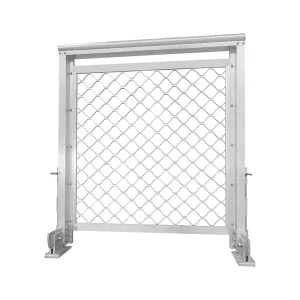
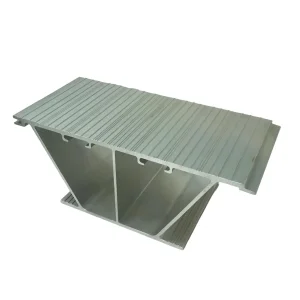
Explore our heavy-industry structural extrusions, engineered helipad decks, and wall cladding profiles customized for high-load, high-impact environments.
Established in 2015 and strategically based in Foshan City, Guangdong, LvXing Intelligent Equipment Co., Ltd. stands as a premier R&D innovator and high-capacity manufacturer of advanced aluminum extrusions. Our core technical competency lies in translating high-level architectural blueprints and complex engineering requirements into physical, high-performance structural systems, ranging from industrial wall cladding systems to heavy-load helipads.
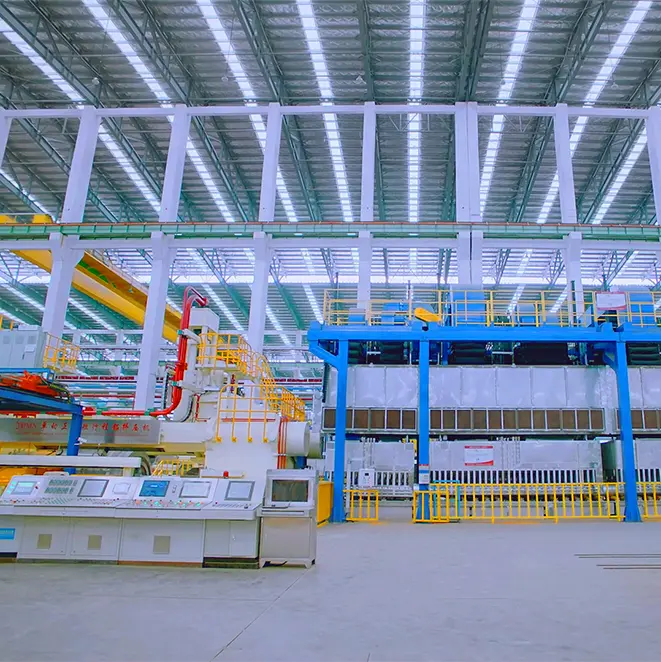
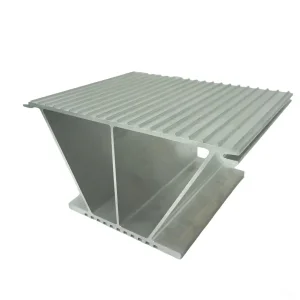
By leveraging premium Fenglu aluminum raw materials, Lvxing ensures absolute reliability in chemical composition and mechanical properties. We operate heavy-duty extrusion lines scaling from 800T to 20,000T. This enables us to process high-strength structural alloys across the 1xxx, 2xxx, 3xxx, 5xxx, 6xxx, and 7xxx series. We are uniquely positioned to produce fully shaped, monolithic extrusion profiles measuring up to 1.2 meters in section width and up to 28 meters in linear length.
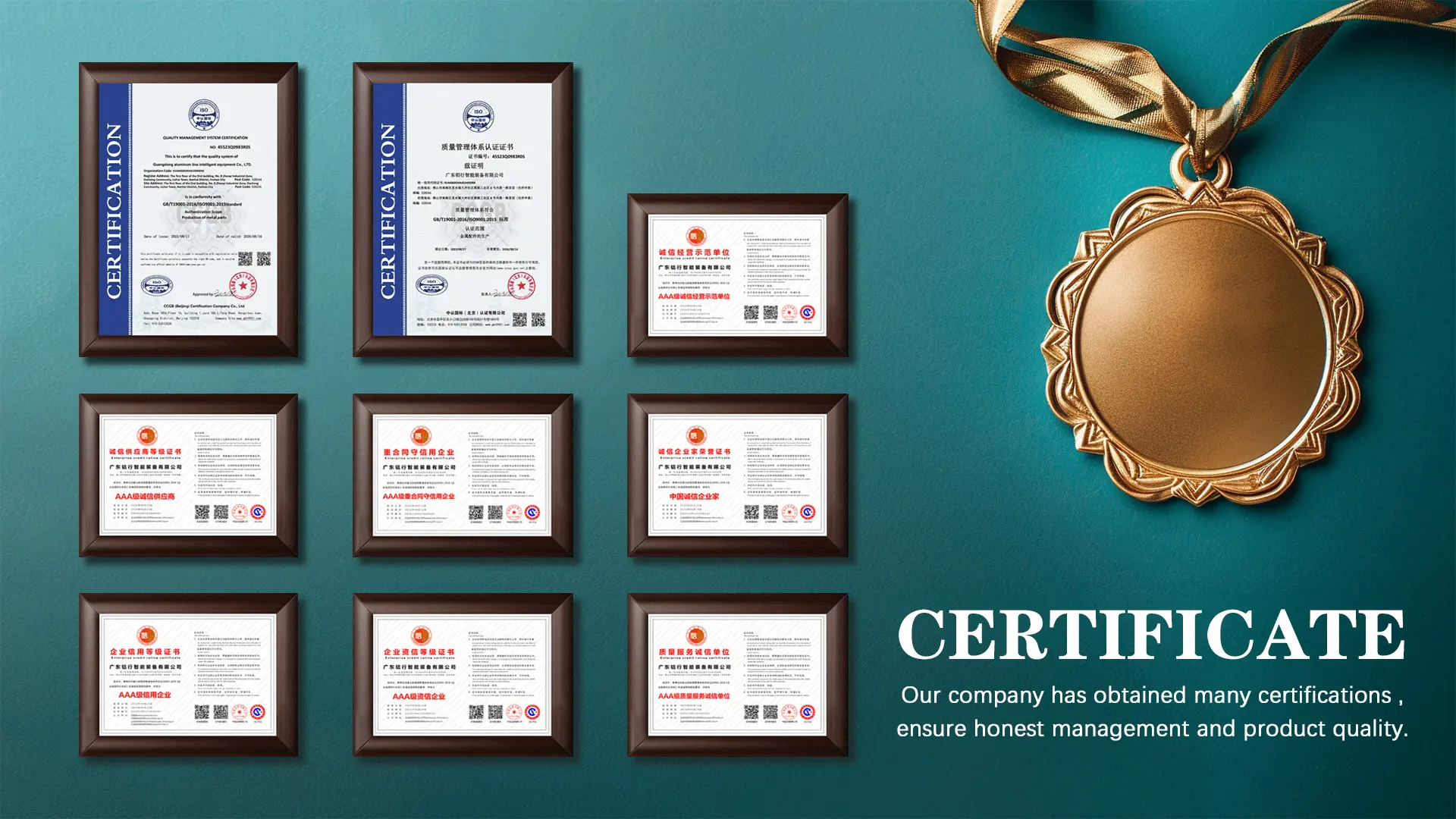
Our operational management complies strictly with GB/T19001-2016 and ISO9001:2015 international quality control systems. Our commitment to high engineering tolerances and material consistency has made us a recognized provider of aerospace-grade and heavy structural components across military, emergency rescue, marine, and urban architectural sectors.
Why Tier-1 global contractors, structural consultants, and facade engineers specify Lvxing for critical architectural envelopes and high-load installations.
We hold the distinguished “Special Aluminium Materials for Aerospace” Certificate, qualifying our manufacturing parameters and mechanical tolerances for extreme structural applications.
Utilizing premium Fenglu billets, our extrusion lines (800T to 20,000T) shape complex profiles up to 1.2m wide or 28m long. Supporting alloy groups from 1xxx up to 7xxx.
Our design team leverages 15+ years of custom engineering. We solve structural challenges, verify wind/dead-load metrics, and provide optimization feedback to reduce material waste.

Official clearance for aerospace structural profiles ensures unmatched fatigue resistance, structural longevity, and tight dimensional tolerance tracking.

Guarantees raw billet purity. Provides highly uniform wall thickness and excellent structural integrity across large span aluminum curtain walls and deck systems.

Our cross-functional technical team matches customer mechanical specifications with manufacturing parameters. This minimizes structural defects and speeds up localized building approvals.
Modern commercial infrastructure demands lightweight, high-performance exterior solutions. Aluminum profiles for wall cladding and heavy structural platforms have become vital components of modern building design. From the high-performance building skins of skyscrapers to complex rooftop helipads, aluminum's high strength-to-weight ratio, structural resilience, and natural resistance to corrosion make it an ideal choice.
Urban density challenges require buildings to perform dynamically under wind pressure, thermal expansion, and seismic shifts. Heavy structural extrusions act as key components of these building envelopes. They serve as the structural backbone (mullions and transoms) supporting architectural panels under immense environmental pressures.
Foshan City in Guangdong is the world's most complete and efficient aluminum production cluster. As a leading manufacturer within this ecosystem, Lvxing integrates raw material sourcing, die design, precision extrusion, surface treatment, and heavy CNC fabrication into a unified process. This concentration minimizes logistical delays, reduces tooling costs, and speeds up prototyping cycles.
By pairing high-tonnage extrusion machines (up to 20,000T) with advanced material lines like Fenglu, we offer global buyers a production scale that is difficult to replicate elsewhere. High-precision automation ensures consistent wall thicknesses, flat surface tolerances, and strict alignment with ASTM, BS EN, and GB standards.
Our profiles undergo strict testing for tensile strength, yield limits, and coating performance, satisfying the demands of architectural and high-load environments.
| Parameters & Material Options | Standard Specifications / Values | Compliance & Quality Certifications |
|---|---|---|
| Alloy Selections | 6063-T5/T6, 6061-T6, 6082-T6, 5083-H112, 7075-T6 | ASTM B221, EN 755, GB/T 6892 |
| Extrusion Dimensions | Width up to 1200mm, Length up to 28 meters | Exceptional large-scale profile capabilities |
| Tolerances (Dimensional) | EN 755-9 High Precision, Custom +/- 0.1mm on CNC cuts | ISO 9001:2015, GB/T 14846 |
| Yield Strength (6082-T6 / 6061-T6) | ≥ 260 MPa / ≥ 240 MPa | Suitable for high-load helidecks & facade framing |
| Surface Protection Finishes | PVDF Coating (2/3/4 coats), Anodizing (Class I/II), Powder Coating | AAMA 2605, Qualicoat Class 2 & 3, Qualanod |
| Aerospace Certifications | Military & Special Aerospace Material Accreditation | GB/T19001-2016 / ISO9001:2015 |
We provide 5xxx and 6xxx series alloys finished with Class I anodizing or PVDF coatings. These materials are built to withstand severe wind loads and chemical exposure in marine coastal environments, preventing rust and degradation.
Our heavy structural extrusions are designed to absorb seismic shifts and wind energy. We engineer internal reinforcement channels that stabilize structural glass and metal panels under movement.
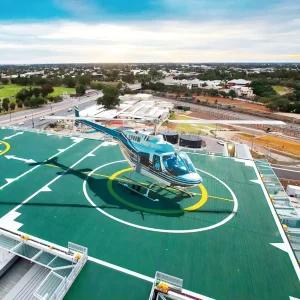
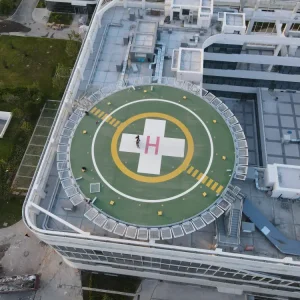
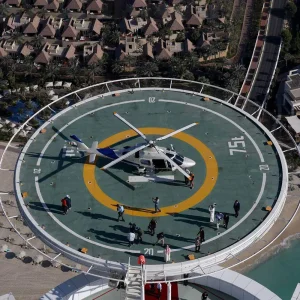
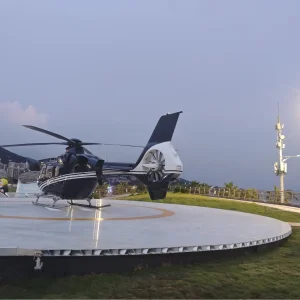
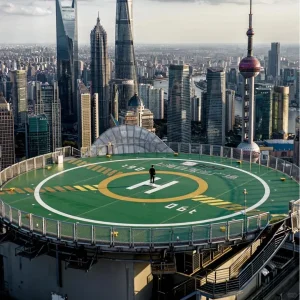
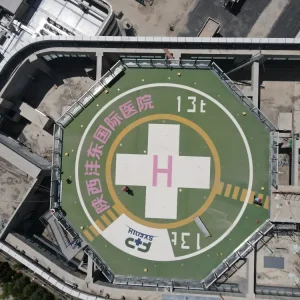
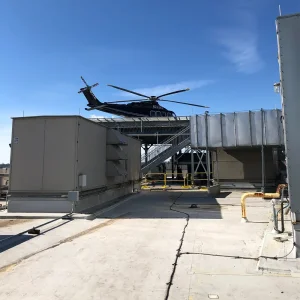
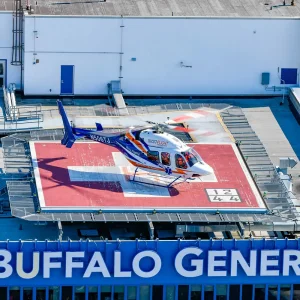
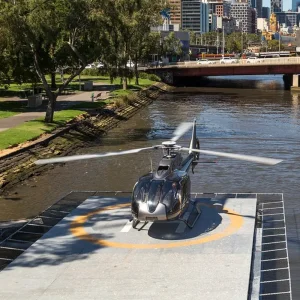
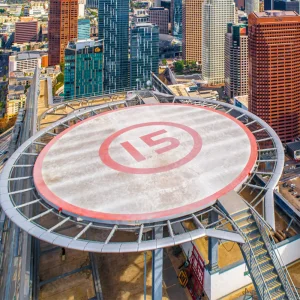
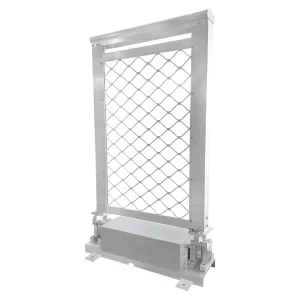
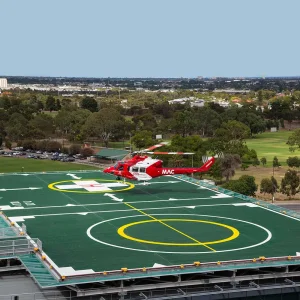
Lvxing designs high-strength helipad panels that handle heavy impact loads. Integrating drainage, perimeter safety netting, and wiring chases, our profiles are ideal for emergency hospitals and offshore oil rigs.
Keeping your projects aligned with international green standards, high performance, and advanced automation.
Future facades are more than passive barriers; they are active components of a building's performance. Lvxing profiles are engineered to integrate ventilation channels, wiring for solar panels, and LED media panels. By designing internal wiring pathways directly into our structural extrusions, we make it simpler for engineers to install smart building controls on exterior walls.
Sustainable development is central to modern design. High-purity structural aluminum is highly recyclable, retaining its properties at the end of a building's life cycle. Our partner, Fenglu, focuses on reducing energy use during primary smelting. Lvxing's precision machining minimizes scrap, helping projects achieve green building certifications like LEED, BREEAM, and DGNB.
A comprehensive checklist designed for procurement heads, facade consultants, and estimators preparing RFQs for custom aluminum wall cladding and structural decking projects.
Clearly specify dead load, wind load, and seismic parameters. For high-impact structures like helidecks, verify the yield strength (MPa) of 6082-T6 or 6061-T6 alloys to meet local safety codes.
Specify standard PVDF (polyvinylidene fluoride) coatings for high UV and air-pollution areas. Specify Class I anodizing (25+ microns) for coastal and marine environments to prevent pitting corrosion.
Request high-precision compliance (EN 755-9 or better). For custom interlocking cladding, specify CNC machining tolerances to ensure simple assembly and clean joints on site.
Expert answers addressing the design, material selection, fabrication, and performance of aluminum wall cladding and structural profile systems.
For standard architectural cladding profiles and panel supports, 6063-T5 or T6 is the industry standard due to its excellent surface finish, ease of extrusion, and good corrosion resistance. For heavy-duty cladding structures, facade mullions, and helicopter landing decks subjected to severe dynamic loads, we recommend 6061-T6 or 6082-T6. These alloys offer higher yield strengths (typically ≥ 240-260 MPa) and improved structural performance under wind or impact forces.
We source our raw billets from premium suppliers, primarily utilizing high-grade Fenglu aluminum. Every batch of material is traceable back to its chemical melt batch, accompanied by Mill Test Certificates (MTC) verifying trace element levels (Si, Fe, Cu, Mn, Mg, Cr, Zn, Ti). This strict sourcing policy prevents impurities, ensuring uniform heat treatment response, consistent anodizing, and predictable mechanical properties.
For marine and coastal zones (high salt spray and humidity), we recommend either a PVDF coating (minimum 2-coat or 3-coat system conforming to AAMA 2605 specifications) or a Class I Anodized finish (film thickness ≥ 20-25 microns). PVDF coatings provide excellent resistance to UV radiation and chemical pollutants, while anodizing forms an integral aluminum oxide layer that won't peel or blister, preventing corrosion in coastal environments.
Thanks to our range of extrusion equipment (ranging from 800T to 20,000T), we can produce profiles up to 1.2 meters in cross-sectional width and up to 28 meters in linear length. This capability allows engineers to design wide, seamless monolithic profiles, reducing joint lines and minimizing water leakage paths in architectural systems.
Our R&D department brings over 15 years of technical experience to every project. Customers can provide CAD or 3D models (STEP, DWG, DXF). Our engineers run thermal and stress simulations to optimize the extrusion design. Once approved, we fabricate the extrusion die in-house, execute sample runs, and verify mechanical and dimensional tolerances before beginning mass production.
We are certified under GB/T19001-2016 / ISO9001:2015 international quality management standards. Additionally, we hold specialized certificates including the “Special Aluminium Materials for Aerospace” accreditation. Our profiles comply with global standards, including ASTM B221 (USA), EN 755 (Europe), and AS/NZS 1866 (Australia/NZ).
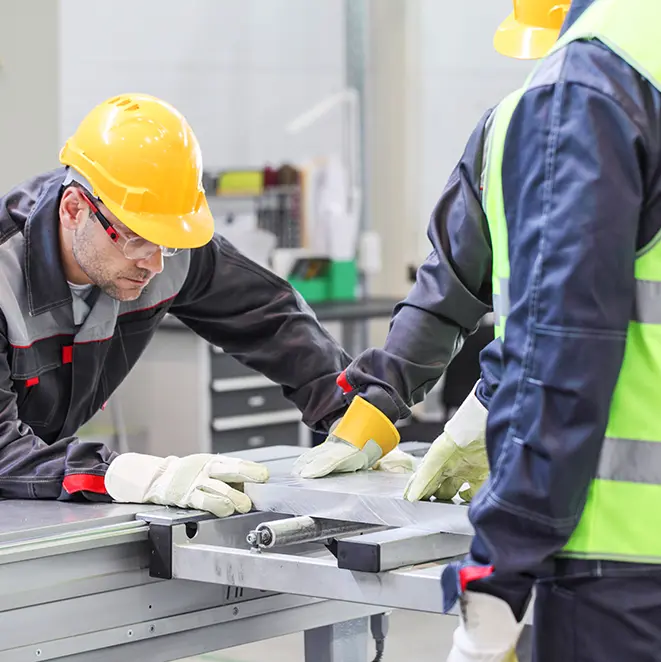
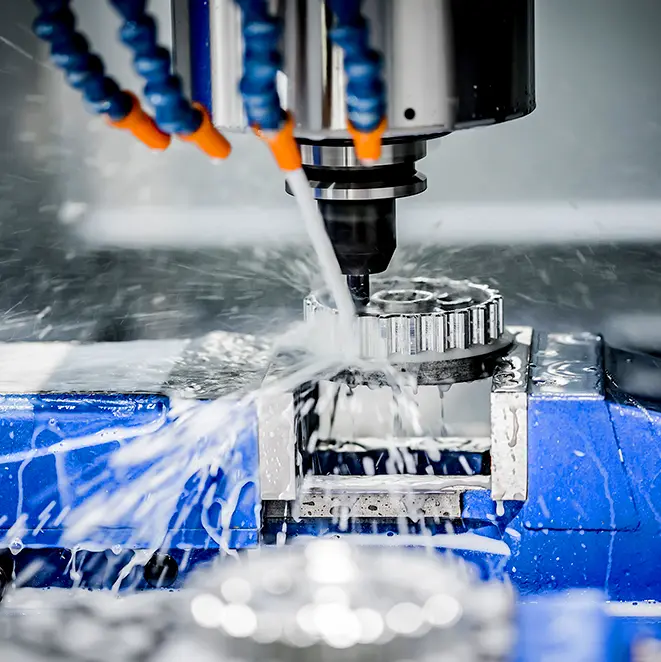
Yes. We offer complete post-extrusion fabrication services, including high-precision cutting, drilling, milling, slotting, tapping, and welding. Our CNC machining centers can process long components, allowing us to deliver profiles that are pre-drilled and ready to install on site, reducing assembly time and labor costs.
To prevent scratches and damage during transport, each profile is wrapped with protective PE film or interleaved with soft paper. The bundles are then packed in heavy-duty wooden crates or steel frames, secured with steel banding, and wrapped in shrink wrap to block moisture. This packaging ensures the profiles arrive in perfect condition, even during long ocean transits.
Explore the remainder of our specialized structural range, including safety netting systems and heavy-load custom helipad extrusion profiles.
 LvXing