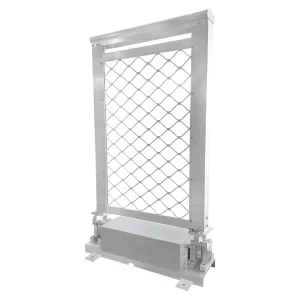
Engineered to exceed strict safety metrics including CAP 437, FAA AC 150/5390-2C, and ISO 19901-3 certifications.
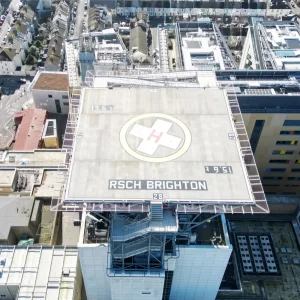
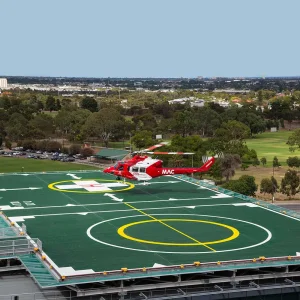
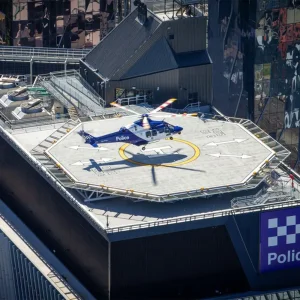
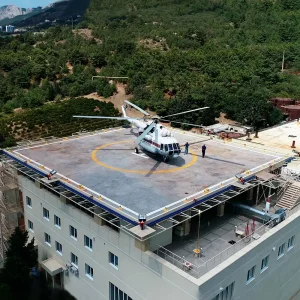
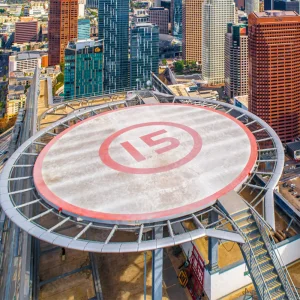
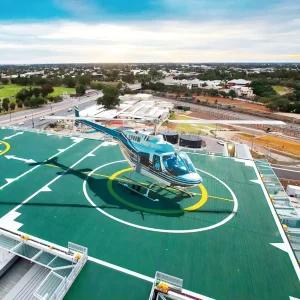
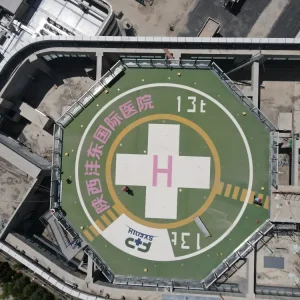
Established in 2015 and strategically located in Foshan City, Guangdong province, LvXing Intelligent Equipment Co., Ltd. (Lvxing) stands as an elite global force in structural aluminum metallurgy and automated safety configurations. Our core competency focuses on engineered helipad aluminum extrusion profiles and complex deck accessories, developed to assure safety, structural longevity, and compliance in harsh civil and offshore applications.
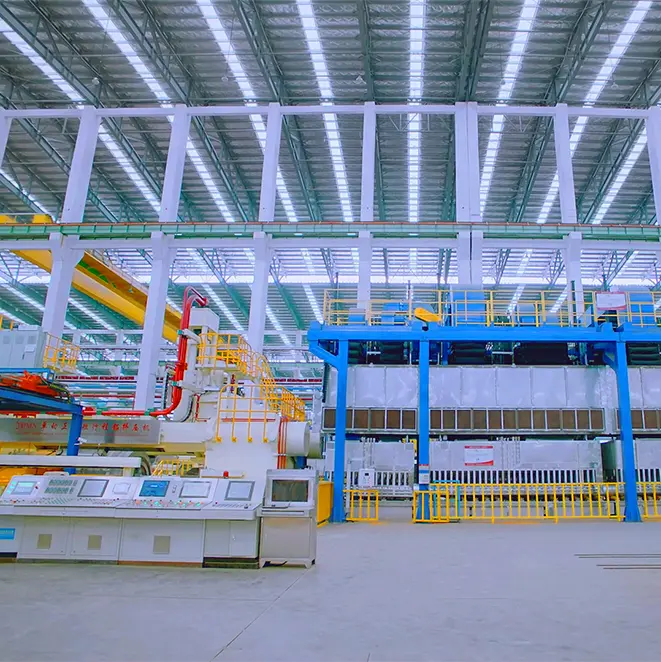
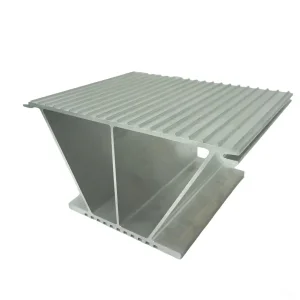
Lvxing operates on the premium supply of Fenglu aluminum, processing critical structural profiles utilizing advanced extrusion lines spanning 800T to 20,000T. This enables us to formulate high-performance alloys including 1xxx, 2xxx, 3xxx, 5xxx, 6xxx, and 7xxx series. We manufacture large-scale, fully shaped products with cross-sectional widths reaching 1.2 meters and structural lengths up to 28 meters with micrometer-level dimensional tolerances.
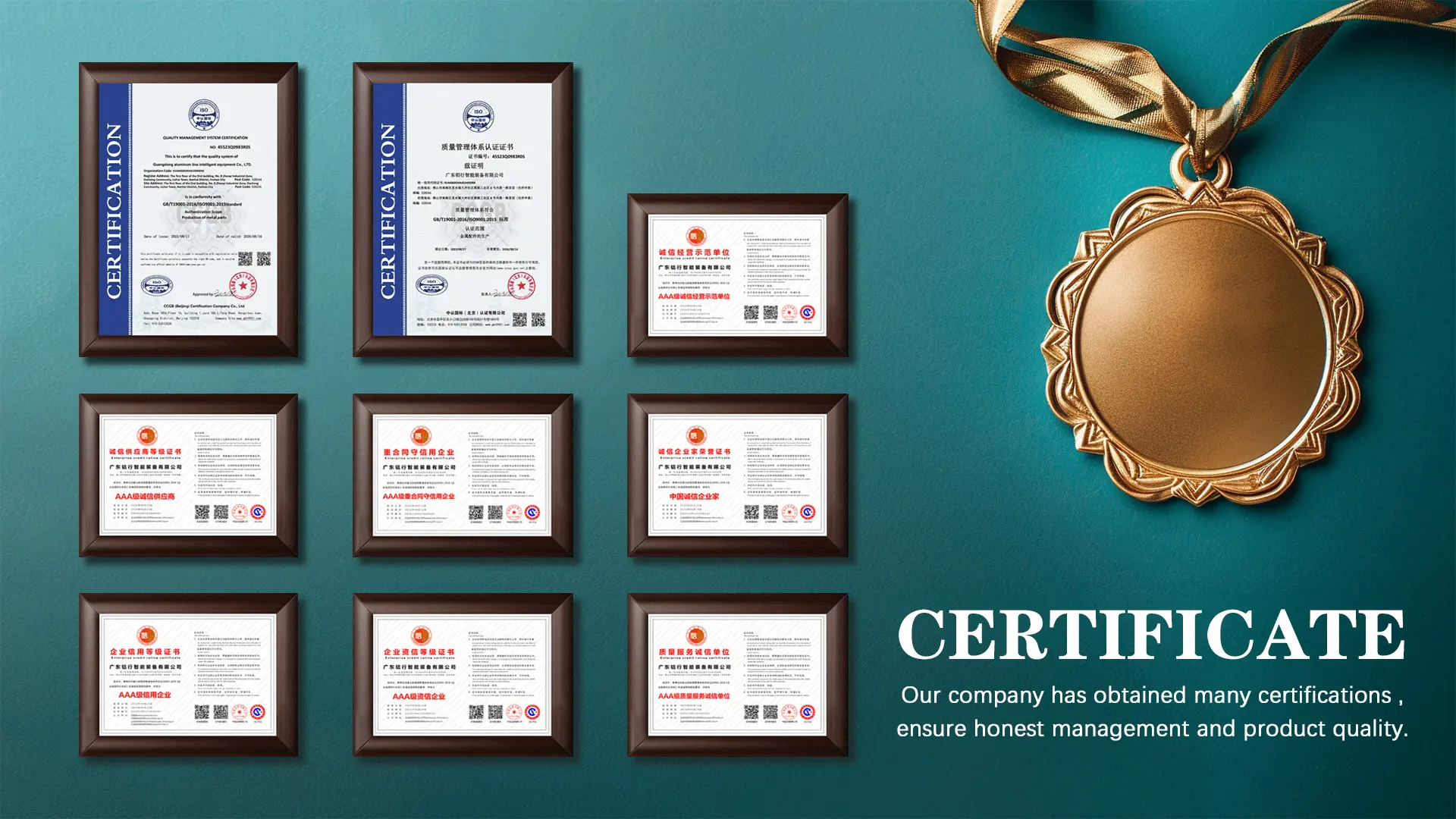
Our operation conforms strictly to GB/T19001-2016/ISO9001:2015 standards, backed by the prestigious "Special Aluminium Materials for Aerospace" certificate, guaranteeing the high safety margins demanded by maritime and aviation inspection bodies worldwide.
Exploring structural mechanics, corrosion dynamics, and energy dissipation properties of marine-grade safety profiles.
Helideck perimeter safety nets must prevent personnel, support equipment, and baggage from falling over the deck edge while under extreme wind and mechanical stress. The Civil Aviation Authority (CAA) standards, notably CAP 437, dictate that perimeter safety nets must extend outward at least 1.5 meters from the edge of the landing area, sloping upwards at a slight incline (typically 10 degrees) to capture falling bodies with minimal trauma. Traditionally, stainless steel netting was utilized; however, material innovations have led to the dominance of marine-grade aluminum configurations due to key mechanical and electrochemical properties.
Constructed primarily from 6061-T6 and 6082-T6 extrusion profiles. These structural-grade aluminum-silicon-magnesium alloys undergo artificial aging (T6 tempering) to reach tensile strengths exceeding 290 MPa and yield strengths over 240 MPa, balancing ductility and load-bearing performance.
Aluminum's elastic modulus is roughly one-third that of structural steel (approx. 70 GPa vs 210 GPa). When a load falls into the net, the net frame undergoes targeted elastic deformation, absorbing impact energy while reducing the rebound effect on personnel.
When exposed to marine atmospheres, 6xxx series alloys rapidly form a microscopic, self-passivating amorphous aluminum oxide (Al2O3) layer. Anodizing (Class 20/25 micron coatings) and PVDF coatings further protect the system from chloride-induced crevice corrosion.
Furthermore, Lvxing's capability to utilize Fenglu profiles extruded up to 20,000T enables the production of structural net frames with continuous extrusion lines. This reduces welded joints—which are typically the first areas to suffer fatigue failure under cyclic wind loads and helicopter rotor downwashes.
How engineering designs are adapted to perform reliably across specialized operational landscapes.
Offshore Floating Production Storage and Offloading (FPSO) units operate in harsh environments with constant salt spray, humidity, and mechanical movement. Safety nets here require highly corrosion-resistant 6082-T6 frames coupled with marine-grade 316 stainless steel mesh or non-corrosive synthetic polymers. Special isolation washers prevent galvanic corrosion between the aluminum frame and steel ship deck.
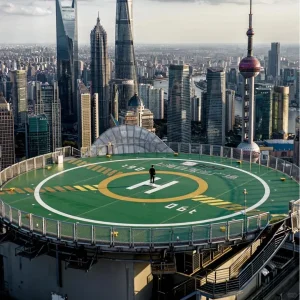
Civil municipal rules require rooftop rescue helipads for tall buildings (exceeding 100m). Weight restrictions limit structural reinforcements. Aluminum's lightweight profile (approximately 65% lighter than steel equivalents) minimizes the building's dead load. It also offers low wind resistance, reducing wind shear effects under strong wind currents near the roof edge.
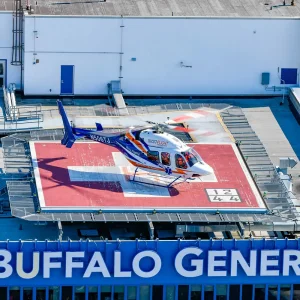
Trauma hospitals rely on swift HEMS transfers. Safety nets in these environments must be non-magnetic to avoid interfering with nearby medical equipment (like MRI scanners or telemetry units) and must not block emergency lighting. Our custom square and round hospital frames incorporate built-in channels for LED lighting strips to improve visibility during night operations.
Tactical military airfields and police station rooftops require robust gear and quick deployment. Our safety nets are designed with swing-down or foldable frames, allowing maintenance crews to lower the nets for clear drone or specialized helicopter maneuvers without compromising safety standards during standard operations.
Technical specifications of Lvxing aluminum safety systems compared with traditional materials.
| Performance / Material Parameter | Lvxing Aluminum System (6061-T6 / 6082-T6) | Traditional Galvanized Steel | Marine Stainless Steel (SS316) |
|---|---|---|---|
| Structural Density (g/cm³) | 2.70 (Ultra-lightweight) | 7.85 (Heavyweight) | 8.00 (Heavyweight) |
| Tensile Strength (MPa) | 290 - 310 | 370 - 450 | 515 - 620 |
| Corrosion Mechanism | Self-passivating oxide (Al₂O₃) | Sacrificial zinc layer (rusts once breached) | Pitting/crevice corrosion in high-salt pools |
| Service Life Expectancy | 25+ Years (Maintenance-free) | 5 - 8 Years (Frequent recoating) | 15+ Years (Requires clean-wash) |
| Impact Absorption | Excellent (Moderate Elastic Modulus: ~70 GPa) | Stiff / High rebound impact | Stiff (High Elastic Modulus: ~193 GPa) |
| Relative Cost Index | Medium (High ROI over service life) | Low (High replacement costs) | Very High (Prohibitive upfront material cost) |
Manufacturing processes validated by industry certifications and rigorous quality assurance.
We are certified to produce "Special Aluminium Materials for Aerospace", verifying that our mechanical properties, microstructural grain alignment, and fatigue resistance meet aviation safety standards.
Using premium-grade raw billets from Fenglu, processed via high-tonnage extrusion lines (up to 20,000T), we maintain consistent material density, prevent interior voids, and ensure precise tolerances.
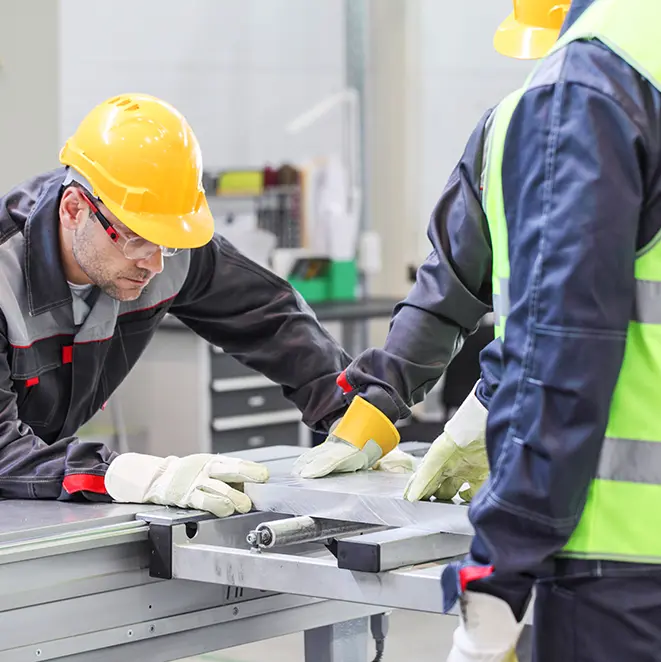
Our engineering team has over 15 years of industry experience, allowing us to review client CAD models, perform finite element analysis (FEA), identify design issues, and optimize profiles before extrusion.
Sourcing aluminum helipad safety systems from Chinese manufacturers like Lvxing offers key technical and cost advantages. These benefits stem from the integration of the industrial cluster in Foshan City, Guangdong province—a major hub for global aluminum extrusion development.
As offshore and civil aviation industries adapt to next-generation Vertical Take-Off and Landing (VTOL) and Urban Air Mobility (UAM) aircraft, safety nets must evolve. These larger, heavier aircraft require helipads that can withstand higher landing impacts and thermal output.
Lvxing is designing automated self-tensioning safety nets. These systems monitor tension across the mesh and frame, correcting slack caused by thermal expansion in extreme climates (such as the Arctic or the Middle East).
Future designs will incorporate load cell sensors into the net hinge assemblies. These sensors will log dynamic impacts and send real-time alerts to ground crews if a structural threshold is breached.
We are testing lightweight bio-based polymers to replace metal mesh. These materials offer high UV resistance, chemical stability, and lower maintenance needs in coastal locations.
Answers to common technical, design, and logistics questions from engineers and procurement managers.
Our products meet global aviation and maritime codes, including UK CAA CAP 437 (Standards for Offshore Helicopter Landing Areas), FAA Advisory Circular AC 150/5390-2C, and ISO 19901-3. We also provide CE-compliant documentation for European projects.
Aluminum systems are up to 65% lighter, which simplifies retrofitting and reduces rooftop loads. Aluminum also absorbs impact energy through controlled elastic deformation and naturally forms a corrosion-resistant oxide layer, minimizing maintenance costs.
Yes. Utilizing our 800T to 20,000T extrusion lines, we customize alloy composition (such as 6082-T6 or 5086 for marine environments) and cross-sections (up to 1.2m wide, 28m long) to match your platform's specific layout.
We isolate the aluminum frame from the ship's steel hull using custom non-conductive polymer bushings (such as POM or PTFE) and 316 stainless steel fasteners, breaking the electrical path that drives galvanic corrosion.
Yes, we design custom folding, modular, and retractable configurations. These allow the nets to fold down during deck clearance, drone operations, or maintenance, and lock securely back in place for flights.
We conduct mechanical pull tests, non-destructive ultrasonic inspections of welds, finite element analysis (FEA) simulations, and drop-load testing (simulating a 100kg body impact) to verify structural integrity before delivery.
High-tolerance extrusions, structural profiles, and custom perimeter systems.
 LvXing