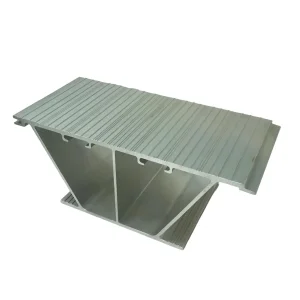
Explore our certified structural aluminum profiles, customized helipads, and high-performance perimeter safety systems engineered to global specifications.
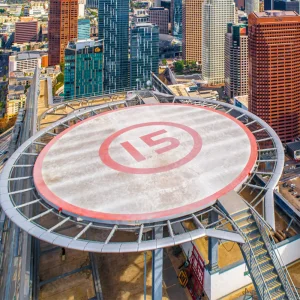
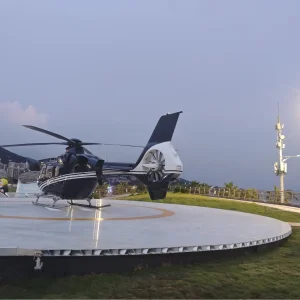
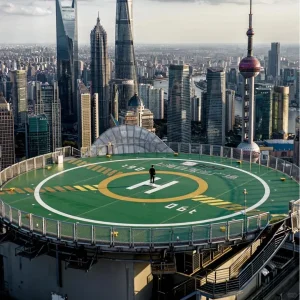
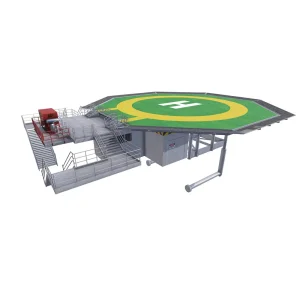
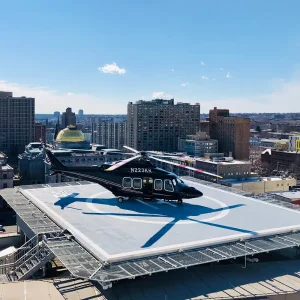
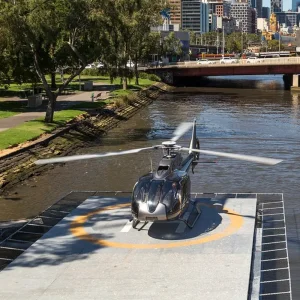
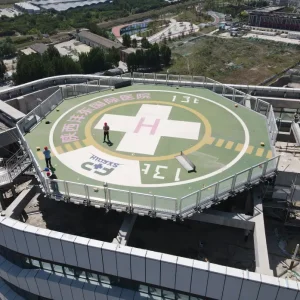
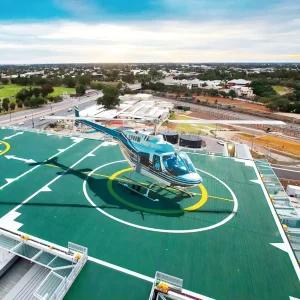
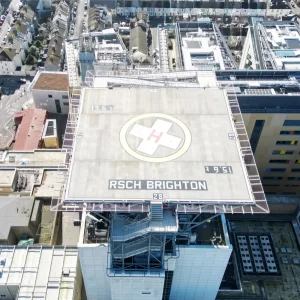
As vertical density increases in metropolitan hubs globally, multi-story buildings and skyscrapers are no longer merely residential or commercial towers; they serve as critical nodes in municipal transportation and emergency medical networks. Rooftop helipads play a vital role in high-altitude fire rescue, rapid hospital transport, and corporate travel. The installation of customized multi-story building helicopter deck nets is a critical safety requirement designed to mitigate structural hazards and prevent personnel falls during dynamic flight deck operations.
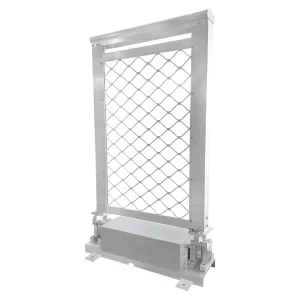
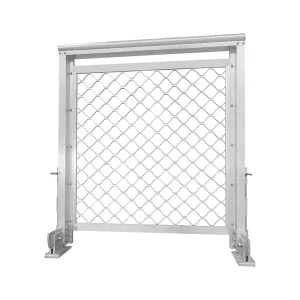
In helicopter landing zones, high wind shear and rotors create volatile environments. A failure to manage perimeter safety risks can lead to catastrophic consequences. Lvxing Intelligent Equipment offers comprehensive, custom-tailored helideck solutions that integrate structurally sound perimeter nets. These systems act as a flexible catch barrier without interfering with the pilot's line of sight or the aerodynamics of the helicopter approach corridor.
Frames and mesh panels designed to absorb and distribute kinetic energy in the event of personnel fall impacts, complying with international aviation safety criteria.
Open-mesh structures engineered to allow high-velocity wind downwash to pass through freely, reducing turbulence and uplift forces on the deck cantilever.
LVXING, SPECIALIZES IN ALUMINUM SOLUTIONS.
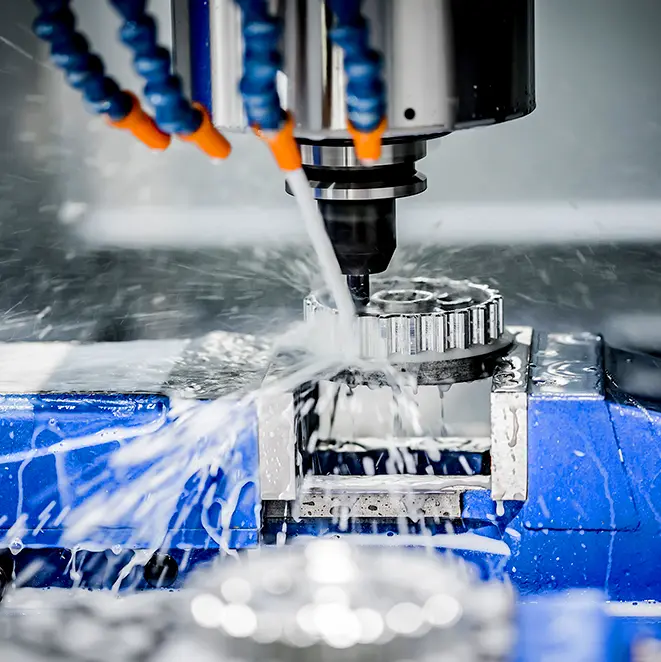
Established in 2015 and located in Foshan City, Guangdong, LvXing Intelligent Equipment Co., Ltd. boasts a skilled R&D team with extensive experience. We leverage exceptional technical expertise to effectively transform customers' ideas into reality, consistently meeting their precise requirements.
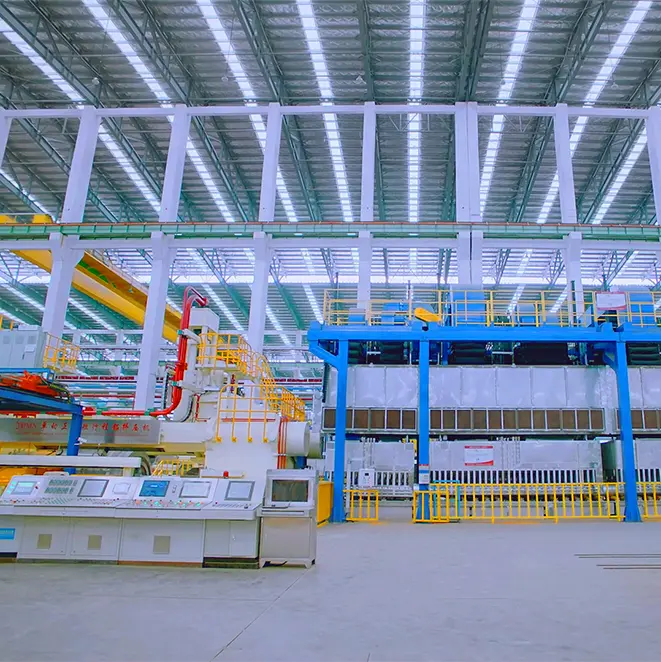
We utilize premium Fenglu aluminum, offering a diverse range of profiles for flexible applications. Our extrusion lines, ranging from 800T to 20,000T, accommodate alloys 1xxx, 2xxx, 3xxx, 5xxx, 6xxx, and 7xxx, allowing us to produce shaped products with section dimensions up to 1.2 meters in width and 28 meters in length. These products are recognized for their precision and meticulous processing, finding broad application in aerospace, military, medical, and industrial sectors.
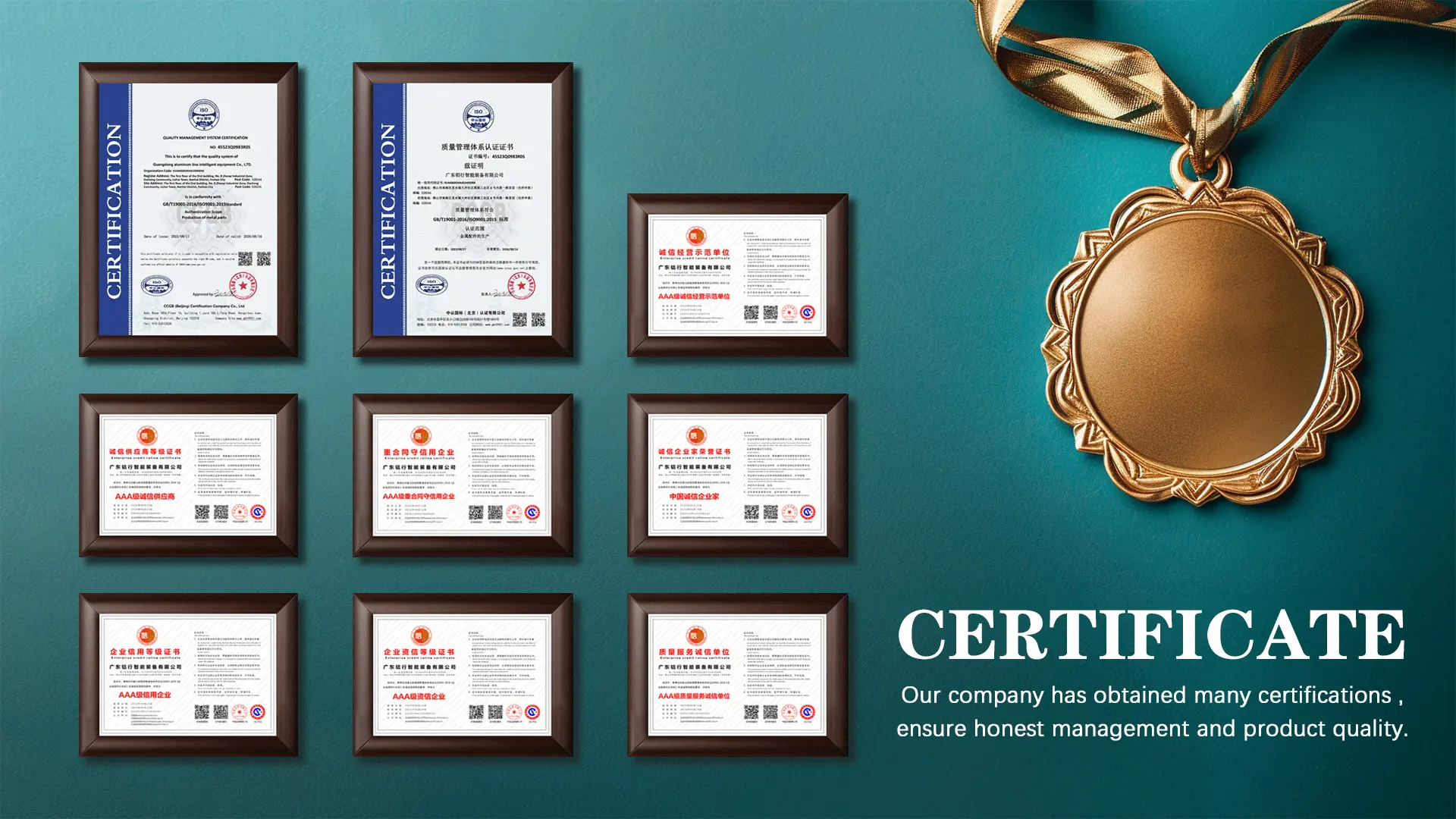
Our commitment to excellence is evident throughout the manufacturing process, rigorous quality control, thorough packaging, and efficient shipping procedures. This dedication has earned us recognition as a national excellent and honest enterprise, along with quality system certification in accordance with GB/T19001-2016/ISO9001:2015 standards.
We aspire to be your trusted business partner and warmly invite you to visit our factory.
Uncompromising material selection, advanced extrusion power, and expert engineering ensure top safety performance.

We have obtained the “Special Aluminium Materials for Aerospace” Certificate, guaranteeing defense-grade mechanical integrity.

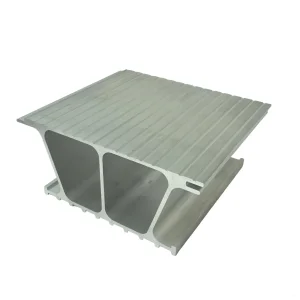
We provide and utilize high-quality Fenglu aluminum profiles. With extrusion lines ranging from 800T to 20,000T, we can produce alloys 1xxx, 2xxx, 3xxx, 5xxx, 6xxx, and 7xxx. We can manufacture fully shaped products with section dimensions up to 1.2 meters in width or 28 meters in length.

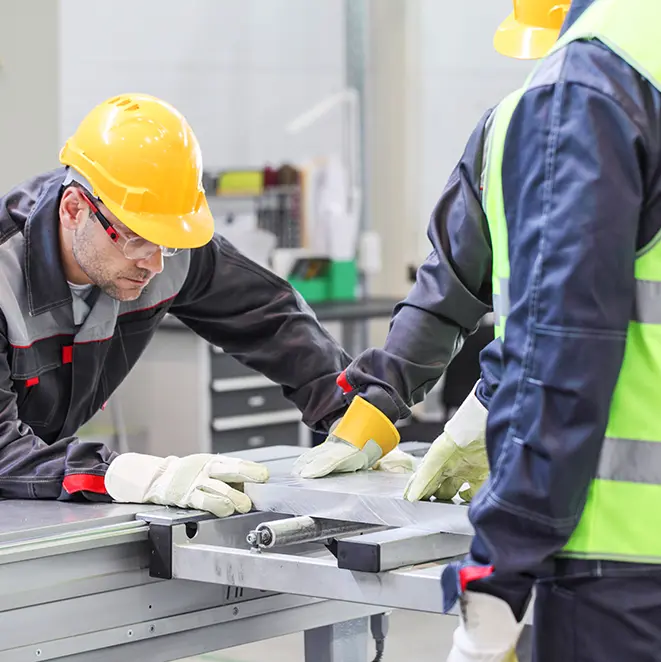
We have a team of technicians with 15 years of invaluable experience. Our deep understanding of customer requirements allows us to identify potential issues and offer practical insights, turning customer ideas into tangible products that meet specific needs.
Meeting the safety requirements of modern urban developments, offshore infrastructure, and aviation standards.
The international demand for high-strength aluminum helideck perimeter safety systems has increased significantly. Civil aviation authorities, including the United States Federal Aviation Administration (FAA), the European Union Aviation Safety Agency (EASA), and the UK Civil Aviation Authority (CAA), have updated their codes to address potential hazards on rooftop and offshore landing platforms. The primary standard for offshore operations, CAP 437, details strict guidelines for perimeter safety nets. It mandates that safety nets must extend outward at least 1.5 meters from the landing deck edge and have an upward slope of 10 degrees.
Historically, structural steel and synthetic fibers were standard. However, steel adds excessive deadweight to cantilevered structures and is highly susceptible to coastal marine corrosion. Synthetics degrade quickly under ultraviolet (UV) radiation and high thermal cycles from engine exhaust. The industry has increasingly transitioned to marine-grade structural aluminum alloys (such as 6005A-T6 or 6082-T6) due to their strength-to-weight ratio, built-in corrosion resistance, and low-maintenance profiles.
| Standard Parameters | Steel Systems | Synthetic Rope Nets | Lvxing Aluminum Safety Net Systems |
|---|---|---|---|
| Dead Weight Impact | High (approx. 45-60 kg/m²) | Low (approx. 10 kg/m² framework dependent) | Optimized Low (approx. 18-25 kg/m² total) |
| Corrosion Resistance | Poor (requires frequent painting) | N/A (rot risks in high humidity) | Excellent (salt spray test > 2000 hours) |
| Service Life Cycle | 5 to 8 years (with maintenance) | 2 to 3 years (high UV exposure failure) | 25+ Years Maintenance-Free |
| Wind Resistance (Uplift) | Severe solid drag profile | Unstable dynamic flutter | Highly Aerodynamic Open Net Structure |
| Global Compliance | Variable by custom design | Frequently fails drop-testing after aging | Compliant with CAP 437 & ICAO Annex 14 |
Operating globally requires compliance with regional construction codes and civil aviation standards. Lvxing Intelligent Equipment offers comprehensive, localized engineering and design support to ensure your rooftop helideck safety installations comply with local requirements. Our systems are backed by professional structural calculations and CE certifications, simplifying the regulatory approval process for project stakeholders and local civil aviation inspectors.
Whether your project is located in the high-density urban areas of Europe, North America, Southeast Asia, or the Middle East, our technical teams work closely with structural engineers, building architects, and main contractors. We supply detailed 3D CAD models, finite element analysis (FEA) reports, and anchorage design calculations to ensure the connection points match the building’s primary structural frame.
Customized safety net integration across diverse global operating environments.
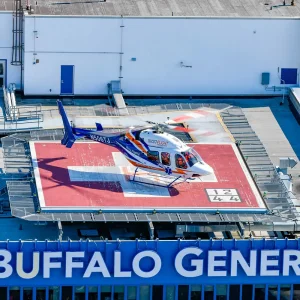
In critical care medical environments, rooftop helipads are in constant use. Safety nets must be reliable and allow maintenance teams to work without obstructing landing zones. Lvxing’s aluminum net systems provide a maintenance-free, weather-resistant barrier that supports high-frequency rescue operations.
Multi-story skyscrapers face high wind forces and strict urban aesthetics. Our customizable, low-profile safety nets integrate with building facades, offering fall protection while preserving the building's architectural profile.
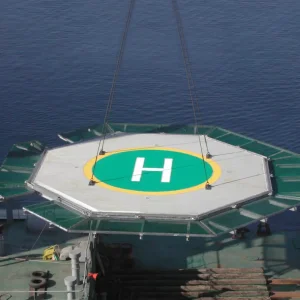
Offshore helidecks on oil rigs, gas platforms, and maritime vessels are exposed to corrosive saltwater environments. Our marine-grade aluminum alloy profiles and nets prevent corrosion, reduce maintenance cycles, and withstand rough seas and high winds.
Developing next-generation helipad perimeter safety systems for future urban air mobility.
Integrating strain-gauge sensors and fiber-optic cables into aluminum support frames to monitor impact loads, mesh tension, and structural wear in real time.
Refining our electrically automated folding and deployment systems. Actuators connect directly to building management systems, folding the safety nets down during flight operations and raising them during service windows.
Designing next-generation, high-performance profile cross-sections. Computational Fluid Dynamics (CFD) modeling helps minimize turbulence on rooftops, ensuring stability for eVTOLs and urban air taxi systems.
Technical answers to common engineering, regulatory, and design questions about customized helicopter deck nets.
Complete custom solutions for aviation and marine platforms, certified to international safety requirements.
 LvXing