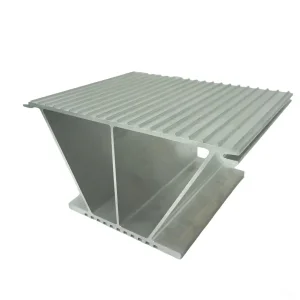
China Helicopter Landing Pad Nets Factory Manufacturer & Factory

Global Grade Aluminum Helideck Safety Mesh, Perimeter Safety Systems, and Structural Engineering Solutions Designed to Meet CAP 437, ICAO Annex 14, and Rigorous Marine Standards.

Global Helideck Industry Overview & Macro Safety Standards

Analyzing the shift towards high-performance aluminum mesh systems in marine, offshore energy, and urban vertical infrastructure.

The Evolution of Helideck Protection

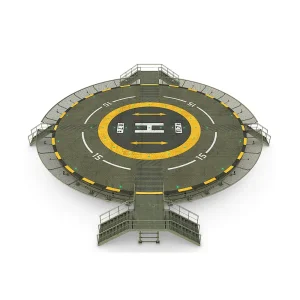
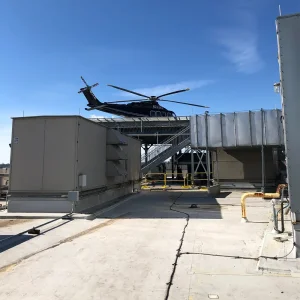
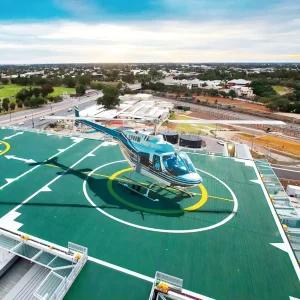
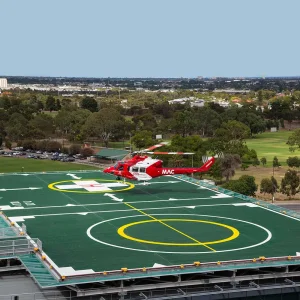
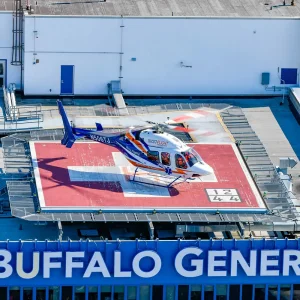
In modern industrial and marine aviation, helicopter landing safety is paramount. Helicopter landing pads (helidecks) on offshore oil platforms, hospital roofs, floating production storage and offloading (FPSO) units, and naval vessels require critical peripheral protection. Traditionally, heavy carbon-steel or short-lived synthetic fiber netting systems were utilized. Today, the global standard has decisively shifted toward lightweight, corrosion-resistant, high-strength structural aluminum systems.

Under international aviation regulations, helicopter landing pads must feature a peripheral safety net system that is designed to catch personnel or light equipment sliding or blown off the landing platform. These nets must resist severe mechanical impacts, hurricane-grade wind shear, high UV degradation, and constant exposure to highly corrosive marine salt sprays.

Regulatory Directives: CAP 437 & ICAO

Safety nets manufactured by LvXing conform strictly to major aviation and maritime directives. Foremost among these are the Civil Aviation Authority (CAA) **CAP 437** (Standards for Offshore Helicopter Landing Areas) and **ICAO Annex 14** (Volume II - Heliports). These standards dictate:

  • Horizontal Outward Extension: Safety nets must project at least 1.5 meters outward from the edge of the helideck.
  • Upward Slope: A specific incline angle (not exceeding 15 degrees above the horizontal plane) is required to safely contain any falling body.
  • Impact Resistance: Systems must withstand drop tests simulating a 100 kg mass hitting the net from heights of up to 1 meter without structural failure.

Precision Manufacturing Scale

Lvxing Intelligent Equipment's heavy-duty fabrication infrastructure by the numbers.

20,000T
Extrusion Capacity
1.2m
Max Profile Width
28m
Max Extruded Length
15+
Years R&D Experience

Welcome to Lvxing: Leaders in High-Performance Aluminum Systems

LVXING SPECIALIZES IN STRUCTURAL ALUMINUM HELIDECK SOLUTIONS.
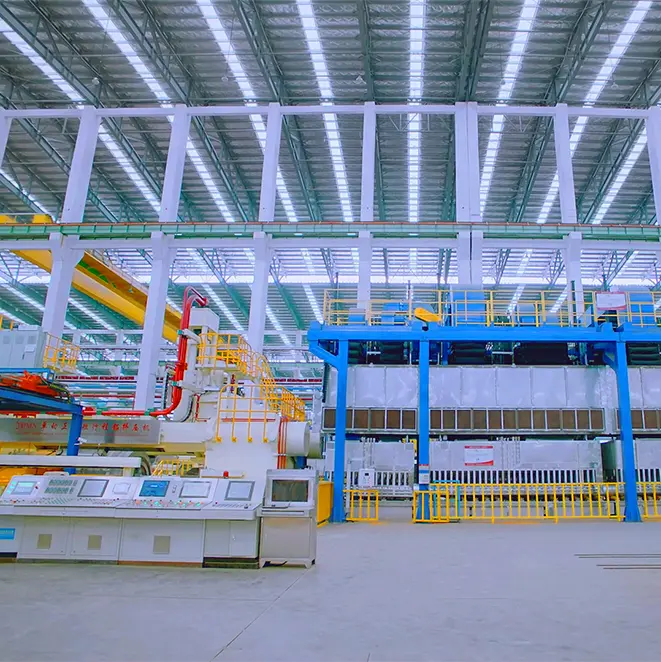
Established in 2015 and located in Foshan City, Guangdong, LvXing Intelligent Equipment Co., Ltd. boasts a skilled R&D team with extensive experience. We leverage exceptional technical expertise to effectively transform customers' ideas into reality, consistently meeting their precise requirements.
Special Aluminium Materials for Aerospace
Aerospace Certificate Icon

Aerospace Certification

We have obtained the prestigious “Special Aluminium Materials for Aerospace” Certificate. Our engineering processes adhere to rigorous standards that guarantee microstructural consistency and chemical purity under challenging high-altitude and marine stress fields.

Fenglu Aluminum Extrusion Process
Fenglu Profile Icon

Premium Raw Materials & Extrusion

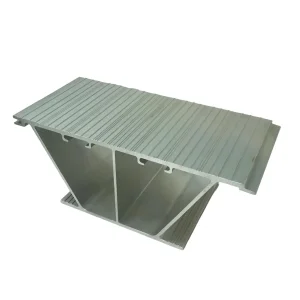
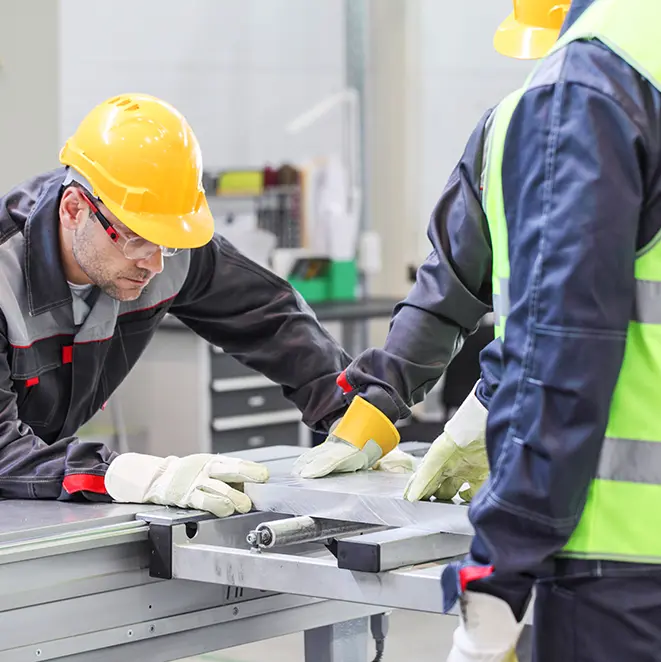
We provide and utilize high-quality Fenglu aluminum profiles. With heavy-duty extrusion lines ranging from 800T to 20,000T, we process high-strength alloys across the 1xxx, 2xxx, 3xxx, 5xxx, 6xxx, and 7xxx series, allowing us to manufacture fully shaped products up to 1.2 meters in width or 28 meters in length.

Lvxing Tech Engineers Team
Team Icon

Expert Structural Engineering

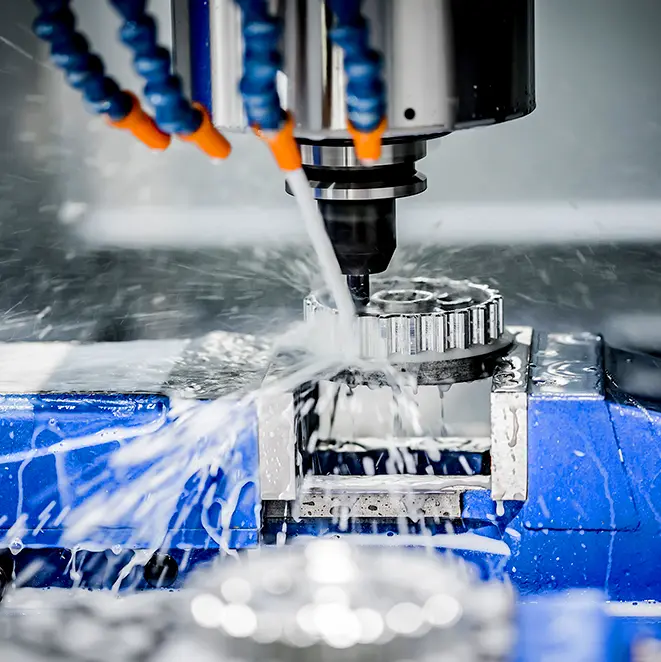
We have a team of technicians with 15 years of invaluable experience. Our deep understanding of customer requirements allows us to identify potential issues, run FEA (Finite Element Analysis) structural stress models, and offer practical insights that turn customer ideas into highly functional products.

Helideck Safety Net Design Schematic

Localized Application Scenarios: Where Safety Meets Ground Truth

Adapting helipad net engineering to diverse environmental zones and highly specialized missions.

Marine & Offshore

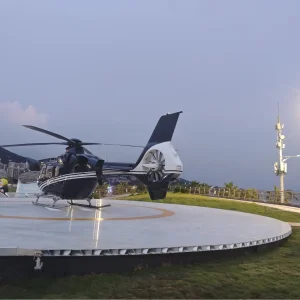
Offshore FPSOs & Drillships

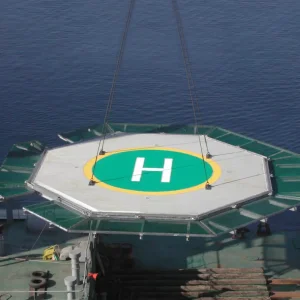
Subjected to constant sea spray, thermal cycling, and platform vibration. Lvxing's aluminum perimeter safety nets leverage 6000-series (like 6061-T6 or 6082-T6) anodized profiles and marine-grade stainless steel cables to ensure absolute corrosion resistance, preventing structural decay and galvanic corrosion.

Emergency Medical Services

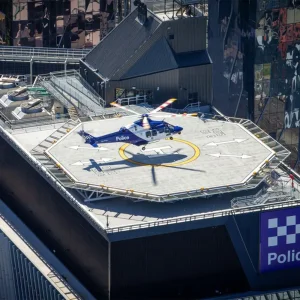
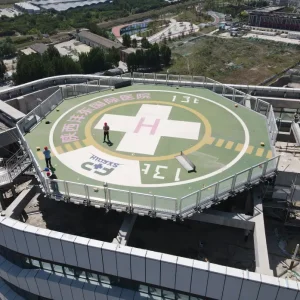
Hospital Rooftop Helipads

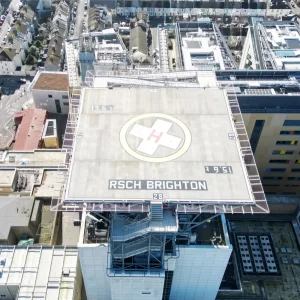
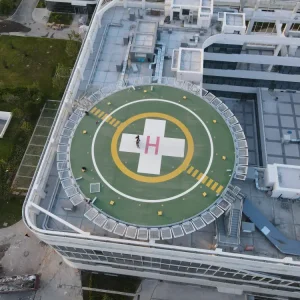
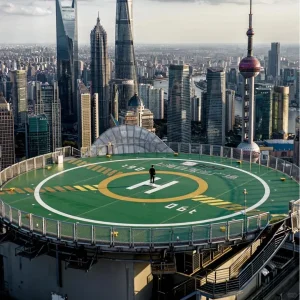
Urban emergency response demands zero-failure safety systems. Elevated rooftop environments require lightweight structural loads so as not to stress building foundations, combined with aerodynamic perimeter mesh to mitigate high wind updrafts created by skyscraper architecture.

Commercial & Law Enforcement

Police & Skyscraper Pads

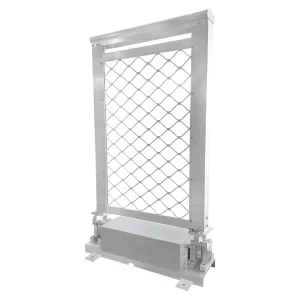
From tactical urban police rooftops to luxury skyscraper landing docks, aesthetics must combine with high-strength reliability. The modular framework of our customized aluminum profiles allows for rapid installation, easy manual or motorized swing-away functions, and integration with perimeter LED lighting.

Strict Material Compliance & Quality Control

Our commitment to excellence is evident throughout the manufacturing process, rigorous quality control, thorough packaging, and efficient shipping procedures. This dedication has earned us recognition as a national excellent and honest enterprise, along with quality system certification in accordance with GB/T19001-2016/ISO9001:2015 standards.

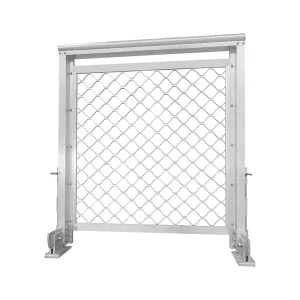
We work exclusively with Fenglu Aluminum, an industry-leading raw material base. Our mechanical tests verify tensile strength, yield strength, and elongation before any profile is shaped. The structural safety mesh is fabricated using high-strength wire cables and tensioned boundary profiles to guarantee that force loads are evenly dispersed through the supporting structural frame.

Additionally, we offer customized finishing options, including powder coating, clear anodization, and specialized anti-reflective treatments designed to prevent blinding pilots during approach and landing operations.

Lvxing Technical Capability Breakdown:

  • Alloy Capabilities: 1xxx (99% pure), 2xxx (Al-Cu for aerospace), 3xxx (Al-Mn for general corrosion resistance), 5xxx (Al-Mg for marine structures), 6xxx (Al-Mg-Si structural), and 7xxx (Al-Zn-Mg ultra-high strength).
  • Extrusion Limits: Large-span structures with profiles up to 1.2 meters wide and 28 meters in length extruded in-house.
  • Mechanical Operations: High-precision CNC machining, robotic welding, manual net assembly, precision drilling, and automated anodizing lines.
  • System Formats: Both manual swing-away systems and automated electric perimeter safety nets.

Technological Roadmap: The Future of Helideck Protection

Pioneering the next generation of smart safety enclosures and highly adaptive structural alloys.

1. Smart Integrated Sensor Mesh

We are researching structural health monitoring (SHM) systems built directly into the aluminum safety net grid. Fiber-optic sensors embedded inside the perimeter frame will report impact events, tension loss, or deformation in real-time back to the platform control center.

2. High-Strength Recyclable Alloys

Green construction is vital. Our materials R&D focuses on maximizing the use of post-industrial recycled aluminum content without sacrificing tensile capabilities, aligning our production output with ESG guidelines without compromising aerospace safety standards.

3. Automated Climate Protection

Developing active de-icing and heating profiles within helideck support structures for sub-zero Arctic and Northern Sea applications. Electrically conductive pathways run internally within Lvxing extrusion cavities, preventing critical ice accumulation.

Technical Q&A: In-Depth Engineering Insights

Expert technical answers addressing layout configurations, material limits, certifications, and compliance issues.
What are the specific requirements of CAP 437 regarding safety net geometry?
CAP 437 guidelines mandate that the safety net must project at least 1.5 meters horizontally outward from the edge of the helideck. The net must also have an upward slope of approximately 10 to 15 degrees above the horizontal plane to prevent any falling personnel or cargo from rolling out. It must not rise higher than the level of the landing pad itself so it does not act as an obstruction to helicopter rotors or landing gear.
Why is aluminum preferred over stainless steel or synthetic fiber mesh?
Aluminum profiles and mesh (specifically 6000-series alloy frames) offer a superior strength-to-weight ratio. Unlike synthetic fibers, aluminum is immune to UV radiation breakdown. Unlike carbon steel, it does not rust. While stainless steel is strong, it is significantly heavier and can cause galvanic corrosion issues if paired with other structures. An aluminum net system reduces dead loads on rooftop structures and offshore cantilever supports, while offering decades of maintenance-free service.
What alloy series does Lvxing utilize for marine helidecks?
For marine offshore applications, we primarily utilize marine-grade 6xxx series alloys (such as 6061-T6 or 6082-T6) and 5xxx series alloys. These alloys provide exceptional mechanical properties and demonstrate superior pitting corrosion resistance in chlorine-rich marine environments. For high-stress structural components, we also process custom aerospace-grade 7xxx series alloys.
How does the electric perimeter safety net system function?
Electric perimeter safety nets are motorized systems that can fold down or retract automatically when helicopters are landing or taking off, and deploy upward once the vehicle is stationary. This is particularly useful on marine vessels, naval flight decks, or rooftops where clearances are tight, ensuring zero interference with flight corridors.
What dynamic drop testing protocols do your nets undergo?
In compliance with ICAO and CAP 437, Lvxing designs net structures to undergo dynamic impact tests. We simulate a body fall using a 100 kg test mass dropped from a height of 1 meter into the center of a mesh panel. The mesh panel, frame, and mounting brackets must absorb the kinetic energy without tearing, separating from the margins, or experiencing structural failure.
What are the dimension limits for Lvxing's custom profiles?
Thanks to our massive heavy-duty extrusion lines ranging up to 20,000 tons, we can manufacture complex single-profile shapes with cross-sectional dimensions up to 1.2 meters in width and single extruded lengths reaching up to 28 meters. This eliminates the need for multiple welded joints, increasing structural safety.
How do you prevent galvanic corrosion between the aluminum frame and steel ship structures?
We isolate the interface using non-conductive elastomeric gaskets (such as neoprene or specialized polymers) and utilize stainless steel fasteners fitted with isolating bushings. This stops the electrical circuit required for galvanic corrosion, allowing the aluminum frame to safely interface with steel structural beams.
Do your helipad safety systems hold CE Certification?
Yes. Many of our helideck perimeter safety systems, both manual and electric, carry full CE Certification. This ensures they comply with European safety, health, and environmental protection standards, facilitating rapid approval processes for global projects.
What kind of surface finish is recommended for glare reduction?
We offer anodized matte finishes or dark-colored powder coatings (such as black or deep gray) that prevent sun reflection from glare-blinding helicopter pilots during high-angle approaches. The coatings are formulated to withstand intensive UV light and salt fog.
Can Lvxing assist with customized engineering calculations and CAD models?
Absolutely. Our R&D engineering team leverages 15 years of industry experience. We can take your structural specifications, rooftop wind-load requirements, or platform dimensions and create detailed 2D/3D CAD drawings and Finite Element Analysis (FEA) reports to verify load paths and structural safety under various scenarios.