Explore our engineered structural aluminum helipad components and perimeter safety nets certified to international marine and civil aviation regulations.
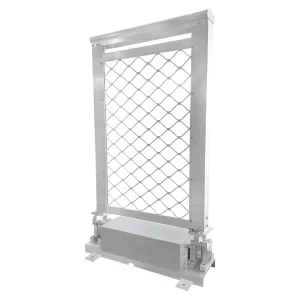
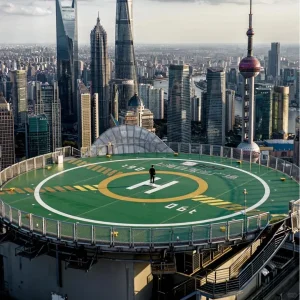
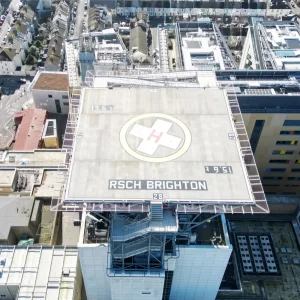
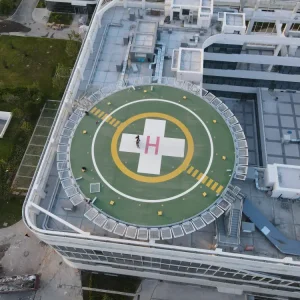
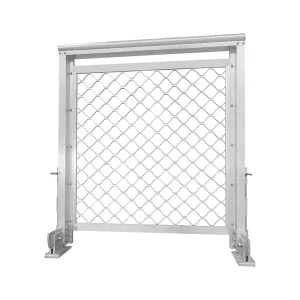
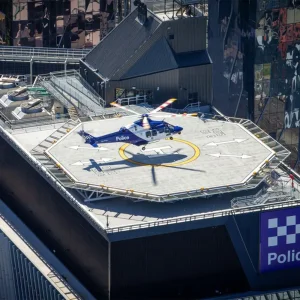
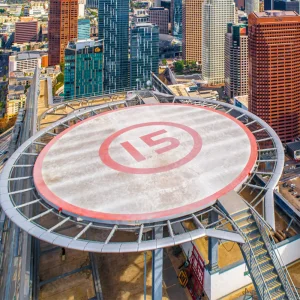
Helipad safety netting is not a standard utility barrier; it is a critical safety system engineered to absorb dynamic kinetic loads during helicopter offshore landing, urban rooftop touchdowns, and maritime deck maneuvers. Standardized by regulations such as the Civil Aviation Authority (CAA) CAP 437 and the Federal Aviation Administration (FAA) Advisory Circular 150/5390-2C, these perimeter netting systems must withstand severe physical stress. The core objective of a safety net is simple yet life-saving: to catch falling personnel or deck gear without causing severe rebound trauma or structural failure.
Regulatory Insight: Under CAA CAP 437 Chapter 3, helideck perimeter safety nets must extend at least 1.5 meters outwards from the deck edge. They must have a slight upward inclination of approximately 10 degrees and must be capable of withstanding a drop test impact of 122 kg (268 lbs) dropped from a height of 1 meter without structural damage or detachment.
To achieve these metrics, Chinese manufacturer LvXing Intelligent Equipment Co., Ltd. implements strict architectural validation on all safety net fabrications. Our design leverages both stainless steel 316 wire mesh matrices and marine-grade, high-strength structural aluminum profile frames. By utilizing optimized mechanical properties, these safety nets provide continuous elasticity, preventing localized strain crystallization and maintaining peak energy attenuation over decades of exposure to high wind loads, saline moisture, and intense UV degradation.
Established in 2015 and located in Foshan City, Guangdong, LvXing Intelligent Equipment Co., Ltd. boasts a highly skilled R&D team with extensive experience in structural, aviation-grade metallurgy. We leverage exceptional technical expertise to effectively transform customer concept designs into physical reality, consistently meeting precise engineering requirements.
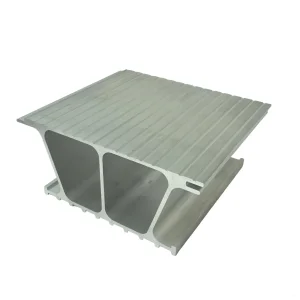
We utilize premium Fenglu aluminum, offering a diverse range of high-performance profiles for flexible applications. Our structural extrusion lines range from 800T to a massive 20,000T, allowing processing of alloys including 1xxx, 2xxx, 3xxx, 5xxx, 6xxx, and 7xxx series. This capacity enables the production of complex, fully-shaped structural components with section dimensions up to 1.2 meters in width and 28 meters in length. These profiles are highly regarded for their precision tolerance and meticulous heat treatment, finding broad application in aerospace, military maritime decks, medical infrastructure, and skyscraper engineering.
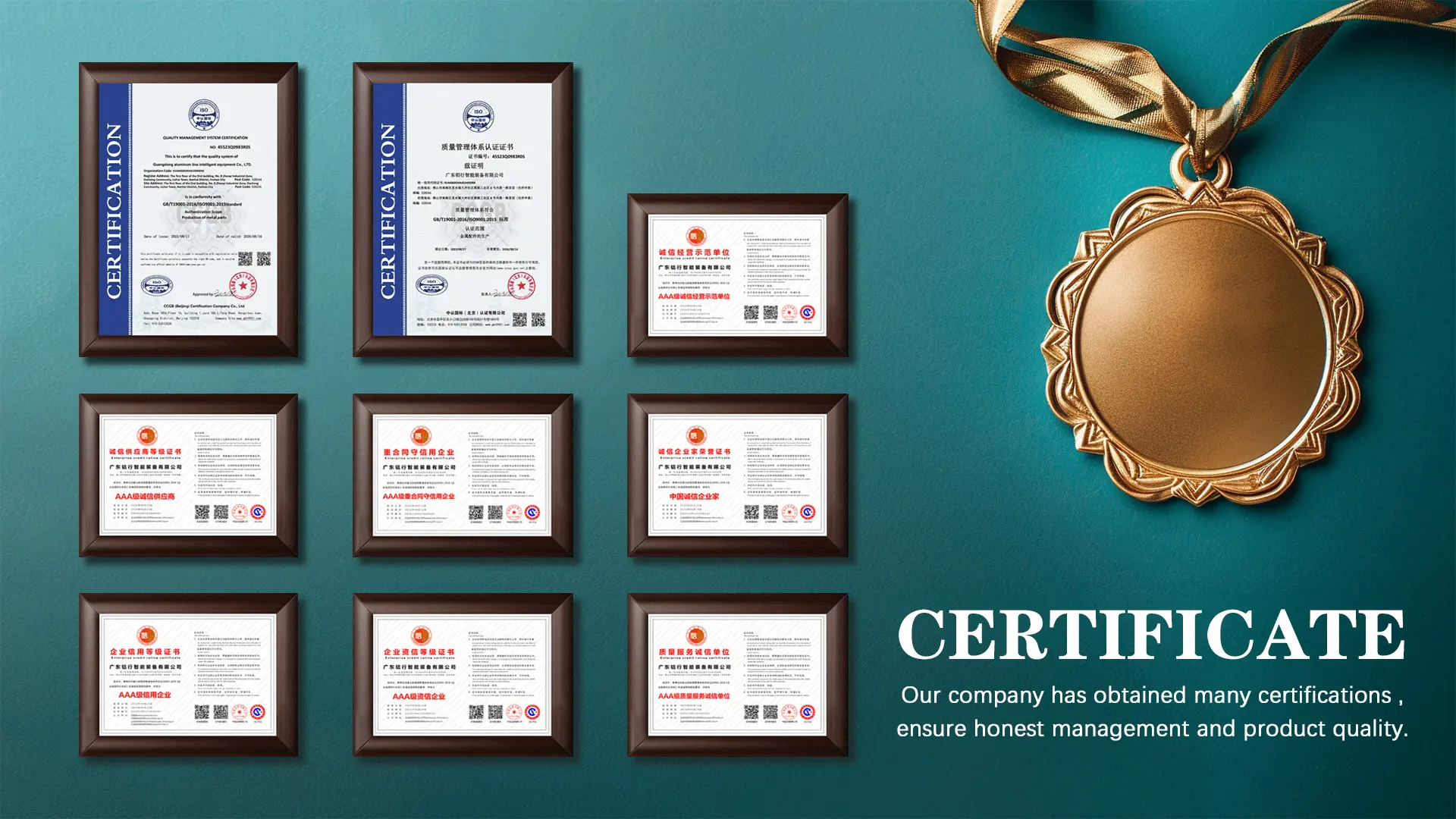
Our commitment to excellence is evident throughout the manufacturing process, from raw ingot alloy selection to rigorous ultrasonic weld inspections, heavy duty sea-cargo packaging, and efficient international logistics. This dedication has earned us recognition as an national excellent and honest enterprise, along with quality system certification in accordance with GB/T19001-2016/ISO9001:2015 standards.
Underpinning our product longevity is deep vertical integration. Here is what separates our production footprint from regional workshops.
We hold the prestigious "Special Aluminium Materials for Aerospace" Certificate, certifying our metallurgy for heavy structural loads under harsh flight-deck environments.
Utilizing high-grade raw billets from Fenglu, our extrusions support complex profiles across 1xxx to 7xxx alloys, ensuring high mechanical strength and yield protection.
Operating extrusion lines from 800T up to 20,000T enables single-piece structural components up to 1.2m wide and 28m long, minimizing structural connection points.
When engineering safety perimeter nets, choosing the correct material depends on local climatic factors, weight restrictions, and deck movement stresses. Below is a detailed breakdown comparing the two primary configurations for marine offshore helidecks and urban high-rise installations.
| Performance Indicator | Marine Stainless Steel (316 Grade) | Aviation Aluminum Alloy (6082-T6 / 6061-T6) |
|---|---|---|
| Weight Ratio | Heavy (~7.93 g/cm³) | Ultra-lightweight (~2.70 g/cm³) - ideal for cantilevered decks |
| Tensile Strength | High (≥ 515 MPa) | Medium-High (≥ 310 MPa) |
| Corrosion Resistance | Excellent, but susceptible to pitting in standing hot seawater | Highly passive via hard-anodizing treatment; zero rust |
| Life Expectancy | 15-20 Years (requires chemical treatment checks) | 30+ Years (requires minimal maintenance) |
| Dynamic Flex Yield | Moderate deflection capacity under sudden human drop impact | Superior elastomeric flex profile (absorbs and distributes force) |
Modern commercial aviation operates across demanding environments. Our engineered perimeter nets are adapted to specific industrial requirements:
Sourcing helideck perimeter safety netting requires deep technical due diligence. Global engineering, procurement, and construction (EPC) companies evaluate safety nets based on compliance certificates rather than simple price per meter. When requesting quotes, buyers must provide:
Sourcing directly from Foshan, China provides significant economic advantages. Because LvXing integrates direct billet supply from Fenglu and operates in-house high-tonnage extrusion presses, the supply chain lacks intermediary markups. Our structural profiles are extruded, heat-treated, and CNC processed on the same campus, saving up to 35% in logistics and structural welding costs compared to Western assembly shops. This cost-efficiency allows us to pass savings onto clients in the form of competitive unit pricing for high-spec aluminum profiles and perimeter safety netting assemblies.
Select from our specialized commercial series, manufactured under strict ISO quality control protocols.
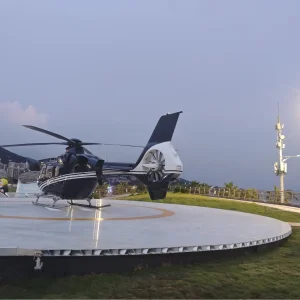
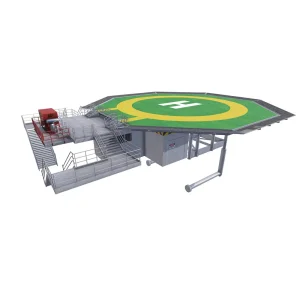
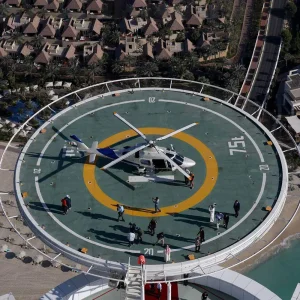
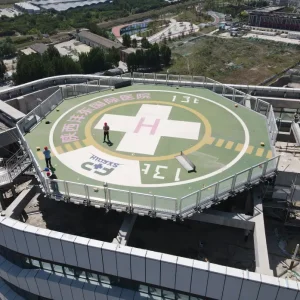
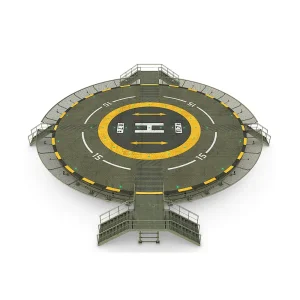
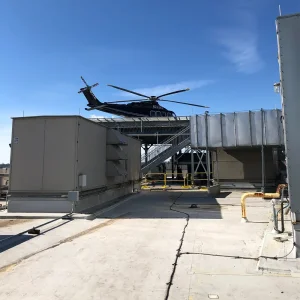
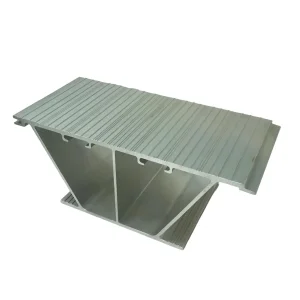
Visual structural guide mapping our standard layout dimensions and perimeter mesh angle requirements.
Find expert answers to common structural design and purchasing questions related to helideck perimeter safety systems.
Safety nets must follow CAA CAP 437 and ICAO Annex 14 Volume II guidelines. They must extend at least 1.5m from the helideck edge and feature an upward slope of 10 degrees. The mesh must not stand above the height of the landing deck edge to prevent interference with rotor systems.
Fenglu aluminum profiles provide high mechanical properties and precise dimensional tolerances. Our partnership grants us access to major extrusion capacity (up to 20,000T), enabling the manufacturing of large structural profiles up to 1.2 meters wide without assembly welds, reducing risk points.
A dynamic test utilizes a standard 122 kg (268 lbs) load body dropped from 1 meter onto the safety net. The net must catch this mass without structural failure, tearing of mesh joints, or permanent deformation of the supporting frame.
Manual systems require crew members to manually fold or adjust the net framing, typically used on vessels with fixed configurations. Electric systems utilize integrated actuators that allow automated remote deployment, ideal for vessels requiring dynamic deck clearance.
Foshan, Guangdong is a global hub for industrial aluminum logistics. Direct access to raw materials and our complete in-house extrusion, CNC machining, and anodization facilities reduce external transportation delays and supply chain markups, lowering bulk procurement costs.
Yes, our capabilities cover 1xxx, 2xxx, 3xxx, 5xxx, 6xxx, and 7xxx series alloys. We can customize the metallurgical formulation to meet design criteria for tensile strength, elongation, and yield strength depending on project specifications.
We use isolators at all contact points between dissimilar metals, such as stainless steel fasteners and aluminum profiles. Our aluminum profiles are hard-anodized, creating a stable oxide layer that resists marine oxidation.
Under marine maintenance schedules, our hard-anodized structural frames and stainless steel mesh assemblies have a design lifecycle of 20 to 30 years, outlasting standard galvanized or polymer safety netting.
 LvXing