Explore our high-precision structural products designed for heavy-duty load compliance and extreme environmental endurance.
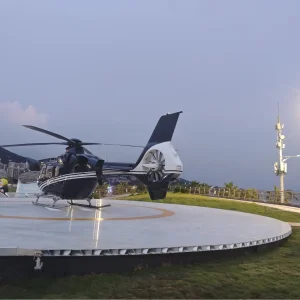
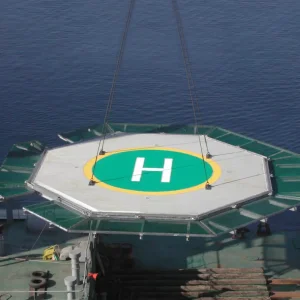
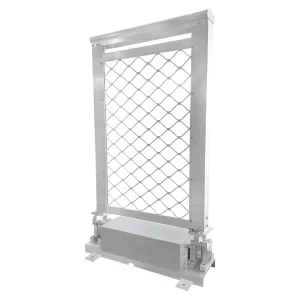
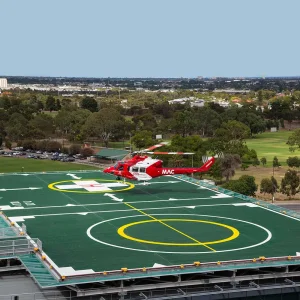
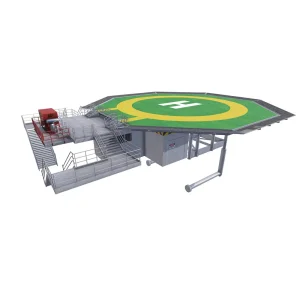
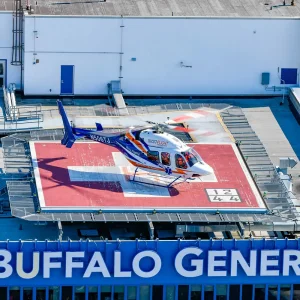
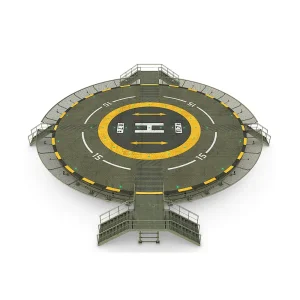
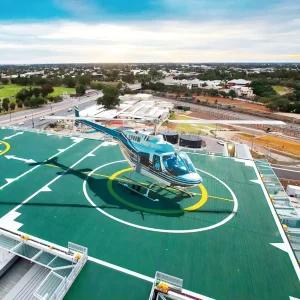
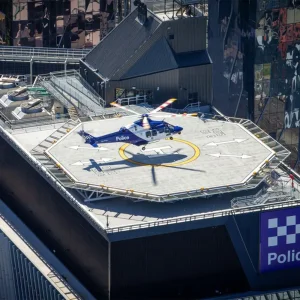
Helideck and rooftop helipad perimeter safety systems are critical life-saving components designed to catch personnel and equipment in the event of an accidental fall. As an engineering-driven manufacturer, Lvxing ensures all structural configurations meet international regulatory frameworks, including CAP 437 (Standards for Offshore Helicopter Landing Areas), ICAO Annex 14 Volume II (Heliports), and FAA Advisory Circulars.
Under CAP 437 regulations, helideck perimeter safety nets must extend outward by at least 1.5 meters from the deck edge. They must exhibit an upward slope of approximately 10 degrees to contain dynamic impact forces. The structural assemblies are designed to absorb dynamic impact kinetic energy (e.g., dropping a 100 kg mass from a height of 1 meter) without catastrophic plastic deformation or weld failure.
Established in 2015 and located in Foshan City, Guangdong, LvXing Intelligent Equipment Co., Ltd. boasts a skilled R&D team with extensive experience. We leverage exceptional technical expertise to effectively transform customers' ideas into reality, consistently meeting their precise requirements.
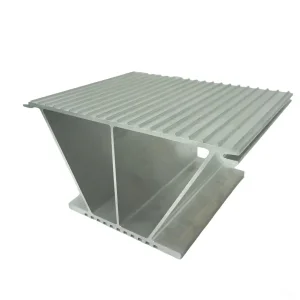
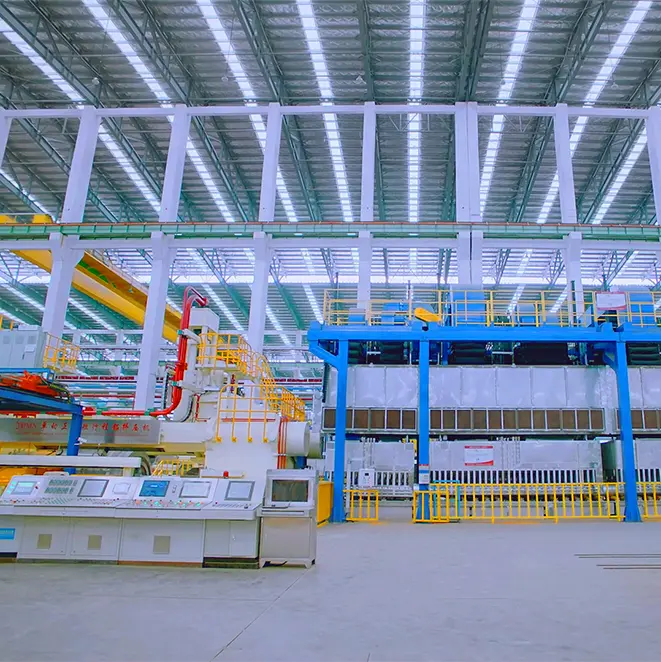
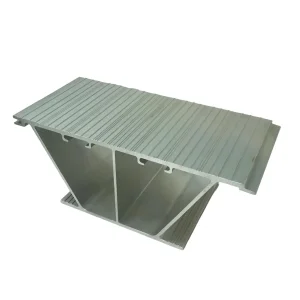
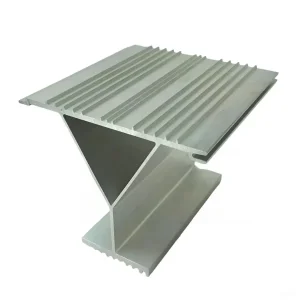
We utilize premium Fenglu aluminum, offering a diverse range of profiles for flexible applications. Our extrusion lines, ranging from 800T to 20,000T, accommodate alloys 1xxx, 2xxx, 3xxx, 5xxx, 6xxx, and 7xxx, allowing us to produce shaped products with section dimensions up to 1.2 meters in width and 28 meters in length. These products are recognized for their precision and meticulous processing, finding broad application in aerospace, military, medical, and industrial sectors.
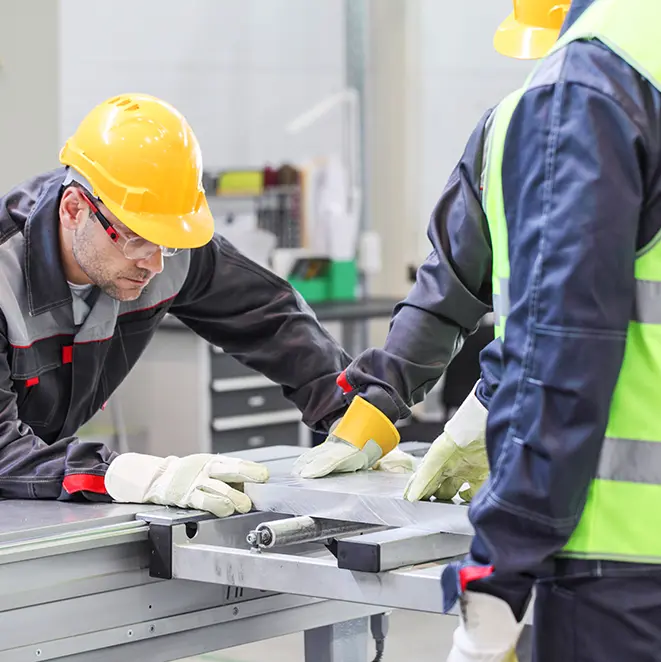
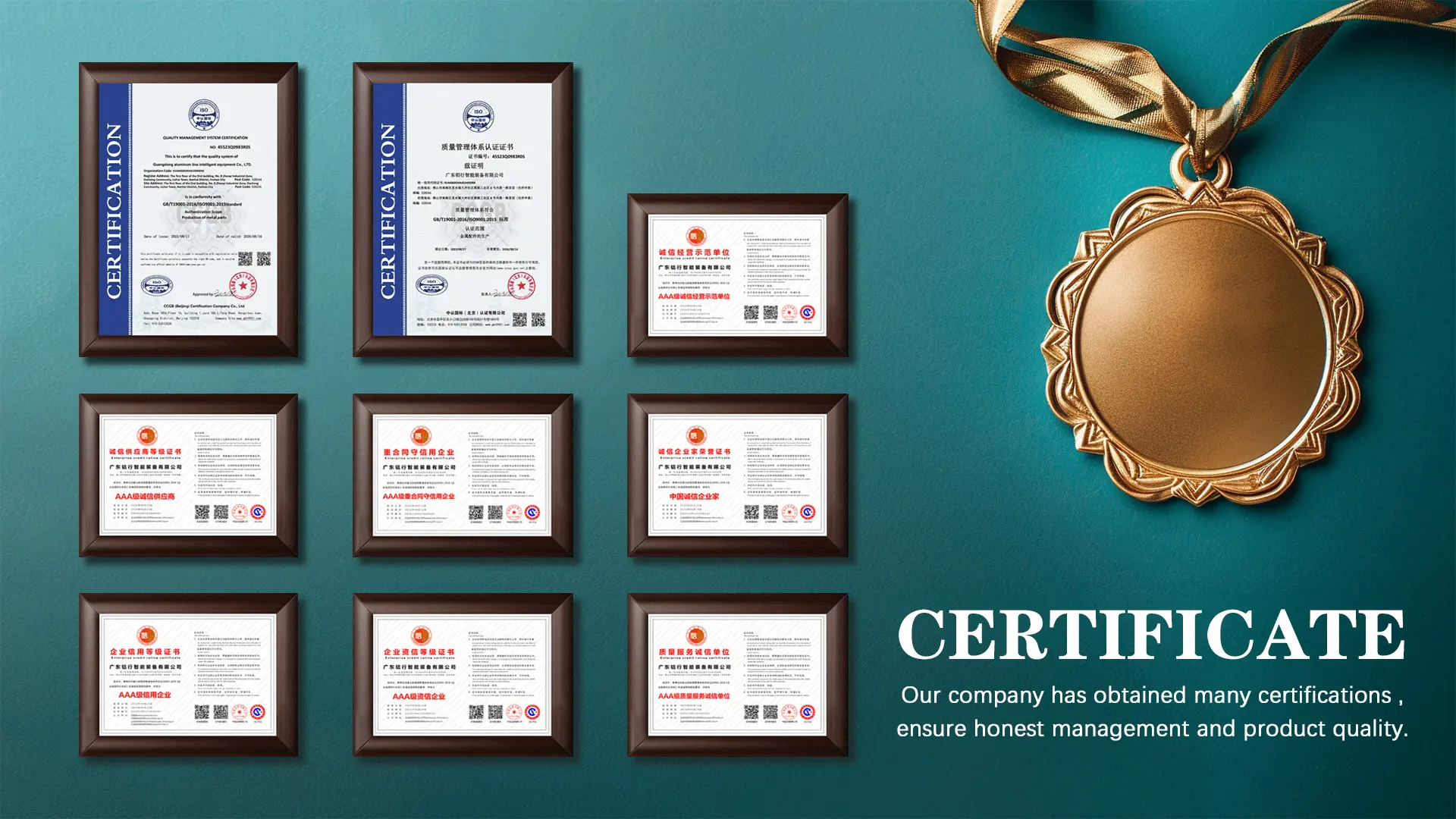
Our commitment to excellence is evident throughout the manufacturing process, rigorous quality control, thorough packaging, and efficient shipping procedures. This dedication has earned us recognition as a national excellent and honest enterprise, along with quality system certification in accordance with GB/T19001-2016/ISO9001:2015 standards.
We aspire to be your trusted business partner and warmly invite you to visit our factory.
GB/T19001-2016/ISO9001:2015 Certified Production
Fenglu Aluminum Material Sourcing
800T to 20,000T Heavy Extrusion Capabilities
Industrial structural qualifications and elite manufacturing scale based in Foshan, China.



Procuring helipad perimeter security nets requires close alignment with regional construction codes and marine offshore standards. Lvxing bridges the gap between global sourcing efficiency and local building regulations by providing comprehensive localized documentation and structural calculation packages.
Whether your project is located in the North Sea, the Gulf of Mexico, or urban centers in Southeast Asia, our engineering division delivers localized support services. We assist architectural firms and general contractors with wind tunnel simulation reports, Finite Element Method (FEM) stress analysis, and localized environmental adaptation configurations.
Key Compliance Protocols:
We provide stamped engineering calculations and dynamic FEM analysis models to satisfy local structural inspectors and maritime certifiers (DNV, ABS, ClassNK).
Our safety nets and brackets utilize customized elastomer gaskets to prevent galvanic corrosion when mounting aluminum structures to steel helidecks.
How Lvxing leverages Foshan’s world-class metallurgy cluster to reduce Total Cost of Ownership (TCO).
Operating extrusion presses from 800 tons up to 20,000 tons allows Lvxing to manufacture large-scale, single-piece perimeter frames. This eliminates assembly joints and welds, minimizing risk of stress-crack corrosion.
By partnering directly with Fenglu Aluminum, the leading supplier of high-grade raw aluminum, we ensure strict trace element control (limiting iron and copper content) to produce corrosion-resistant marine alloys.
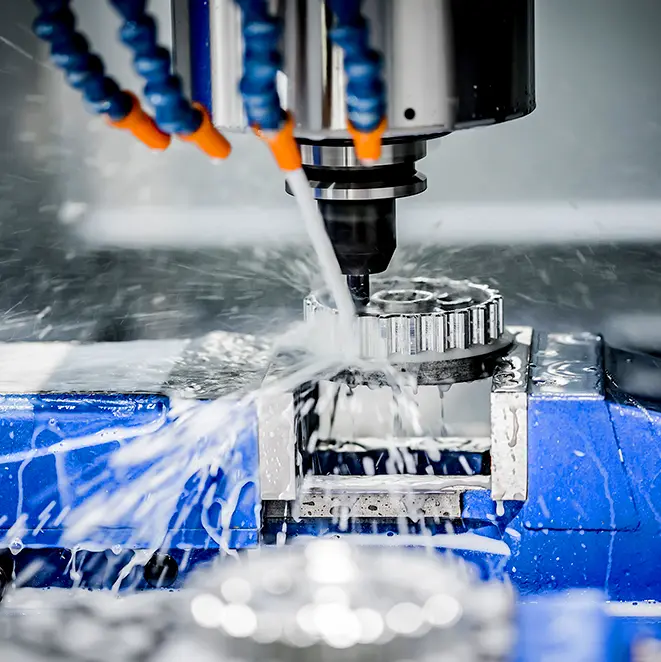
From die design and extrusion to CNC milling, surface anodizing, mesh weaving, and loading testing, every phase occurs in-house. This centralized workflow minimizes transit damage, reduces lead times, and lowers direct costs.
Essential guidance for procurement officers and structural engineers when evaluating helipad safety net quotes.
International EPC contractors are shifting away from traditional stainless steel nets toward marine-grade structured aluminum safety nets. While stainless steel provides excellent tensile strength, it adds significant deadweight to offshore cantilevered structures and requires periodic, intensive tension testing.
Key parameters to request in any RFQ (Request for Quote):
At Lvxing, we supply detailed technical drawings, 3D CAD files, and material trace reports with every quote, enabling procurement teams to confirm exact compliance before logistics planning.
Tailored security netting systems designed for specific physical and environmental conditions.
Engineered to withstand extreme salt spray, high winds, and constant structural vibrations. Incorporates heavy-duty marine-grade alloys and chemical-resistant mounting isolators to prevent pitting and corrosion.
Optimized for wind shear dynamics at high altitudes. Features lightweight structural frames that minimize cantilever loads on the primary columns, along with noise-damping connection dampening.
Designed for continuous reliability. High-visibility perimeter safety borders with options for integrated LED lighting channels, ensuring safe landing guides during nighttime rescue missions.
Foldable and retractable safety net designs tailored for navy decks and large commercial ships. Designed to handle seawater spray, hull rolling, pitching, and dynamic structural loads.
Detailed engineering answers to the most common technical questions from global procurement teams.
Explore our structural profiles, safety netting, and specialized components for high-altitude and marine installations.
 LvXing