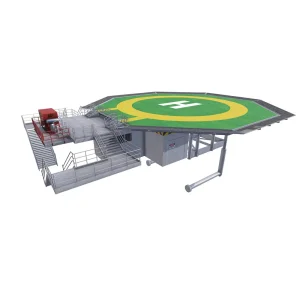
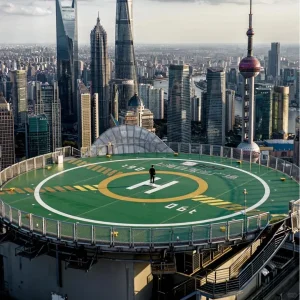
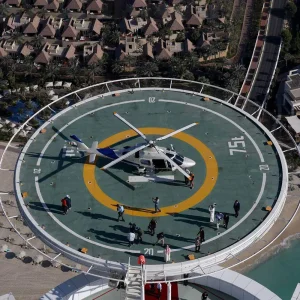
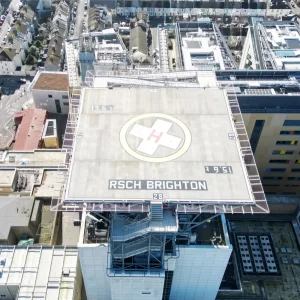
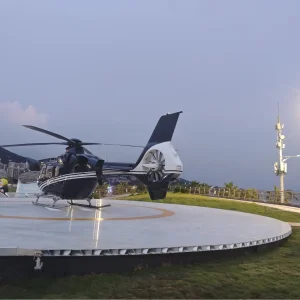
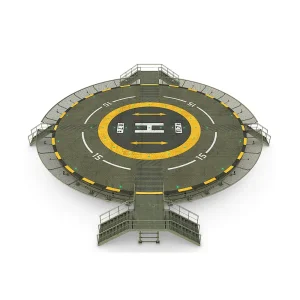
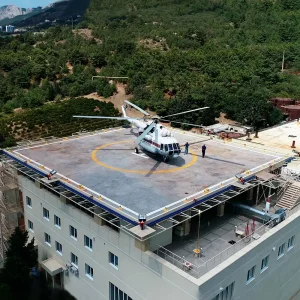
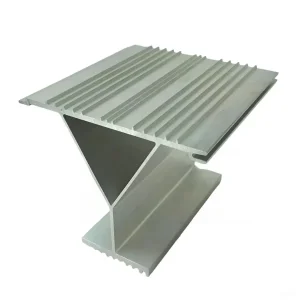
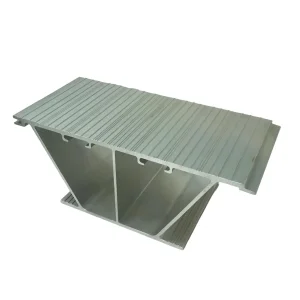
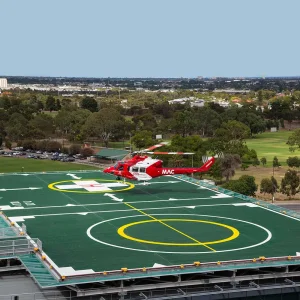
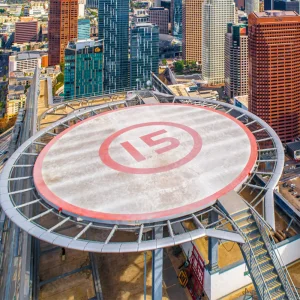
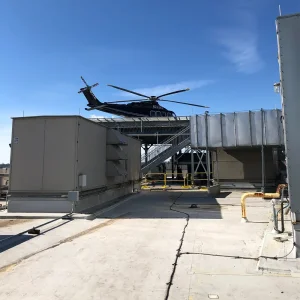
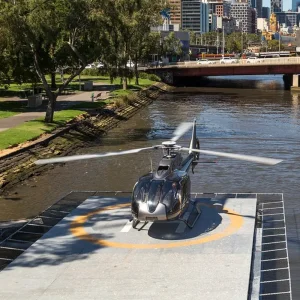
In modern high-density urban areas, skyscrapers serve as commercial centers, medical hubs, and luxury residences. Rapid intervention during emergency events—such as fires, medical crises, and natural disasters—requires robust aerial rescue routes. Helipads built atop tall buildings are vital infrastructure for these rescue efforts. The critical components of these landing decks are the perimeter safety nets and aluminum deck profiles designed to prevent personnel, equipment, and helicopters from falling in high-altitude environments.
As a leading China-based designer and manufacturer, LvXing Intelligent Equipment Co., Ltd. (operating from Foshan City since 2015) specializes in aerospace-grade aluminum helidecks and safety mesh designs. Our integration of technical R&D with Fenglu aluminum profiles makes us a preferred global supplier for high-altitude structural engineering.
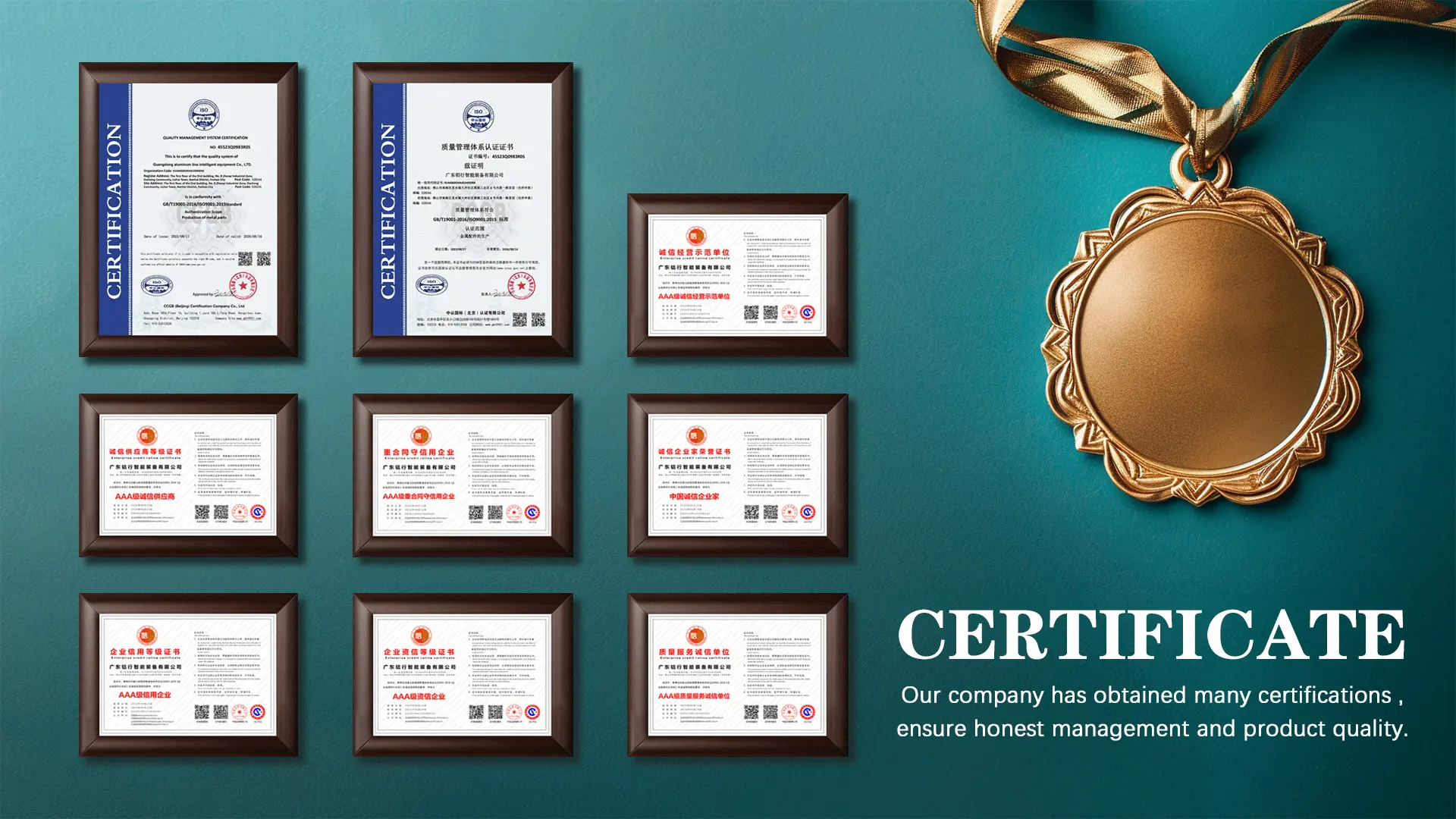
Leveraging world-class raw materials and structural engineering to deliver performance that satisfies strict aviation standards (ICAO Annex 14 & CAP 437).
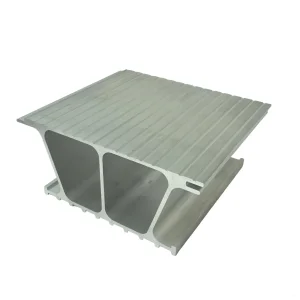
The performance of a helicopter landing deck and its surrounding safety net depends heavily on its material foundation. LvXing employs premium Fenglu aluminum to manufacture our profiles and structural framing. Equipped with extrusion lines ranging from 800T to 20,000T, we process alloys from the 1xxx, 2xxx, 3xxx, 5xxx, 6xxx, and 7xxx series. This material range allows us to produce structural profiles with section widths up to 1.2 meters and lengths up to 28 meters.
Using 6000-series (such as 6061-T6 and 6082-T6) and 7000-series aerospace alloys ensures our structures provide high tensile strength, excellent corrosion resistance, and structural flexibility. These characteristics are critical for absorbing the forces applied to skyscraper roofs during landings and high-winds events.
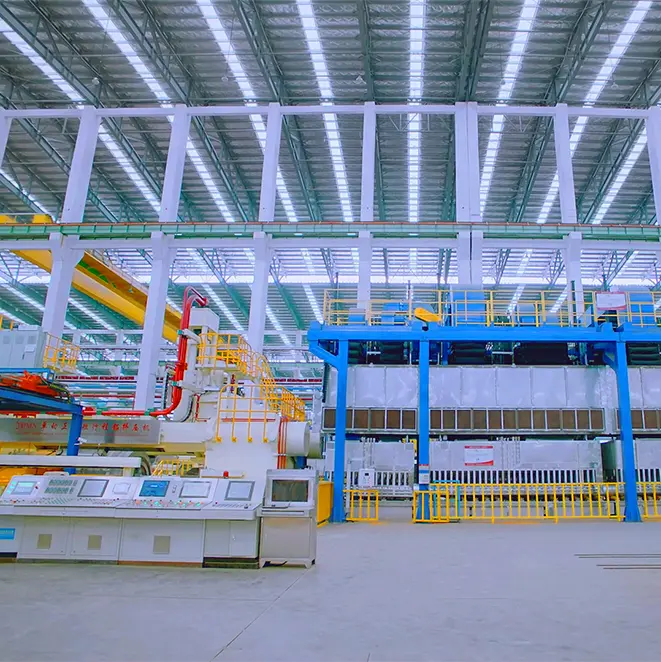

LvXing has obtained the "Special Aluminium Materials for Aerospace" Certificate, confirming our raw materials meet high quality standards for military and aerospace projects.
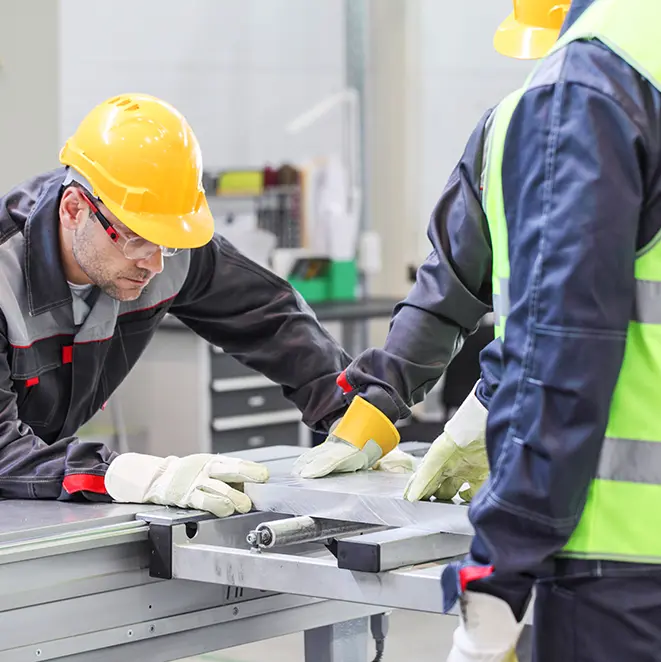

Our heavy industrial machinery extrudes profiles up to 1.2m in width and 28m in length. This reduces the number of structural welds needed, decreasing points of failure and improving structural integrity.
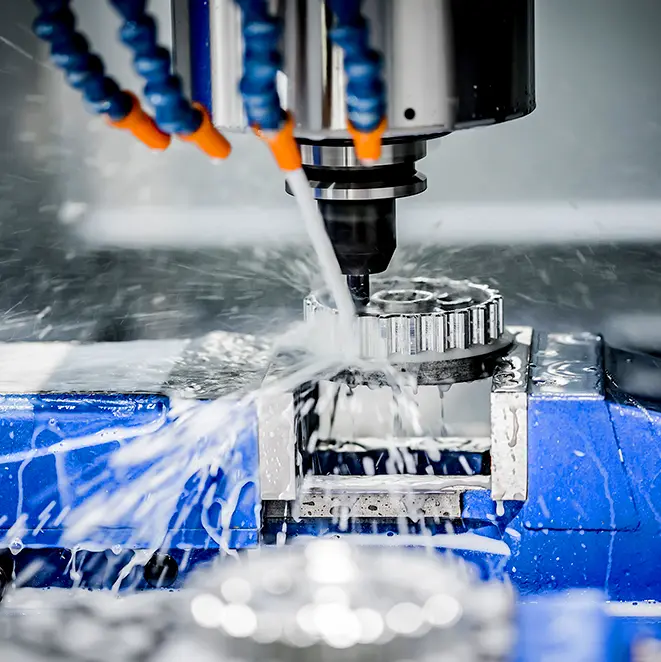

Our team of technical engineers has over 15 years of industry experience, helping us identify structural challenges early and customize helipads to specific local civil aviation regulations.
Helipads on supertall buildings are subject to boundary-layer wind effects, including localized turbulence, updrafts, and vortex shedding. These wind patterns place cyclical dynamic loads on the safety nets and support structures surrounding the pad.
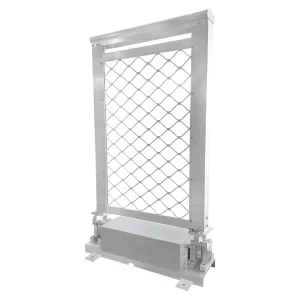
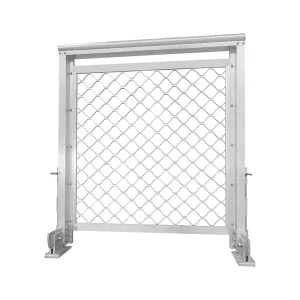
LvXing’s perimeter safety nets use a flexible, high-tensile mesh structure (available in stainless steel 316 or high-strength aluminum wire mesh) mounted to specialized aluminum frames. This design creates a low-drag surface, minimizing wind load on the building's edge while maintaining structural support for personnel safety.
Regulatory frameworks such as CAP 437 and ICAO Annex 14 dictate that a perimeter safety net must prevent a person from falling while protecting them from serious injury. To meet these standards, our helideck perimeter safety systems undergo rigorous drop-testing protocols:
Rooftop helipads must adapt to different situations. In commercial skyscrapers, helideck perimeter safety nets can conflict with municipal zoning height restrictions or block crane paths when not in use. LvXing provides both manual and automated electric options to solve these challenges:
Global architectural engineering firms (EPC contractors) require suppliers to meet complex compliance, material trace, and logistics criteria when sourcing rooftop helipad components. LvXing’s manufacturing processes are optimized to support these international procurement workflows:
Our helipad systems align with international aviation guidelines. Every shipment of profiles, safety mesh, and support components includes raw material certificates, tensile strength test reports, and compliance documentation under GB/T19001-2016/ISO9001:2015 guidelines.
We pre-assemble structural components in our Foshan facility to minimize on-site labor and ensure precision fit. Large aluminum profiles are marked and packaged systematically, ensuring simple installation on-site, even under challenging high-altitude construction constraints.
Skyscrapers in coastal cities and heavy industrial zones face high salt-fog corrosion and acid rain. Our aluminum profiles undergo anodizing, electrophoretic painting, or powder coating treatments. This provides excellent resistance against corrosion, UV exposure, and wear, extending the system's service life beyond 25 years.
The helideck manufacturing industry is evolving alongside advances in urban air mobility (UAM) and eVTOL (electric vertical takeoff and landing) aircraft. We continue to invest in new manufacturing technologies and product designs to meet these changing industry needs:
Aluminum is highly recyclable, and our manufacturing process focuses on minimizing waste. Our partnership with Fenglu Aluminum allows us to source low-carbon aluminum billets, helping developers meet green building certifications such as LEED and BREEAM.
We are developing perimeter safety nets with integrated LED status lighting, dynamic heating elements for automated de-icing in cold climates, and weight-sensor systems that send real-time safety alerts directly to the building's control center.
Manual safety nets are locked in place and must be folded down by hand during maintenance or building exterior cleaning. Electric safety nets are automated, using motorized actuators integrated with control systems to fold or unfold the safety net. This is useful for skyscraper roofs where access is limited or wind conditions change rapidly.
Aluminum alloy profiles (such as 6005A-T6 or 6082-T6) are roughly 60% lighter than structural steel, reducing dead load on the building. Additionally, aluminum naturally forms a protective oxide layer, providing high corrosion resistance without requiring hot-dip galvanizing or frequent repainting, which reduces long-term maintenance costs.
Our helideck perimeter safety nets and aluminum deck profiles are designed to meet ICAO Annex 14 Volume II and UK CAA CAP 437 standards. Our production plant operates under ISO 9001:2015 certification, and our raw materials carry aerospace-grade material certificates.
Our perimeter safety nets use open-grid aluminum or stainless steel wire mesh. This design allows air to pass through with minimal resistance, reducing drag and wind load on the building structure while maintaining its structural strength to catch falling loads.
Yes, our R&D team can customize layouts to match existing building footprints. We analyze structural constraints and create custom framing and mounting brackets to install safety nets on existing concrete or steel roof structures.
Lead times vary depending on the project scale and customization requirements, generally ranging from 30 to 60 days. Our factory in Foshan City, Guangdong is located near major international shipping ports in Guangzhou and Shenzhen, allowing for efficient container loading and transport to global destinations.
 LvXing