Explore our top-tier manufacturing line of safety systems, customized landing profiles, and marine-grade mesh networks designed for extreme environments.
A comprehensive evaluation of structural engineering, regulatory safety frameworks, and materials science for elevated perimeter netting.
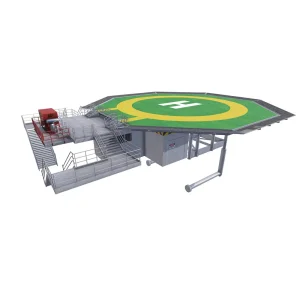
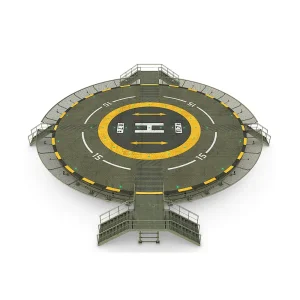
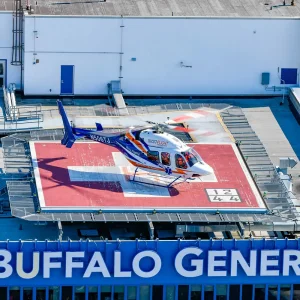
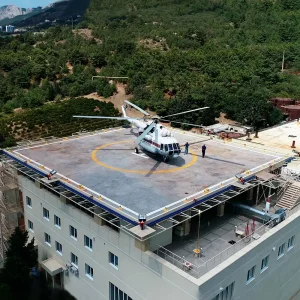
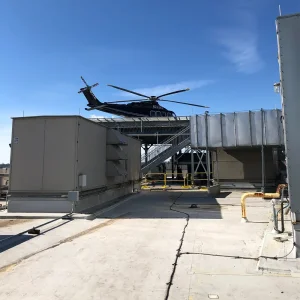
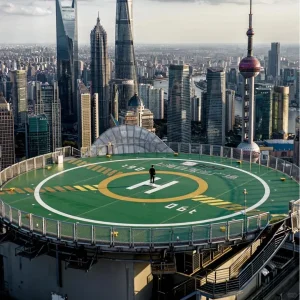
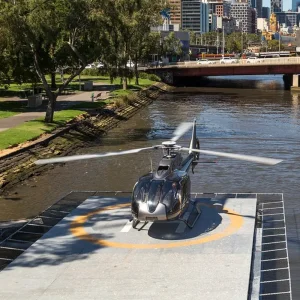
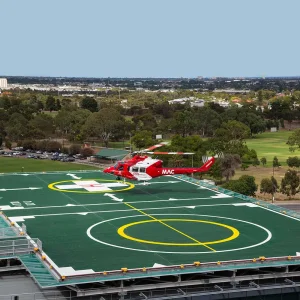
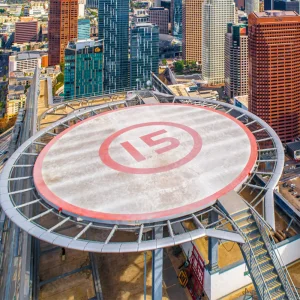
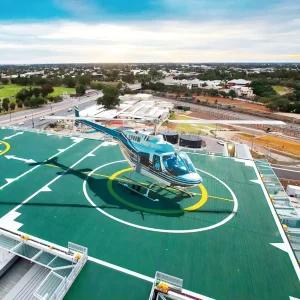
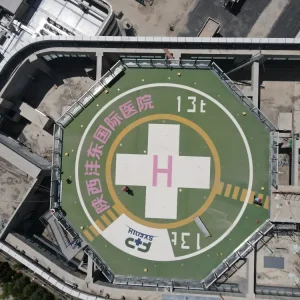
Elevated helipads—commonly built on skyscraper rooftops, offshore oil rigs, exploration vessels, and medical trauma centers—require perimeter safety net systems that are fundamentally different from ground-level containment barriers. Because elevated platforms pose extreme risks to ground personnel, flight crews, and structural integrity, safety regulations dictate that every elevated helicopter landing area must feature an outward-sloping, impact-absorbing safety net system.
From a global procurement standpoint, engineering directors look for systems that combine structural lightness with maximum kinetic energy absorption. Standard industrial netting fails to satisfy the stringent requirements set by international civil aviation bodies. High-grade marine and aerospace aluminum profiles (specifically 6000-series structural alloys like 6061-T6 and 6082-T6) have emerged as the industry gold standard due to their outstanding strength-to-weight ratio, structural fatigue life, and natural resistance to saline environments.
SEO Insight & Information Gain: While traditional steel safety nets suffer from corrosion fatigue and require heavy structural sub-frames, aluminum safety nets combined with high-tensile mesh systems provide a lightweight, corrosion-free service life exceeding 25 years. This significantly reduces the dead load calculations for high-rise structural engineers.
Designing and manufacturing elevated helipad safety nets requires strict adherence to international aviation safety guidelines. Compliance ensures that during emergency run-offs or personnel falls, the net provides sufficient deceleration without causing rebound injuries or structural failure of the surrounding deck.
LVXING, SPECIALIZES IN ALUMINUM SOLUTIONS.
Established in 2015 and located in Foshan City, Guangdong, LvXing Intelligent Equipment Co., Ltd. boasts a skilled R&D team with extensive experience. We leverage exceptional technical expertise to effectively transform customers' ideas into reality, consistently meeting their precise requirements.
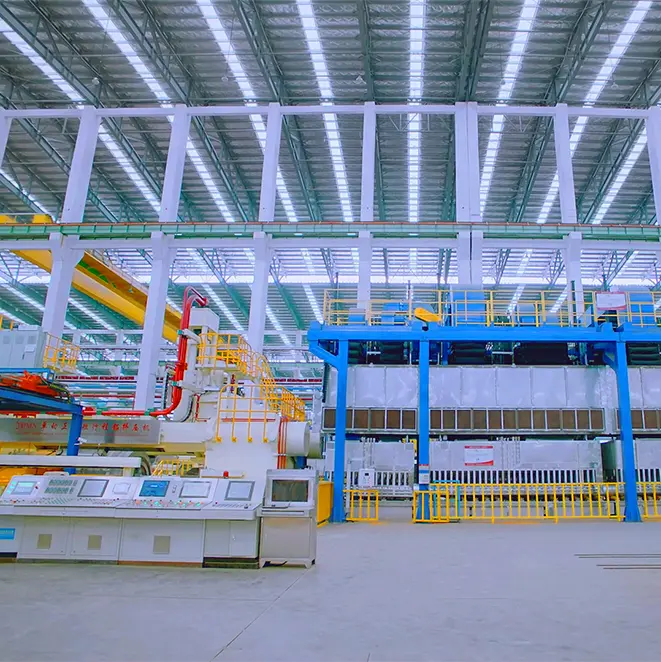
We utilize premium Fenglu aluminum, offering a diverse range of profiles for flexible applications. Our extrusion lines, ranging from 800T to 20,000T, accommodate alloys 1xxx, 2xxx, 3xxx, 5xxx, 6xxx, and 7xxx, allowing us to produce shaped products with section dimensions up to 1.2 meters in width and 28 meters in length. These products are recognized for their precision and meticulous processing, finding broad application in aerospace, military, medical, and industrial sectors.
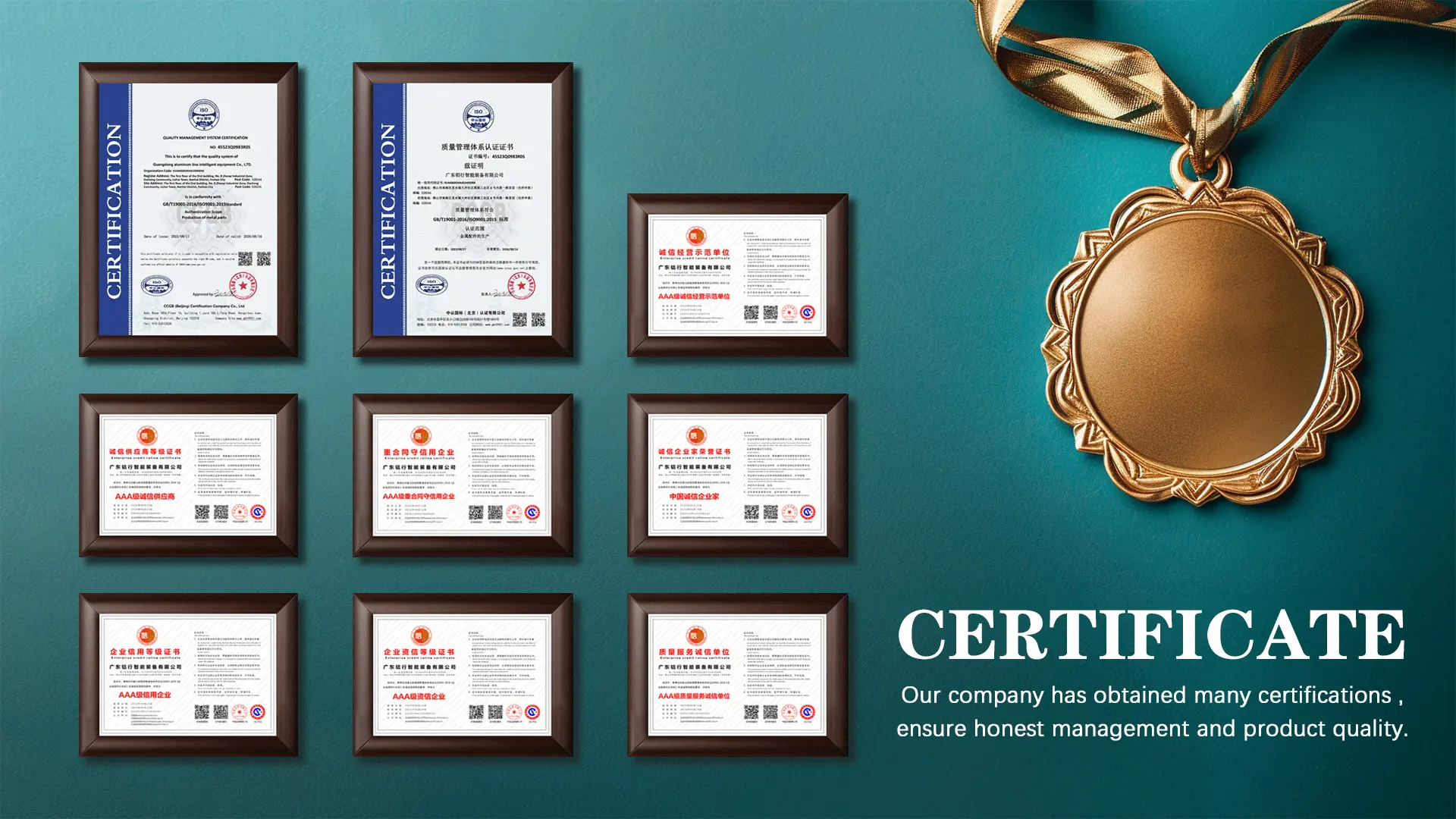
Our commitment to excellence is evident throughout the manufacturing process, rigorous quality control, thorough packaging, and efficient shipping procedures. This dedication has earned us recognition as a national excellent and honest enterprise, along with quality system certification in accordance with GB/T19001-2016/ISO9001:2015 standards.
We aspire to be your trusted business partner and warmly invite you to visit our factory.
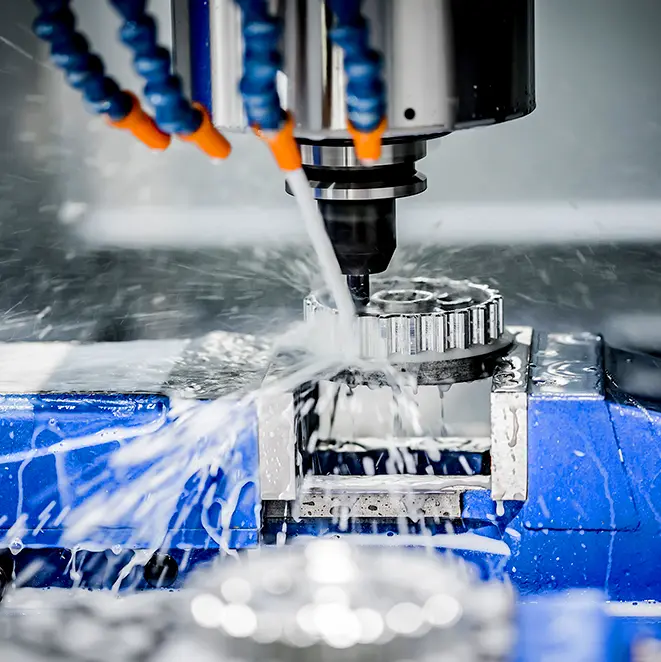
Discover how our specialized manufacturing capabilities, material selections, and technical expertise combine to deliver world-class safety solutions.

We have successfully obtained the highly sought-after "Special Aluminium Materials for Aerospace" Certificate, confirming our ability to meet the strict quality thresholds required by aviation authorities.

We utilize premium Fenglu aluminum profiles. With extrusion lines ranging from 800T to 20,000T, we produce alloys in the 1xxx, 2xxx, 3xxx, 5xxx, 6xxx, and 7xxx series, up to 1.2m in width and 28m in length.

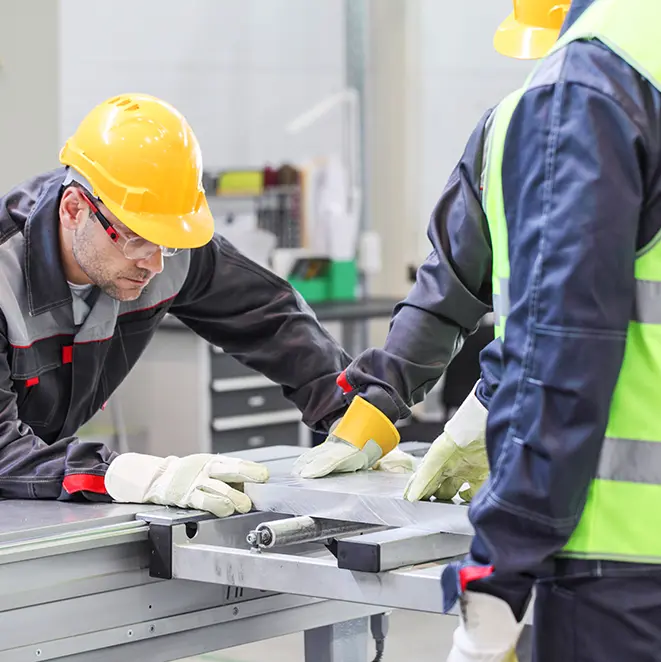
Our R&D team features engineers with over 15 years of practical industry experience. This deep engineering expertise allows us to identify potential challenges early and refine client-specific designs.
Analyzing the metallurgical and mechanical performance parameters that ensure absolute safety during critical operations.
We specify 6082-T6 and 6061-T6 magnesium-silicon aluminum alloys for frames to maximize yield strength and prevent stress-corrosion cracking (SCC) under dynamic wind shear.
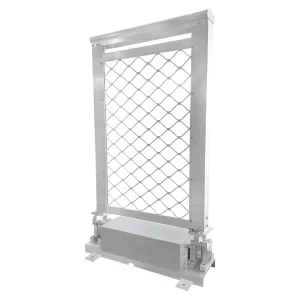
Our boundary safety net systems utilize flexible, high-tensile aluminum links and stainless steel wire mesh designed to yield slightly under load, mitigating critical peak deceleration forces.
To survive in harsh marine and offshore petrochemical environments, all frames undergo rigorous anodization or dual-layer marine coatings to meet ISO 12944 corrosion standards.
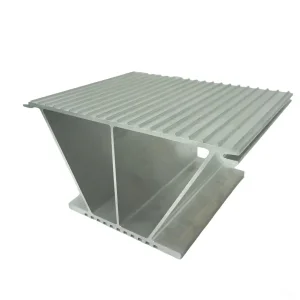
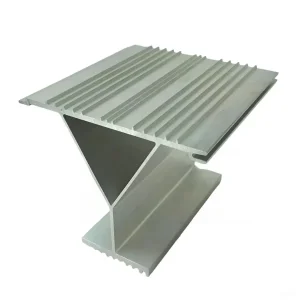
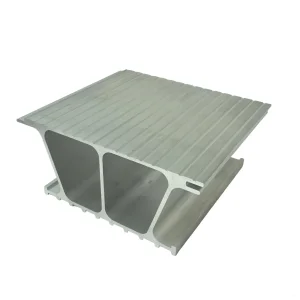
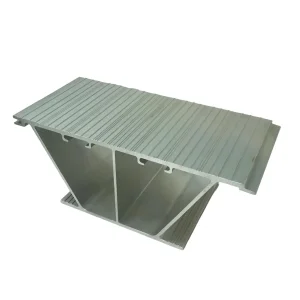
A premium perimeter safety net is not just a catch net; it operates as a sophisticated structural extension of the helideck itself. The support arms, constructed from extruded aluminum profiles, are engineered to mount securely to the landing platform's perimeter edge beam. These support arms are angled downward slightly below the landing surface to guarantee that the helicopter rotors maintain safe clearance.
Our design uses modular panels. This modularity allows for rapid installation and simplifies maintenance; if a section is damaged during operations, it can be unbolted and replaced quickly without dismantling the entire perimeter safety loop. By employing Finite Element Analysis (FEA), our engineering team models wind loading, dead loads, and crash impact forces, ensuring that the safety net remains rigid during high winds but provides elastic deflection upon human or object impact.
Discover how next-generation materials and structural designs are transforming the safety criteria of modern heliports.
As structural engineering advances, architectural planners face strict constraints regarding structural load calculations on skyscrapers and floating production storage and offloading (FPSO) units. Utilizing heavy steel frames for perimeter nets increases the bending moments on the cantilevered supports of the helideck. Our continuous R&D focus is on reducing profile weight while optimizing safety performance:
Procuring custom-designed elevated helipad safety nets from China involves several technical and logistical steps. To provide accurate quotes, our engineering team requires details on landing deck dimensions, local environmental factors (wind velocity, saline air levels), and installation specifications. As an industry-leading manufacturer, Lvxing provides comprehensive technical drawings, structural calculation sheets, and material test reports (MTRs) to streamline the client approval process.
Answers to common structural design and procurement questions regarding elevated helipad safety nets.
Aluminum alloys (like 6082-T6 and 6061-T6) offer a superior strength-to-weight ratio compared to stainless steel. This significantly reduces the structural dead load on elevated cantilevers. Additionally, these marine-grade aluminum alloys naturally generate a protective oxide layer that resists saline corrosion in offshore installations without requiring frequent paint maintenance.
Yes, our engineering department designs and manufactures perimeter safety systems in strict compliance with CAP 437, FAA, and ICAO Annex 14 requirements. We can supply documentation detailing load calculations, FEA analysis, and dynamic drop test specifications (such as withstanding a 122.5 kg impact) to verify compliance for your project.
Absolutely. Leveraging our manufacturing facility equipped with extrusion lines ranging from 800T up to 20,000T, we can extrude custom shapes up to 1.2 meters in width and 28 meters in length. We work directly from architectural blueprints or design custom solutions in-house to meet specific layout constraints.
We supply comprehensive documentation packages, including GB/T19001-2016/ISO9001:2015 Quality System Certificates, Material Test Reports (MTRs) detailing chemical composition and mechanical properties, aerospace-grade material certificates where applicable, and packing lists with seaworthy wooden crate packaging.
Complete structural landing pads, rooftop helipads, and custom perimeter containment nets engineered for civilian and industrial applications.
 LvXing