Custom China Helicopter Landing Zone Nets Supplier & Suppliers

Premium Grade Aluminum Helipad Safety Mesh Systems engineered for extreme environments, offshore compliance, and structural longevity.

Helicopter Landing Zone Nets: Engineering safety at the Edge

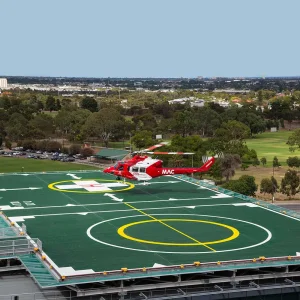
Helicopter Landing Zones (HLZs) on marine offshore vessels, hospital rooftops, urban skyscrapers, and military installations represent some of the most challenging engineering interfaces in modern aviation. Safety at these critical sites demands absolute protection, not only for the aircraft during operations but also for the ground crew working the deck. Among all passive safety systems installed on elevated platforms, Helicopter Landing Zone (HLZ) perimeter safety nets serve as the ultimate barrier preventing falls and mitigating structural risks.

As a leading developer in advanced aluminum solutions, LvXing Intelligent Equipment Co., Ltd. designs and manufactures custom high-strength aluminum safety mesh solutions. Over the past decade, the global aviation sector has shifted away from traditional, heavy stainless steel chains and high-maintenance synthetic rope nets. Today, the industry standard relies heavily on marine-grade, high-tensile aluminum alloy frameworks that offer unparalleled structural integrity, corrosion resistance, and lightweight advantages.

The Mechanics of Fall Arrest & Impact Load Dissipation

An effective landing zone safety net is not simply a fence. It is a highly engineered energy dissipation device. When an object or person impacts the net, the structure must deflect to absorb kinetic energy without creating a trampoline effect that could bounce the hazard back onto the landing area or into the path of rotating helicopter blades. The mechanical mesh must distribute dynamic forces across a structural support frame made of engineered aluminum alloy profiles. Our design focuses on structural safety metrics that align with international standards such as FAA Advisory Circulars, CAP 437 guidelines, and ICAO regulations.

State-of-the-Art Production & Custom Metallurgical Extrusion

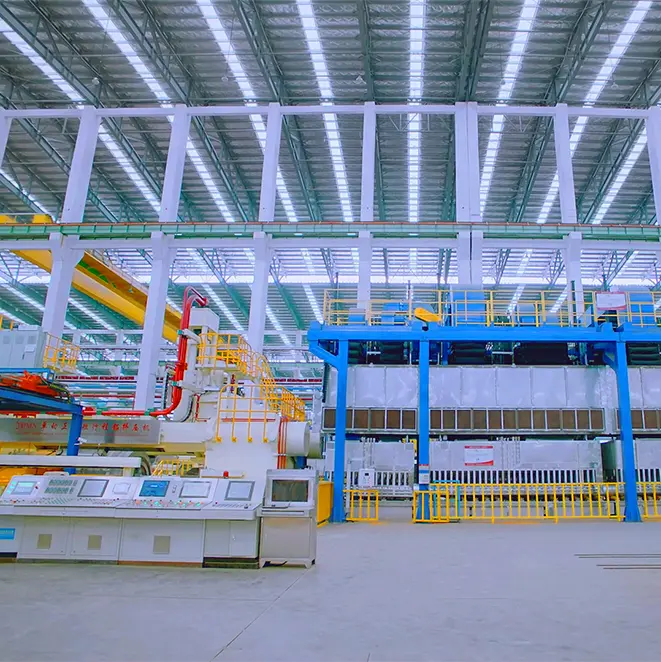
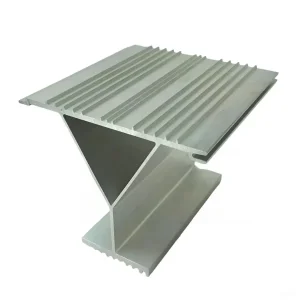
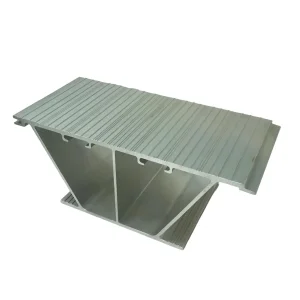
Established in 2015 and based in Foshan City, Guangdong, LvXing Intelligent Equipment Co., Ltd. operates at the forefront of technical aluminum extrusion and deep fabrication processing. We utilize premium Fenglu aluminum, offering a diverse range of profile configurations optimized for high-performance aviation applications.

Our production facilities house advanced extrusion lines ranging from 800T to 20,000T. This enables the fabrication of complex structural profiles across alloy groups including:

  • 1xxx & 3xxx Series: Custom conductivity and thermal control applications.
  • 5xxx Series: Exceptional corrosion resistance under high-salinity marine environments.
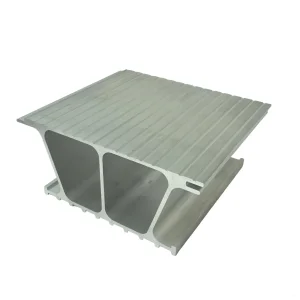
  • 6xxx Series (6061-T6, 6082-T6): The backbone of structural aviation decks and safety framing, combining high tensile strength with exceptional weldability.
  • 7xxx Series: Ultra-high-strength applications requiring aerospace-grade load-bearing capabilities.

We are capable of manufacturing shaped profiles with cross-sectional widths up to 1.2 meters and lengths up to 28 meters, allowing for seamless integration and minimizing critical structural joint failure points on helipads.

LvXing Aluminum Extrusion Factory & Capabilities

Technical Comparison: Safety Mesh Material Performance

Analyzing physical attributes, durability, maintenance costs, and system longevity for modern aviation landing platforms.

Physical Property LvXing Marine-Grade Aluminum (6061-T6/6082-T6) Stainless Steel (316L Wire Mesh) Synthetic Fiber (Polyester / Nylon)
Specific Gravity (Weight Impact) Low (approx. 2.7 g/cm³) - Minimizes dead load on structures High (approx. 8.0 g/cm³) - Increases structural stress Very Low - Susceptible to high wind-drag lifting
Corrosion Resistance (C5-M Marine Environment) Excellent - Spontaneously forms protective oxide layer Moderate - Prone to crevice corrosion and rust pitting High - Impervious to chemical rot, but suffers UV degradation
Dynamic Energy Absorption Controlled plastic/elastic deformation, minimal bounceback Stiff - High impact deceleration forces High elastic recoil - Risky trampoline effect
Service Lifespan 25+ Years with zero structural maintenance 10-15 Years - Requires routine anti-rust treatments 3-5 Years - Rapid degradation under direct UV sunlight
Fire Resistance / Melting Point Non-combustible (~660°C) - High thermal resilience Non-combustible (~1400°C) Melts easily at ~250°C - Poses risk under crash fire conditions

Global Standards Compliance: Meeting CAP 437, FAA & ICAO Requirements

Aviation safety is strictly governed by global bodies. Safety nets manufactured for marine vessels, offshore oil rigs, and land-based helipads must strictly adhere to specific performance criteria. Under UK CAA CAP 437 (Standards for Offshore Helicopter Landing Areas), perimeter safety nets must meet the following parameters:

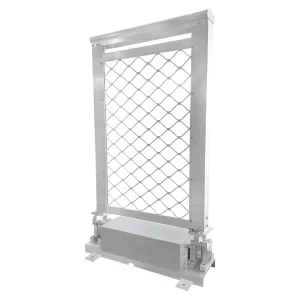
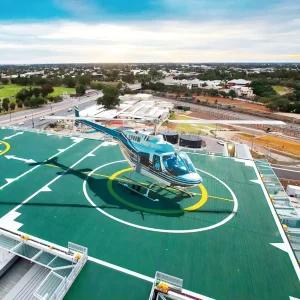
  • Outward & Upward Angle: The net must extend outwards by at least 1.5 meters from the edge of the landing area and incline upwards at an angle between 10 degrees and 15 degrees above the horizontal level of the deck. This profile ensures that personnel who fall or are blown off the deck are safely captured within the net structure.
  • Drop Test Performance: The netting system must be capable of resisting a dynamic drop impact test of at least 200 kg from a height of 1 meter. This represents the weight and kinetic energy of an offshore worker wearing heavy equipment. Our structural aluminum nets are factory-tested to surpass this safety margin.
  • Friction Coefficient & Edge Profiles: The design must not pose a trip hazard. The frame profiles extruded at the LvXing factory feature optimized, rounded profiles with secure connection brackets that distribute dynamic forces cleanly into the primary helideck substructure.

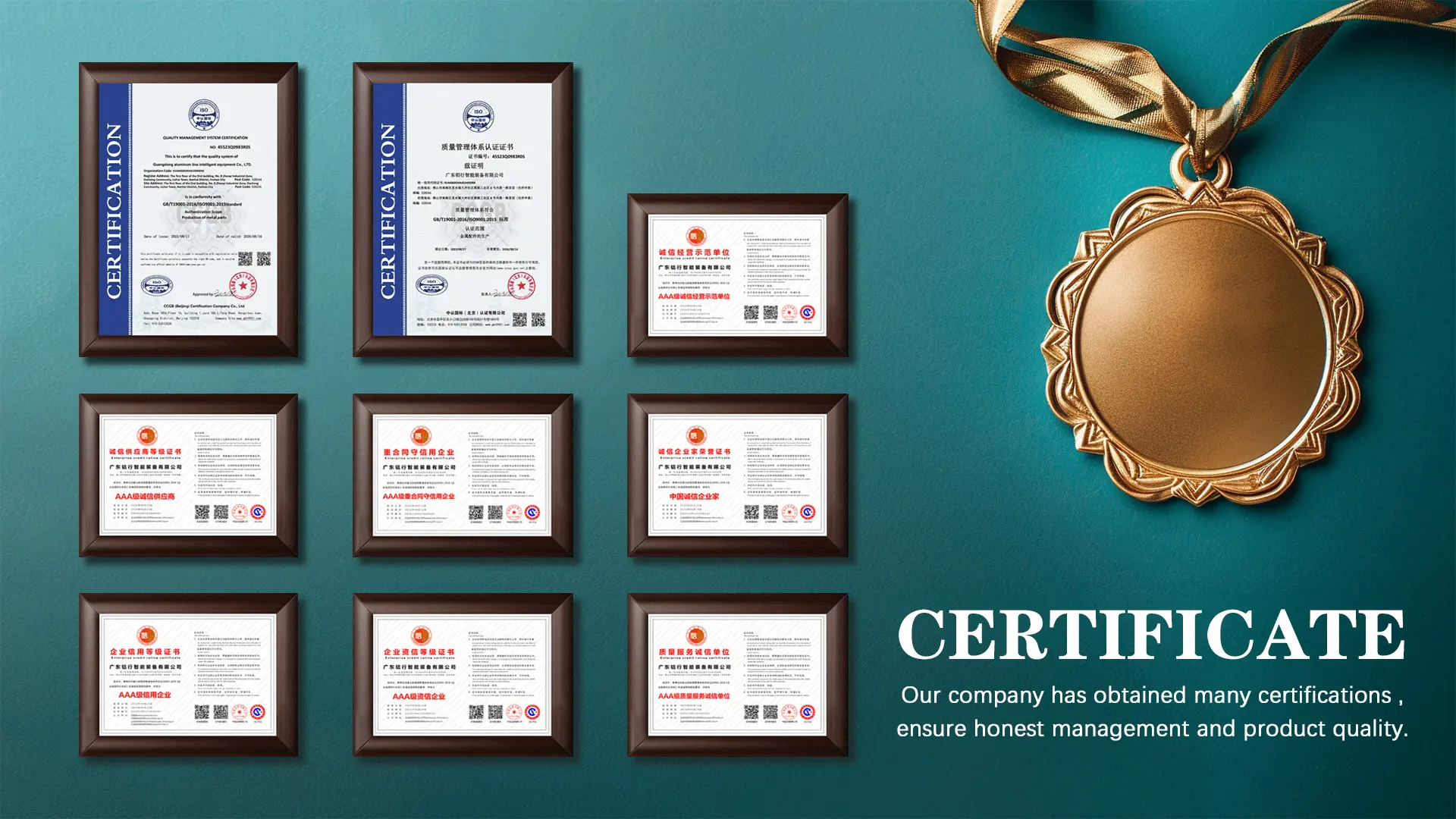
Additionally, ICAO Annex 14 (Aerodromes) Volume II dictates strict guidelines for elevated heliports. The structural alloys we source comply with these rigorous quality controls, which is why LvXing is certified to the GB/T19001-2016 / ISO9001:2015 standards, securing our reputation as a trusted business partner for defense, commercial, and civilian aerospace developers globally.

Manufacturing Scale & Performance Indices

Our operational capabilities translate to massive engineering capacities, ensuring reliability at every stage.

20,000T
Max Extrusion Capacity
28m
Max Profile Length
15+
Years Engineering Experience
ISO9001
Quality Management Certified

Macro Industry Solutions & Application Scenarios

Different environments present unique hazards. LvXing tailors our custom China Helicopter Landing Zone Nets to meet the operational pressures of specific sectors:

1. Offshore Marine Oil & Gas Platforms (FPSOs & Drillships)

Marine environments are highly corrosive due to constant exposure to salt spray, high humidity, and extreme wind forces. Traditional steel nets quickly corrode, compromising safety. LvXing's marine-grade aluminum landing zone safety mesh systems are engineered to withstand continuous C5-M high corrosion environments. The lightweight profile ensures no unnecessary weight load is added to floating vessels, helping to maintain buoyancy and stability calculations.

2. Urban High-Rise & Rooftop Helipads

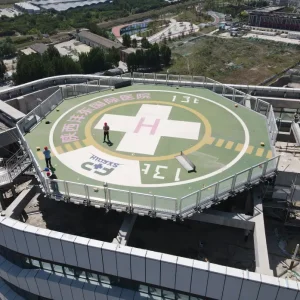
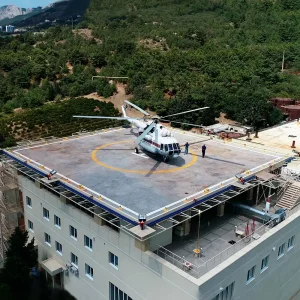
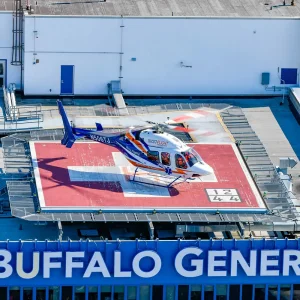
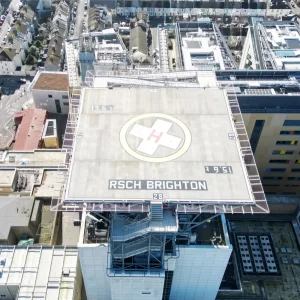
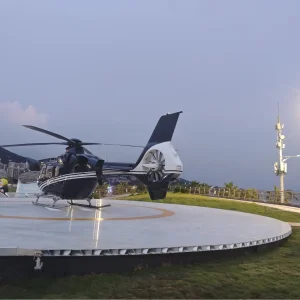
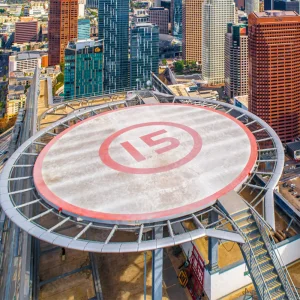
In municipal settings, hospital roofs and commercial high-rises utilize helipads for emergency medical services (EMS) and corporate transport. Rooftop structures have strict weight limitations. By specifying aluminum perimeter netting rather than heavy steel alternatives, engineers can reduce structural loads by up to 60%. Furthermore, our non-combustible profiles are critical in emergency urban fire situations.

3. Tactical & Remote Military Landing Zones

Rapid deployment forces require lightweight, durable, and easily transportable landing zone systems. Our modular aluminum net segments are easily transported, fast to assemble, and require no specialized tools. Under tactical operations, the matte-anodized finish reduces glint and glare, preventing unwanted visual signatures in the field.

Our Core Competitive Edge

Discover the physical qualifications, aerospace certifications, and processing standards that distinguish LvXing Intelligent Equipment on a global scale.

🛡️

Aerospace Material Validation

We have successfully obtained the highly coveted "Special Aluminium Materials for Aerospace" Certificate, validating our ability to supply raw materials for critical aviation and military infrastructure.

Aerospace Certificate Seal

Advanced Extrusion Scale

We provide and utilize high-quality Fenglu aluminum profiles. With extrusion lines ranging from 800T to 20,000T, we produce alloys 1xxx, 2xxx, 3xxx, 5xxx, 6xxx, and 7xxx. We manufacture fully shaped products up to 1.2m wide and 28m long.

Extrusion Machine Blueprint
👨‍🔬

15 Years Expert Technical Team

Our team of technicians brings 15 years of invaluable experience. Our deep understanding of customer requirements allows us to identify potential issues and offer practical insights, turning client concepts into tangible products.

Expert R&D Team Icon
Production Line Machinery Structural Quality Control Checking
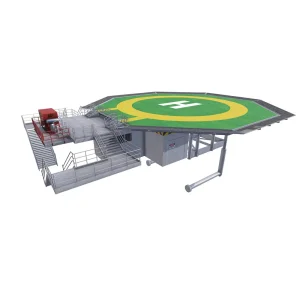
Aluminum Helipad Perimeter Systems Overview Diagram

Technology Roadmap: The Future of Landing Zone Safety

As smart cities develop and offshore drilling ventures into harsher deepwater environments, landing zone designs must evolve. At LvXing, our technology roadmap focuses on three main developments:

Integrated Lighting and Signaling Systems

Modern helidecks are integrating LED visual indicators directly into the safety net framing. Our engineering team is developing integrated channel profiles that accommodate marine-grade LED lights within the mesh margins. This design improves night-landing visibility and clearly defines deck boundaries without requiring external, high-profile lighting fixtures that could impact landing gear clearance.

Dynamic Strain Gauge Monitoring

In harsh environments, safety structures undergo continuous stress. Future iterations of our landing zone nets will feature embedded smart sensor arrays. These strain gauges monitor real-time tension levels and frame deflection, alerting helideck operators to structural damage from high winds, debris impact, or heavy structural loads before failures can occur.

Green Metallurgy & Recyclability

Our commitment to environmental sustainability is central to our material choices. Unlike traditional synthetic fiber nets that end up in landfills, aluminum is 100% recyclable. We are optimizing our manufacturing loops to incorporate low-carbon recycled aluminum, helping our global commercial clients meet their environmental, social, and governance (ESG) targets.

Technical Q&A: Architectural Helipad Netting Systems

Get answers to common engineering questions regarding the installation, testing, and longevity of aluminum landing zone nets.

Q1: How does Lvxing's aluminum netting system handle extreme wind load forces?
Our aluminum mesh systems are designed with high wind-permeability ratios. Because of the optimized aperture dimensions of the wire mesh, the net structure offers minimal aerodynamic drag, preventing aerodynamic lift forces from transferring to the primary helideck structural joints during severe storms or high-wind landings.
Q2: Can your landing zone safety nets be customized to match non-standard deck geometries?
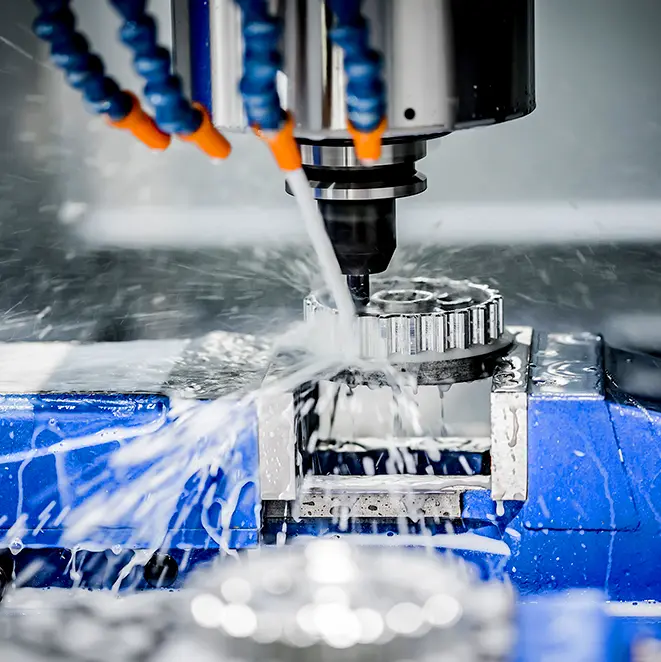
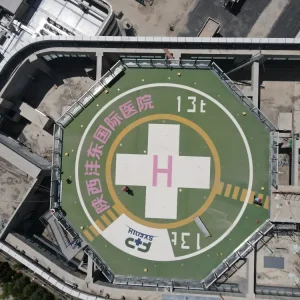
Yes. Leveraging our advanced 800T to 20,000T extrusion lines and in-house CNC processing capabilities, we design custom perimeter safety frames to match any deck geometry, including hexagonal, octagonal, circular, or irregular square shapes, without sacrificing structural load distribution.
Q3: What corrosion protection methods are applied to the aluminum alloy structures?
We use high-grade marine alloys (such as 6061-T6 and 6082-T6) which naturally form a protective oxide layer. Furthermore, our landing zone components undergo specialized surface anodization or optional thermosetting powder coating, achieving high protection against long-term salt spray and harsh marine chemical environments.
Q4: How often must aluminum helipad nets be tested under CAP 437 guidelines?
According to standard aviation guidelines, physical inspection of perimeter safety nets should occur weekly, with formal load testing performed at least once every three years. The test involves applying a dynamic or static load (such as a 200 kg drop test) to verify structural integrity. Due to the high yield strength of our chosen alloys, our nets routinely pass these tests with zero structural deformations.
Q5: What are the assembly and installation requirements for remote sites?
Our safety mesh systems feature a modular, bolt-together panel design. These lightweight sections can be installed on-site using standard industrial tools, eliminating the need for complex hot work, structural welding, or heavy crane machinery. This design greatly reduces total installation costs and minimizes downtime for operating vessels.