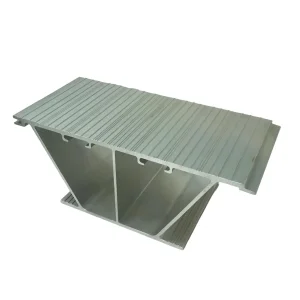
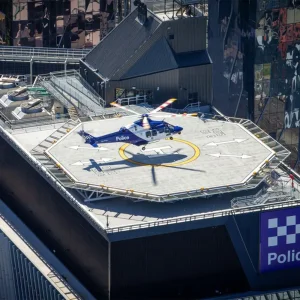
Explore our top-tier certified safety nets, structural profiles, and custom configurations manufactured to rigorous aerospace tolerances.
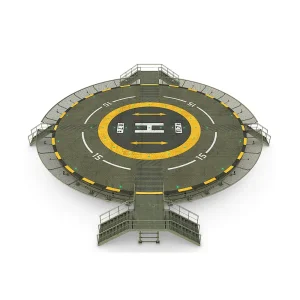
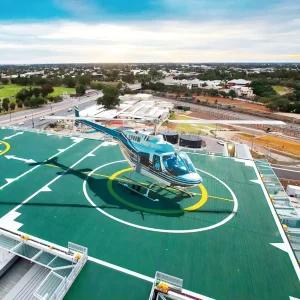
In modern maritime navigation, offshore resource exploration, and rapid urban medical deployment, helicopter landing decks (helidecks) function as high-risk, high-velocity operational zones. Helicopter landing pad net systems—comprising perimeter safety nets and surface landing friction mesh—serve as the final physical barrier protecting flight personnel, maintenance crews, and multi-million-dollar aviation assets. According to international standards like the UK Civil Aviation Authority's CAP 437 (Standards for Offshore Helicopter Landing Areas) and the Federal Aviation Administration's FAA AC 150/5390-2C, installation of certified perimeter safety nets is a non-negotiable safety mandate.
These specialized safety nets must withstand severe environmental stresses: extreme wind shear, intense marine salt spray corrosion, ultraviolet degradation, and high-velocity downwash forces generated by helicopter main rotors. A failure in the structural integrity of the net or its support profiles can lead to catastrophic consequences. By engineering custom-tailored helipad netting systems using high-strength structural grade aluminum and stainless steel components, Lvxing Intelligent Equipment provides global operators with robust, corrosion-resistant security structures designed to meet safety limits while minimizing wind resistance.
The structural efficiency of a helideck safety net system depends significantly on the choice of raw materials and the manufacturing process. At Lvxing, we source premium-grade Fenglu aluminum, integrating advanced heat-treatment tempers (such as T6 for 6000-series alloys) to achieve optimal strength-to-weight ratios. The extrusion process is carried out on high-capacity extrusion lines ranging from 800T to 20,000T. This allows the production of single-piece, structural alloy extrusions measuring up to 1.2 meters in width and 28 meters in length, eliminating weld seams that could act as stress concentrators.
| Property / Parameter | Standard Specification (Alloy 6082-T6 / 6061-T6) | Lvxing Custom Extrusion Performance |
|---|---|---|
| Tensile Strength (Ultimate) | ≥ 290 MPa | 310 - 330 MPa |
| Yield Strength (0.2% Offset) | ≥ 250 MPa | 260 - 280 MPa |
| Salt Spray Corrosion Resistance | ISO 9227 (1000 Hours Exposure) | No pitting, zero structural loss (25μm Anodizing) |
| Dynamic Impact Mitigation | CAP 437 (122.5 kg drop test at 2.4m) | Fully Compliant (Zero frame warping) |
| Temperature Working Range | -40°C to +80°C | Stable physical bounds; no low-temp embrittlement |
By leveraging 1xxx, 2xxx, 3xxx, 5xxx, 6xxx, and 7xxx series alloy extrusions, Lvxing customizes the structural framework's flexibility and stiffness to meet specific environmental conditions. For instance, offshore rigs in the North Sea require 6082-T6 profiles for superior resistance to chloride-induced stress corrosion cracking, whereas urban rooftop installations often prioritize lightweight 6063-T6 structures to minimize dead loads on the building's support structure.
In the procurement landscape, global EPC (Engineering, Procurement, and Construction) companies and offshore vessel operators look for systems that offer both safety compliance and long-term durability. Modern helidecks are shifting away from traditional steel-mesh frames, which require regular rust-treatment painting and add significant dead-weight. The industry is moving toward modular, lightweight aluminum safety nets.
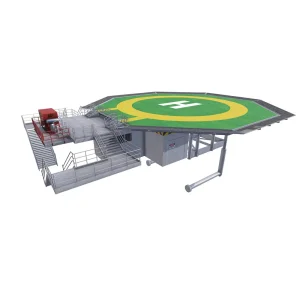
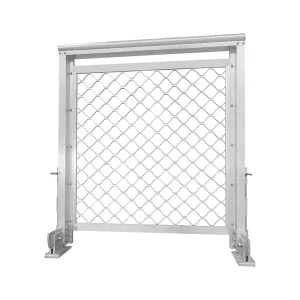
Our clients in Europe, the Americas, and the Asia-Pacific region are increasingly demanding electric and motorized perimeter folding safety nets. These systems allow operators to lower the net during non-operational hours or maintenance schedules and deploy them quickly prior to helicopter takeoff or landing. Additionally, integrating safety mesh with localized LED lighting systems (CAP 437 Circle-H lights) has become a key requirement for enhancing visibility during nighttime or poor weather conditions.
Leading structural aluminum manufacturing and design for high-reliability applications since 2015.
Established in 2015 and located in Foshan City, Guangdong, LvXing Intelligent Equipment Co., Ltd. boasts a skilled R&D team with extensive experience. We leverage exceptional technical expertise to effectively transform customers' ideas into reality, consistently meeting their precise requirements.
We utilize premium Fenglu aluminum, offering a diverse range of profiles for flexible applications. Our extrusion lines, ranging from 800T to 20,000T, accommodate alloys 1xxx, 2xxx, 3xxx, 5xxx, 6xxx, and 7xxx, allowing us to produce shaped products with section dimensions up to 1.2 meters in width and 28 meters in length. These products are recognized for their precision and meticulous processing, finding broad application in aerospace, military, medical, and industrial sectors.
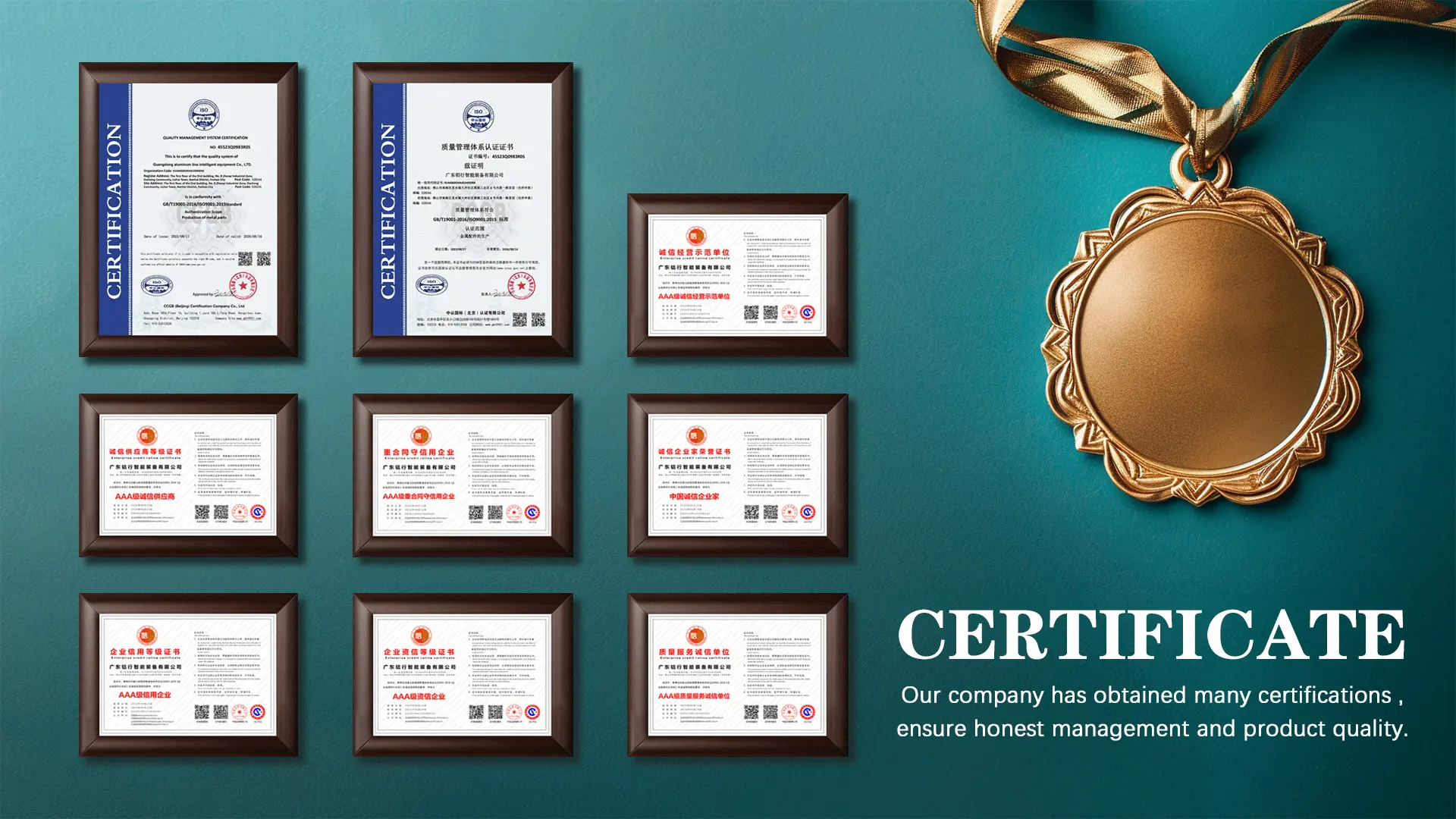
Our commitment to excellence is evident throughout the manufacturing process, rigorous quality control, thorough packaging, and efficient shipping procedures. This dedication has earned us recognition as a national excellent and honest enterprise, along with quality system certification in accordance with GB/T19001-2016/ISO9001:2015 standards.
We aspire to be your trusted business partner and warmly invite you to visit our factory.
We deliver verified safety, premium materials, and professional manufacturing capabilities.
We have obtained the "Special Aluminium Materials for Aerospace" Certificate, verifying our high metallurgical standards.
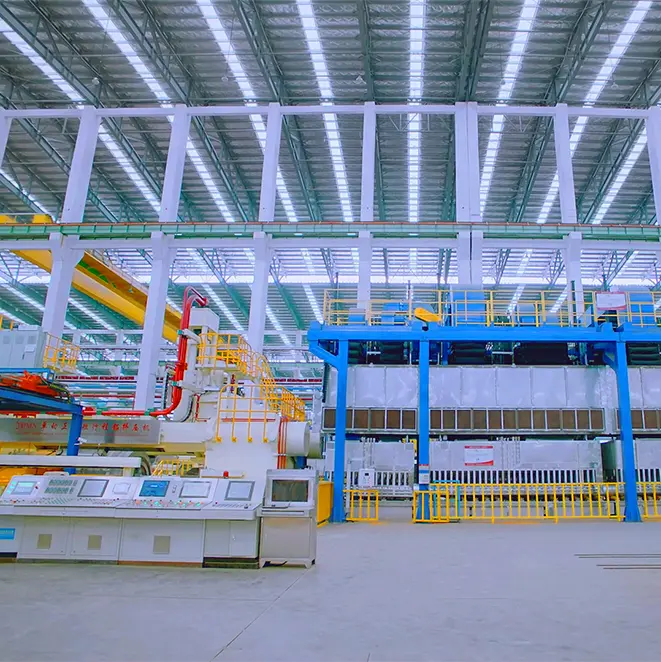
We provide high-quality Fenglu profiles. With lines ranging 800T-20,000T, we support section profiles up to 1.2m wide and 28m long.
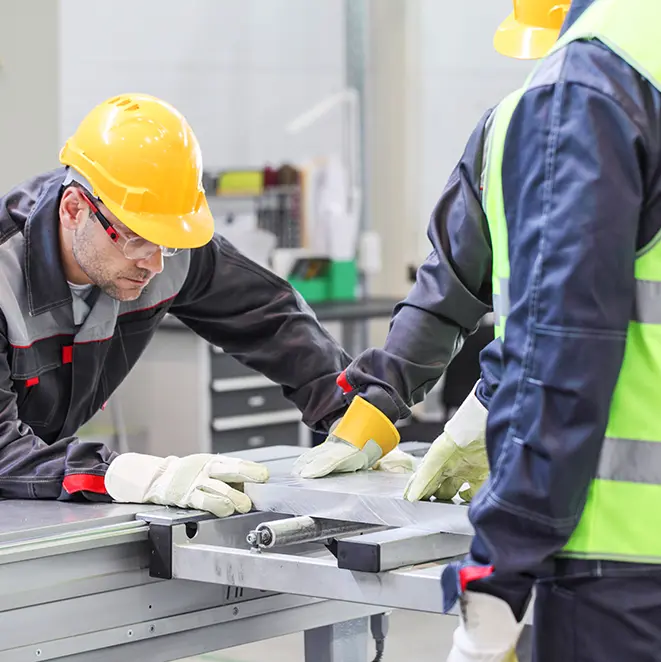
Our team of technicians has 15 years of invaluable experience. We identify potential issues early and provide practical design optimization insights.
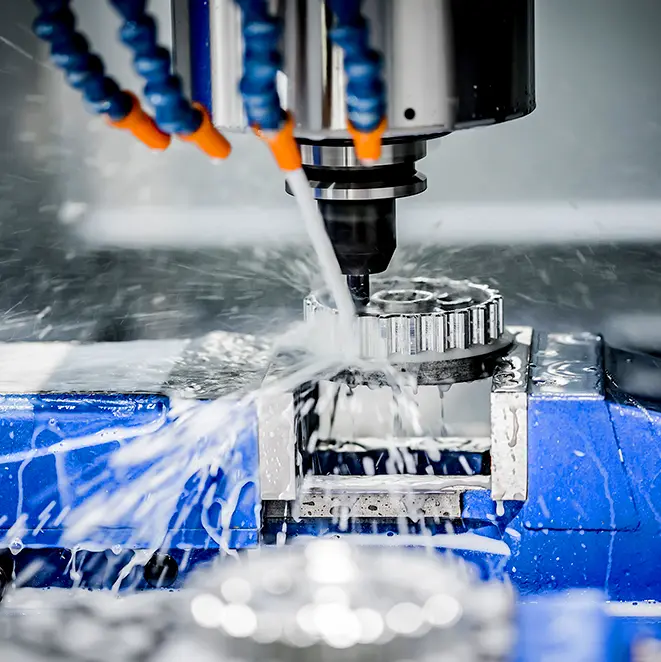
 Aerospace Grade Metallurgical Assurance
 Ultra-Large 20,000T Extrusion Capability
 15-Year Engineering R&D Division
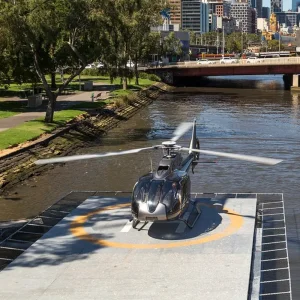
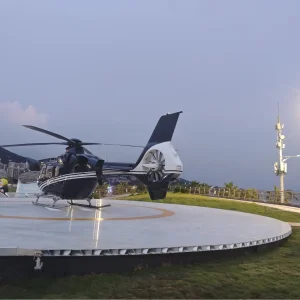
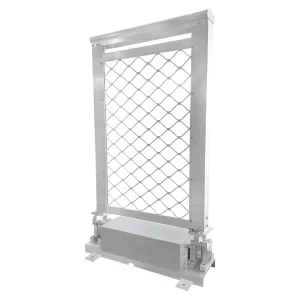
Custom helipad nets are deployed across diverse and demanding global environments. In offshore operations, they are integrated onto Drilling Jack-ups, semi-submersibles, and Floating Production Storage and Offloading (FPSO) vessels. In these marine environments, high humidity and salt spray accelerate rust in low-grade steel netting. Our high-grade anodized aluminum support frames, paired with 316 stainless steel wire cables, provide durable corrosion protection without requiring regular onshore repainting cycles.
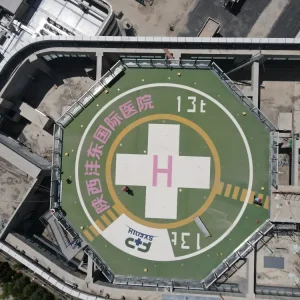
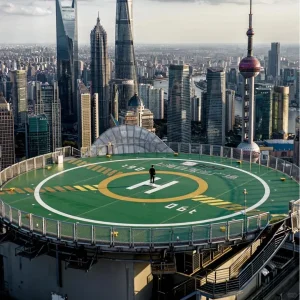
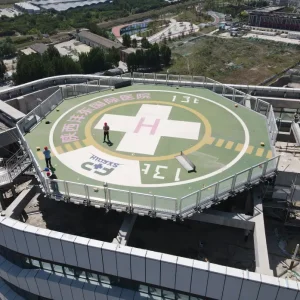
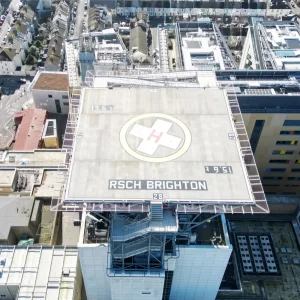
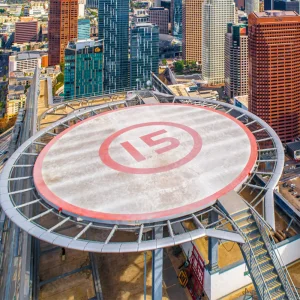
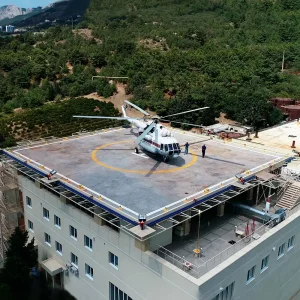
In urban and municipal sectors, rooftop skyscraper helipads and dedicated hospital emergency zones rely on perimeter netting systems to prevent personnel or equipment from falling over the deck edges. Hospital emergency helipads must operate reliably in all weather conditions, which requires clean layouts that prevent water buildup and minimize wind turbulence. Lvxing's custom profiles are engineered to integrate seamlessly with deck heating systems (to melt snow and ice) and crash-barrier assemblies, meeting stringent local building and aviation regulations.
Operating out of Foshan City, Guangdong—a globally recognized industrial center for high-grade aluminum manufacturing—Lvxing Intelligent Equipment offers significant supply chain advantages. Our close proximity to raw material producers, testing laboratories, and deepwater shipping terminals allows us to deliver high-quality products efficiently.
Our modular design system allows for fast custom tooling adjustments, enabling us to design and build custom extrusion dies in a fraction of the time required by Western fabricators. From initial CAD drawing validation to shipping container loading, our ISO 9001:2015 certified quality controls ensure that every shipment of safety nets arrives on site with complete metallurgical certificates and test documentation.
Common questions regarding regulatory standards, technical configurations, and installation processes.
Complete architectural profiles, specialized components, and certified deck landing configurations.
 LvXing