The global industrial landscape is undergoing a massive transformation driven by the quest for lightweight, high-performance structural systems. At the forefront of this revolution is the 7000 series aluminum alloy. Recognized primarily for its outstanding strength-to-weight ratio—rivaling many structural steels while maintaining a fraction of the mass—this alloy family (predominantly Al-Zn-Mg-Cu) has transitioned from niche military aerospace applications to mainstream high-integrity engineering sectors.
In modern industrial commerce, the demand for 7000 series extrusions is driven by three major macro-trends: the green transition in transport systems, the construction of maritime/offshore installations, and the rapid expansion of urban aviation infrastructure such as skyscraper helipads. Key structural alloys like 7075, 7050, and 7005 represent the pinnacle of extrusion engineering. These alloys undergo meticulous heat treatments (such as T6, T651, and T73) to optimize mechanical parameters, including tensile yield strength, fracture toughness, and stress-corrosion cracking (SCC) resistance.
As international supply chains optimize, procurement specialists require dependable, certified partners capable of executing high-tonnage structural runs. According to global metallurgical market reports, the demand for custom high-strength aluminum extrusions is projected to expand at a CAGR of 6.2% over the next decade. This expansion highlights the need for advanced manufacturing complexes equipped with heavy extrusion presses, state-of-the-art quenching lines, and precise aging furnaces to guarantee structural integrity across critical load paths.
Established in 2015 and strategically positioned in the industrial hub of Foshan City, Guangdong, LvXing Intelligent Equipment Co., Ltd. has established itself as an industry pioneer. Supported by a highly skilled R&D team with decades of metallurgical experience, we leverage exceptional technical expertise to effectively transform customer concept designs into robust physical realities, consistently meeting and exceeding demanding specification tolerances.
Our raw material supply chain relies exclusively on premium-grade Fenglu aluminum, providing the reliable substrate purity needed for critical high-strength extrusions. LvXing's production facilities house massive extrusion configurations ranging from 800T to 20,000T presses. This diverse equipment infrastructure allows us to process alloys across the 1xxx, 2xxx, 3xxx, 5xxx, 6xxx, and 7xxx spectrum.
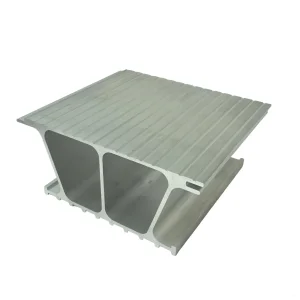
We are uniquely capable of manufacturing challenging profile shapes with massive section dimensions—supporting widths up to 1.2 meters and seamless continuous lengths up to 28 meters. These heavy structural extrusions are celebrated for their meticulous dimensional accuracy and mechanical uniformity, finding critical roles in international aerospace, defense sectors, advanced medical equipment, and harsh marine environments.
"Our unwavering commitment to manufacturing precision and structural longevity drives our strict quality control frameworks, ISO-compliant documentation, and secure global logistics management."
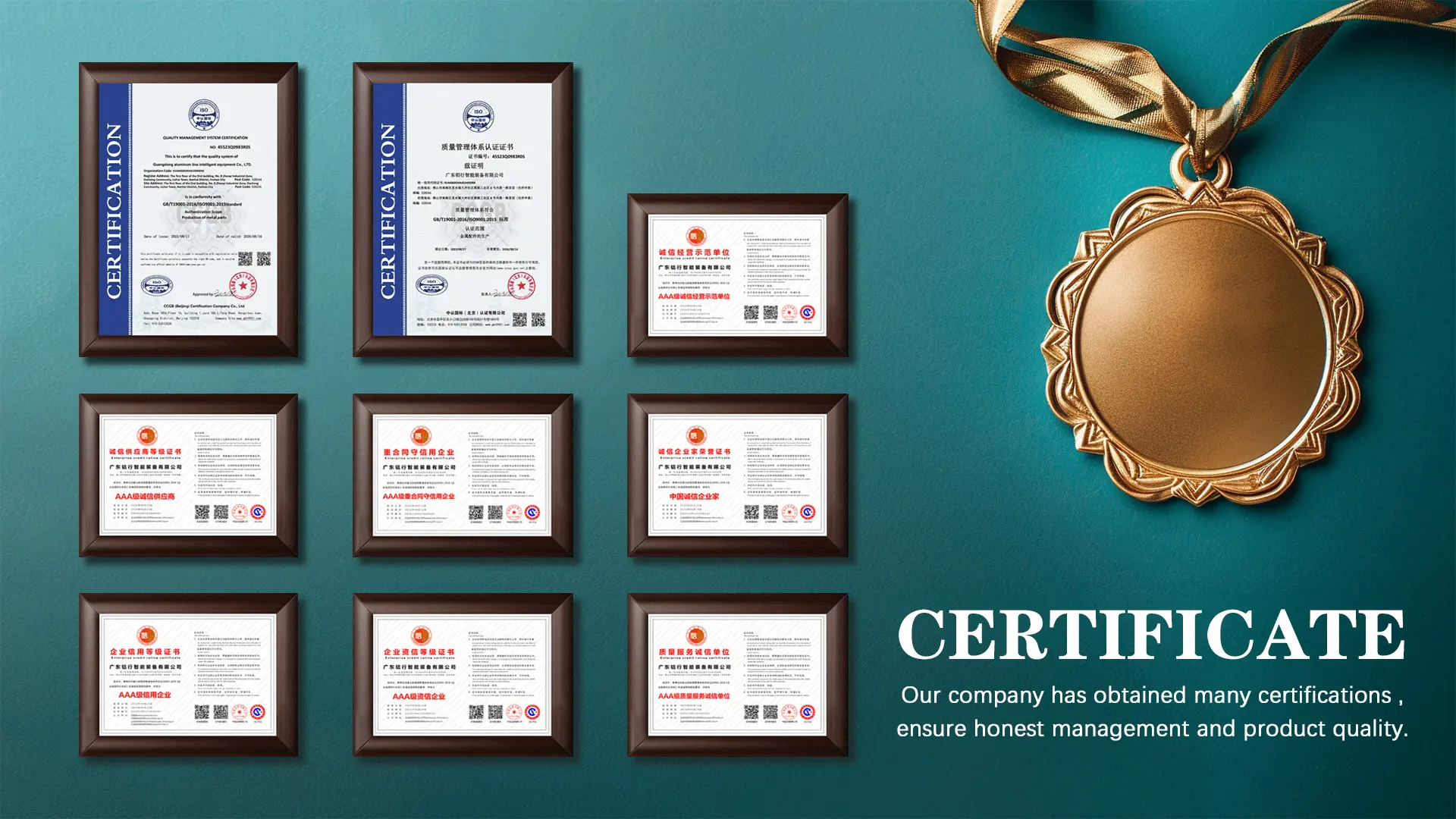
LVXING INTELLIGENT EQUIPMENT CO., LTD.LvXing's operations comply with the highest standards of international verification. Our production systems have achieved full quality certification in accordance with GB/T19001-2016/ISO9001:2015 standards, proving our reliability to global engineering procurement teams.
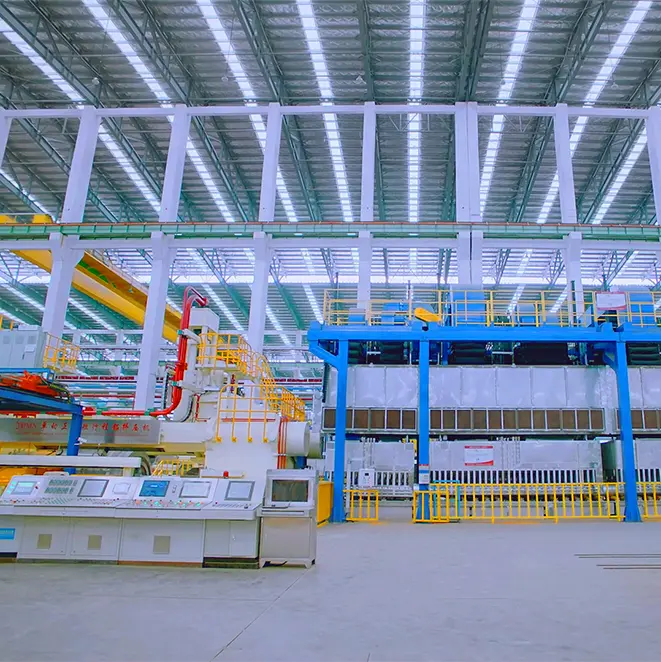

We have successfully obtained the highly sought-after “Special Aluminium Materials for Aerospace” Certificate. This designation confirms that our metallurgy, grain refinement, and quality control systems meet the standards required for critical aerospace structural elements.
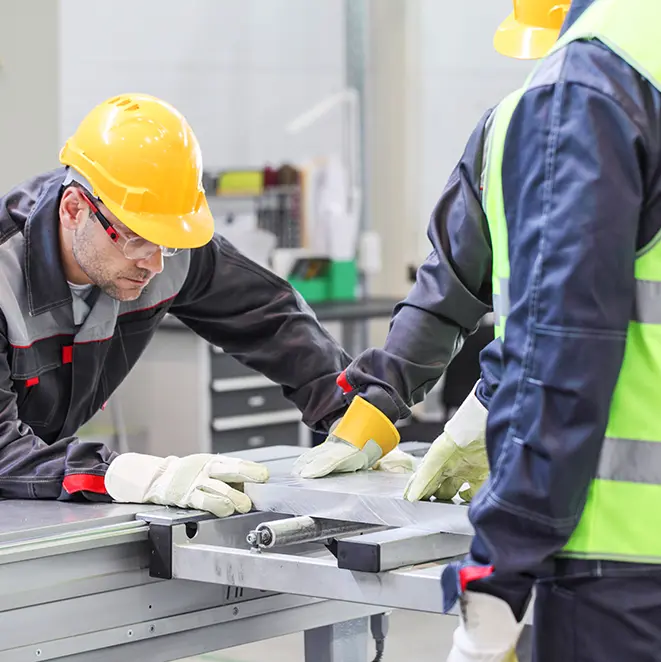

Utilizing high-grade raw Fenglu billets combined with a vast press range from 800T to 20,000T allows us to manufacture complex profiles up to 1.2 meters wide or up to 28 meters long. This capacity minimizes the need for joints in heavy-duty structural designs.
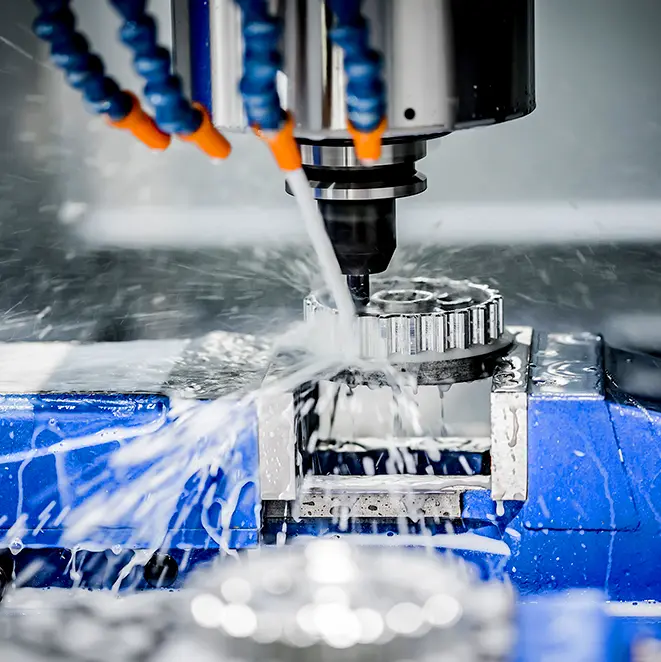

Our dedicated engineering team brings over 15 years of practical manufacturing experience to every project. This deep expertise allows us to identify design issues early, recommend optimizations for complex profile cross-sections, and deliver cost-effective solutions.
To assist structural engineers in making informed material choices, the table below compares the mechanical properties of popular 7000 series alloys against standard 6000 series profiles (typically used in general construction). The high zinc composition of the 7000 series, when subjected to artificial aging, produces high density precipitation zones that dramatically improve mechanical performance.
| Alloy & Temper | Yield Strength (MPa) | Tensile Strength (MPa) | Elongation (%) | Primary Industrial Use Case |
|---|---|---|---|---|
| 7075-T6 | 503 MPa | 572 MPa | 11% | Aerospace structures, high-stress defense equipment, aircraft fittings |
| 7050-T7451 | 469 MPa | 524 MPa | 10% | Thick plate components, fuselage frames, military aircraft bulkheads |
| 7005-T6 | 290 MPa | 350 MPa | 12% | High-stress welded structures, marine structural framing, helideck support beams |
| 6061-T6 (Ref) | 276 MPa | 310 MPa | 12% | Medium-strength structural components, standard architectural frames |
The pricing structure for custom 7000 series aluminum profiles is determined by several key factors. Unlike standard construction profiles, high-strength alloys require careful management during extrusion and thermal processing. Pricing is calculated using the following formula:
Total Price = [LME Aluminum Base Rate + Processing & Extrusion Fee + Special Tooling Cost (Amortized) + Surface Treatment Cost] per Metric Ton
Key cost factors include:
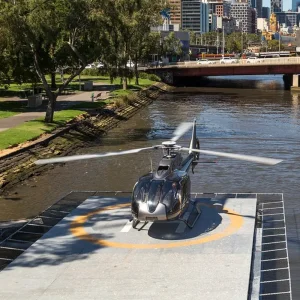
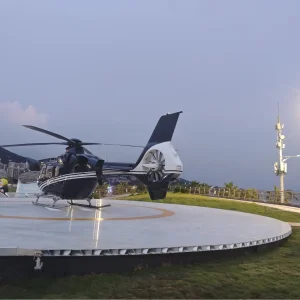
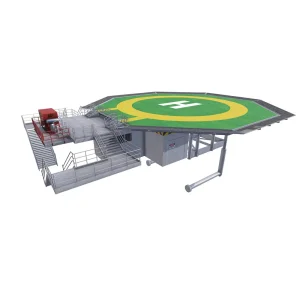
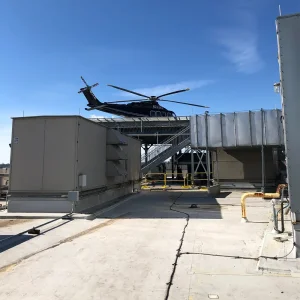
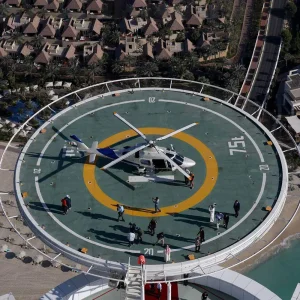
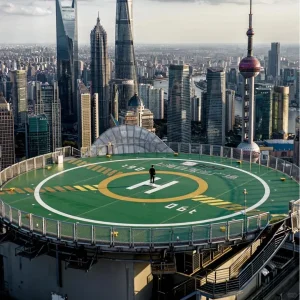
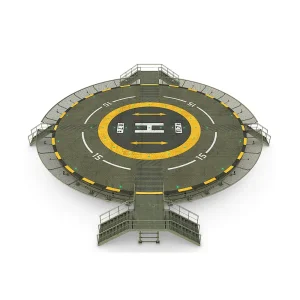
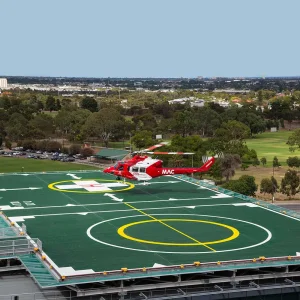
One of the most demanding applications for high-strength aluminum alloys is modern helicopter landing decks (helipads/helidecks). These structures face a challenging combination of engineering requirements: they must be lightweight to minimize structural loads on buildings or offshore oil platforms, yet strong enough to withstand the impact forces of emergency landings. They must also offer excellent resistance to marine salt spray.
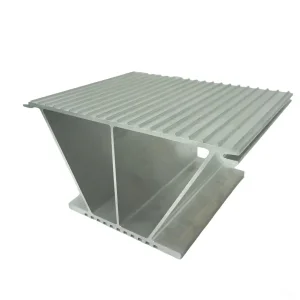
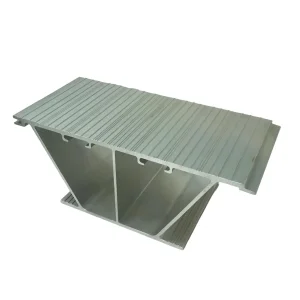
Our custom-engineered 7000 and 6000 series composite profiles are designed specifically to meet these challenges. By using custom multi-void hollow extrusions, we can create helipad planks that snap-lock together. This design simplifies on-site assembly and helps distribute dynamic wheel loads evenly across the supporting steel framework.
1. Offshore Oil & Gas Platforms: On ocean platforms, minimizing top-side weight is critical for maintaining stability. Replacing traditional steel decks with our engineered aluminum helipad profiles reduces deck weight by up to 50%, while offering excellent resistance to saltwater corrosion.
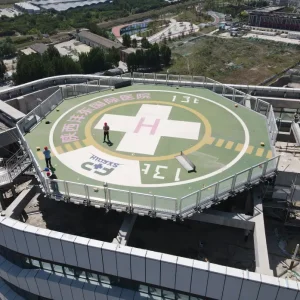
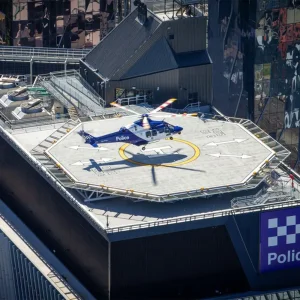
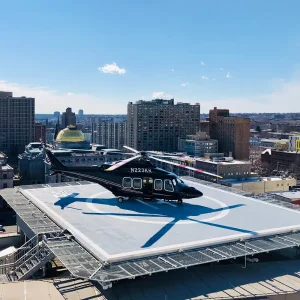
2. High-Rise Rooftops & Skyscraper Helipads: Urban emergency medical services (EMS) rely on rooftop helipads for rapid transit. Our structural profiles distribute localized landing forces across building columns without requiring heavy structural retrofits.
3. Shipboard Helidecks: Naval vessels and superyachts benefit from the low maintenance requirements of hard-anodized marine-grade aluminum, which performs reliably in the harshest ocean environments.
As engineering challenges grow, the materials science behind aluminum extrusions continues to evolve. LvXing's metallurgical research team is actively tracking several key developments to keep our production processes at the cutting edge of the industry:
 LvXing