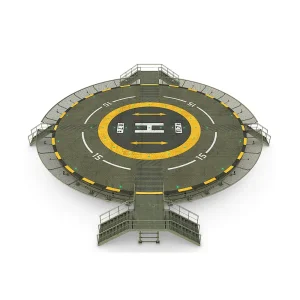
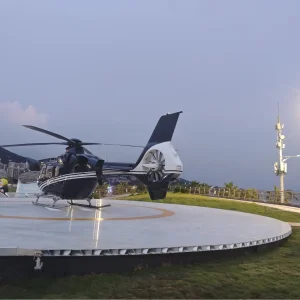
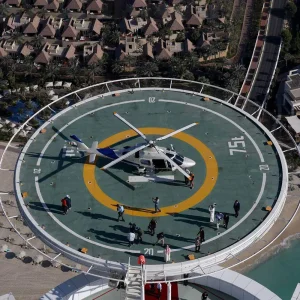
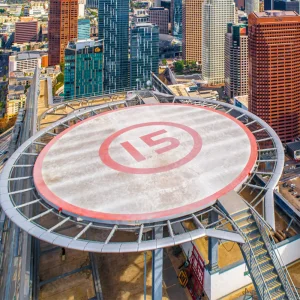
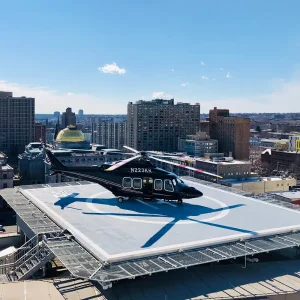
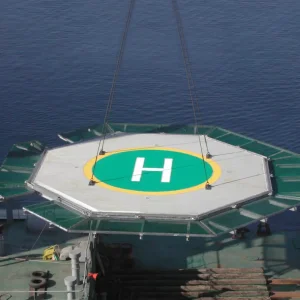
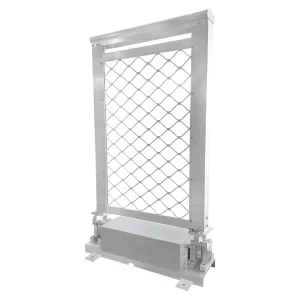
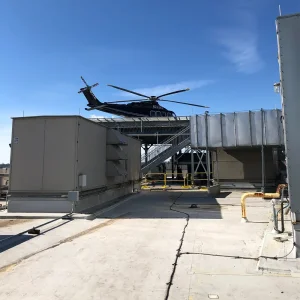
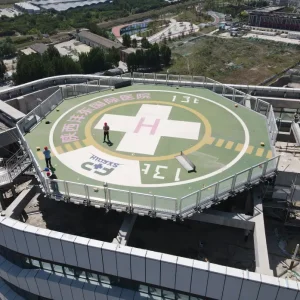
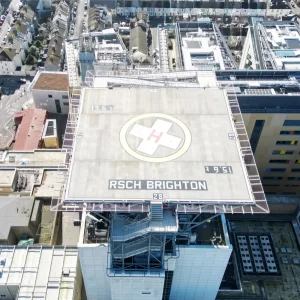
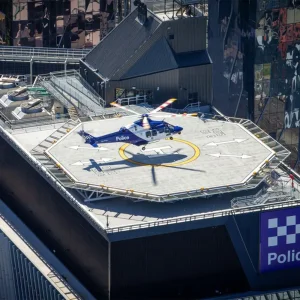
Elevated rooftop helipads, hospital trauma facilities, and marine vessel landing decks present severe microclimatic dynamics. Operating at elevations exceeding 100 meters exposes structural assemblies to intense wind shear, severe turbulence, and marine salt corrosion. Helideck perimeter safety nets serve as the final critical fall-arrest barrier for flight deck crew, passengers, and ground service staff.
Modern structural standards—governed by the International Civil Aviation Organization (ICAO Annex 14 Vol II) and the Civil Aviation Authority (CAP 437)—demand robust energy-absorbing designs. Safety nets must withstand dynamic drop test loads of up to 2.3 kJ, equivalent to a 100 kg weight impact from a free fall of 2.25 meters. Our systems absorb this dynamic kinetic energy without permanent deformation or catastrophic weld failures, providing an engineered margin of safety.
Explore our premium range of high-performance perimeter security panels, custom extrusion framing profiles, and heavy-duty structural assemblies engineered to survive harsh structural loads.
Industrial capacity designed to execute complex custom architectural metal projects.
Established in 2015 and located in the industrial heart of Foshan City, Guangdong, LvXing Intelligent Equipment Co., Ltd. specializes in advanced structural aluminum solutions. We leverage premium Fenglu aluminum to manufacture flexible, customizable profiles designed for severe-service environments, including aerospace, marine, medical, and high-altitude security.
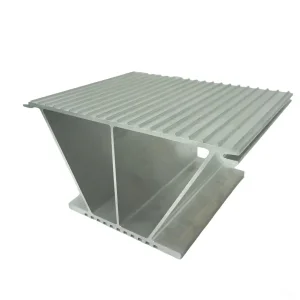
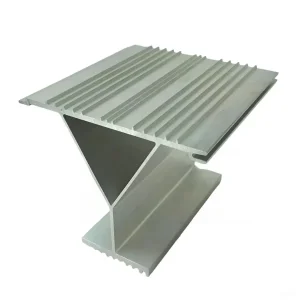
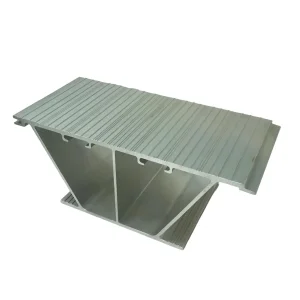
Our expansive production facility operates state-of-the-art extrusion lines ranging from 800T to 20,000T. This enables the fabrication of high-performance alloys across the 1xxx, 2xxx, 3xxx, 5xxx, 6xxx, and 7xxx series. We produce fully shaped, complex profiles with section dimensions measuring up to 1.2 meters in width and 28 meters in length. This structural capability is critical for constructing long-span, light-weight helideck structural components that reduce dead load on high-altitude support structures.
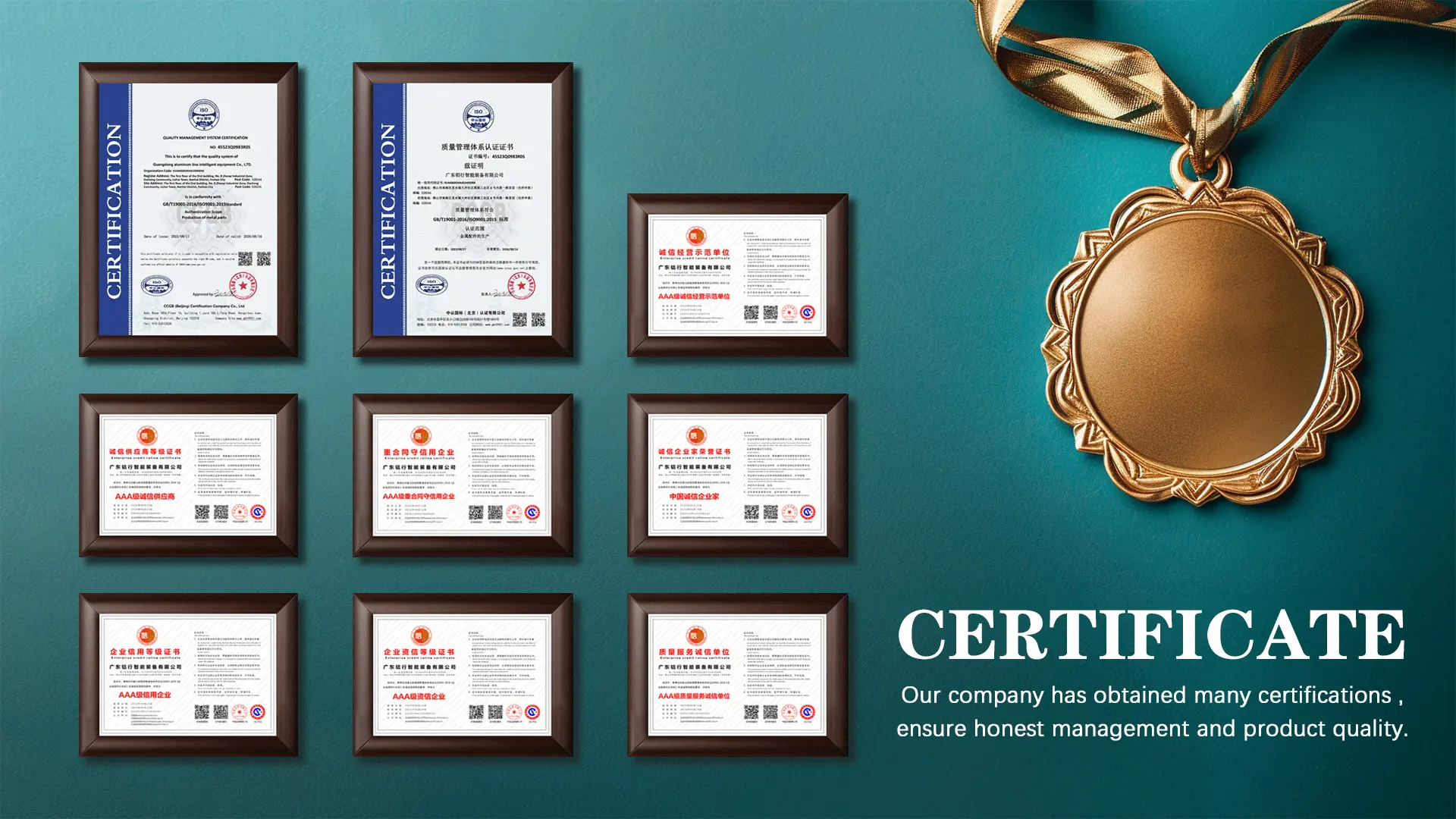
Our quality assurance program guarantees GB/T19001-2016/ISO9001:2015 standard compliance across every phase of product development, raw material verification, extrusion processing, finishing, and transport packing. Recognized as a national excellent and honest enterprise, LvXing remains the trusted manufacturing partner for critical safety projects worldwide.
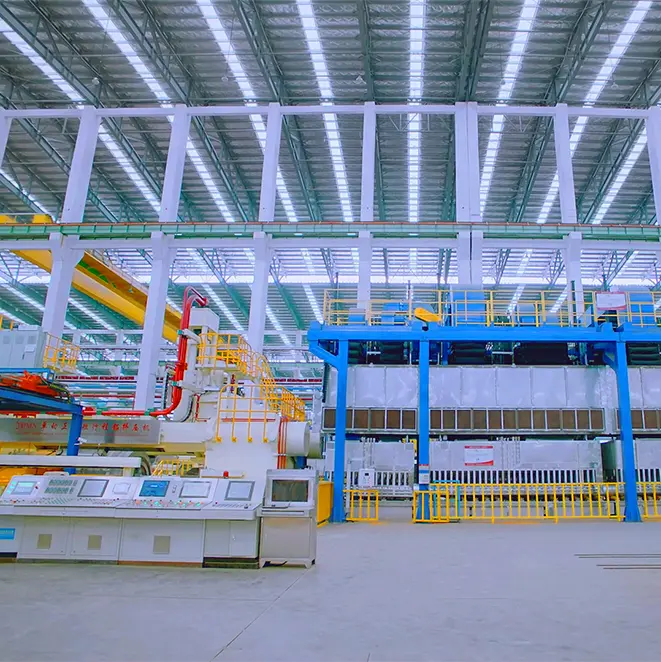
Aerospace Certification
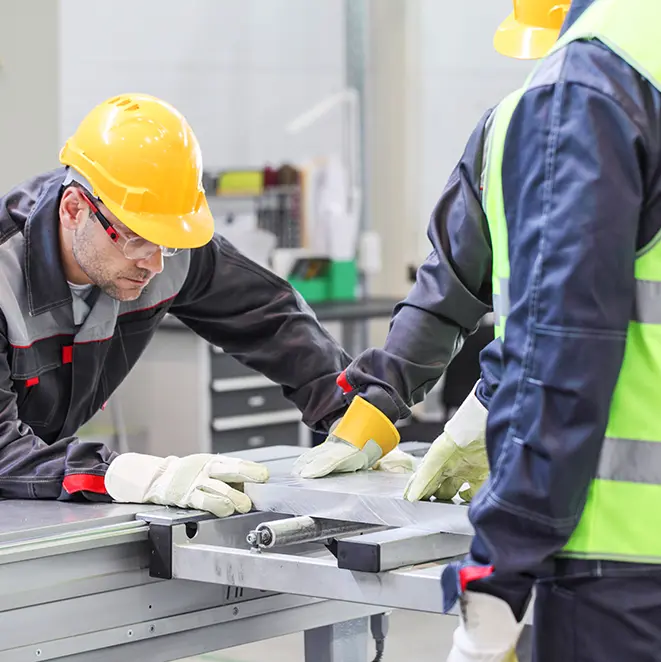
Fenglu Extrusions
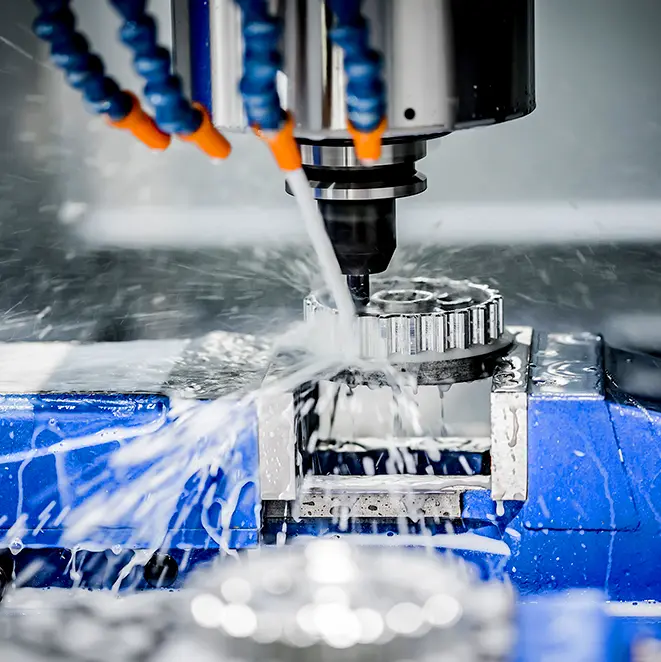
R&D Lab Testing
Our facility has secured the prestigious "Special Aluminium Materials for Aerospace" Certificate. This ensures every landing deck profile and perimeter net component has the grain integrity and tensile strength required to perform in the field.
Purchasing teams and structural engineers must evaluate critical material options to ensure long-term stability and code compliance. High-altitude rooftop and offshore helidecks require specific material performance characteristics.
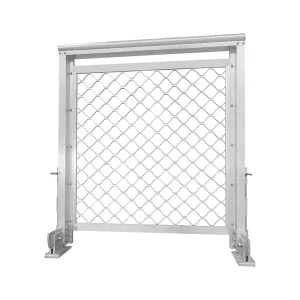
Traditional stainless steel wire mesh provides durability but adds excessive weight, leading to galvanic corrosion on aluminum decks. Our 6000-series marine-grade aluminum frame systems feature modular mesh inserts, significantly reducing weight while retaining high load capacity.
High-altitude roofs face extreme wind loading. Safety barriers must present low wind resistance profiles. Our open-area mesh designs are wind-tunnel tested to prevent structural oscillations and load transfer to the main building support framework.
Every customized shipment includes dynamic load test certifications, surface coating thickness audits, and chemical mill analysis reports. This documentation simplifies building permitting and local civil aviation approvals.
Building high-altitude helipads requires a meticulous balance of structural safety and low dead weight. Our manufacturing system leverages raw material control, heavy press extrusions, and certified hand-assembly to deliver high-performance perimeter safety barriers.
Our design group translates conceptual architectural layouts into structurally compliant shop drawings, preventing installation conflicts.
With our 20,000T hydraulic extrusion lines, we produce long, single-piece profiles that eliminate weak weld joints.


We are continually updating our product designs. Together with research institutes, LvXing is developing intelligent perimeter safety systems for future smart city aviation infrastructure.
A transparent overview of the variables that determine the cost of custom high-altitude helipad perimeter safety systems.
Selecting marine-grade 6000-series (e.g., 6061-T6, 6082-T6) or high-tensile 7000-series aluminum directly impacts raw material costs. Standard building applications typically utilize 6063-T6, which offers an optimal balance of cost and corrosion resistance.
Manual folding systems rely on lightweight structural pins, providing a reliable, cost-effective option. Automated electric-fold systems require explosion-proof actuator motors and specialized control units, increasing the initial cost but reducing labor requirements.
Standard orders receive internal compliance documentation. Projects requiring third-party CE certifications, witness-drop tests (e.g., by DNV or Lloyd's Register), and custom mill certificates involve additional compliance processing costs.
Expert answers addressing structural design, regulatory compliance, testing procedures, and ordering logistics.
Explore our specialized range of certified aluminum profile extrusions, ship deck landing frames, and automated perimeter barriers.
We provide full design and calculation documents for engineering design institutes and procurement agencies, helping streamline the project approval process.
 LvXing