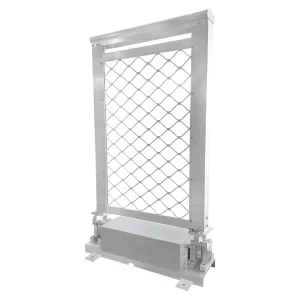
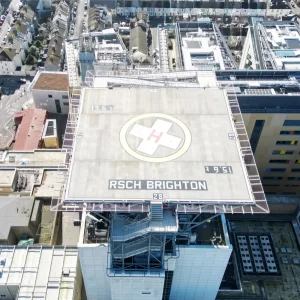
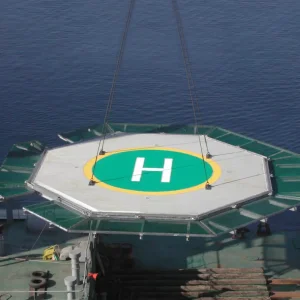
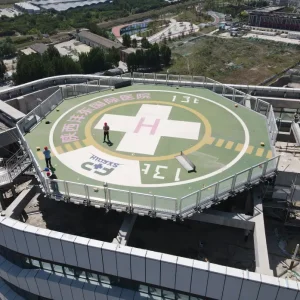
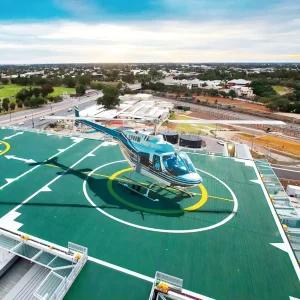
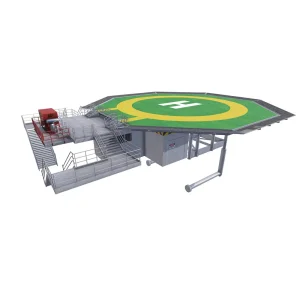
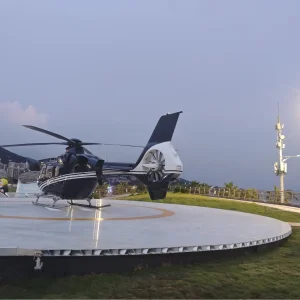
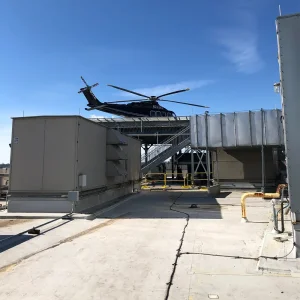
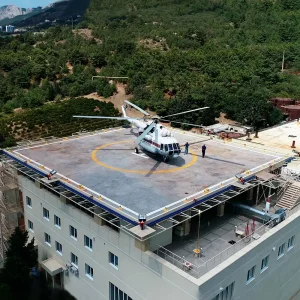
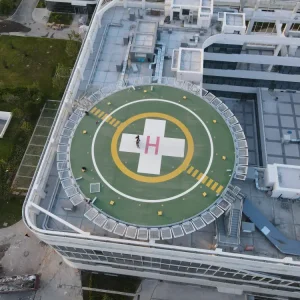
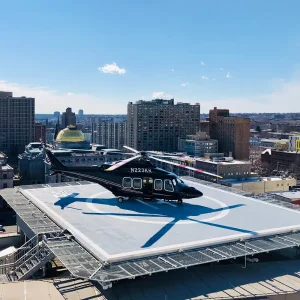
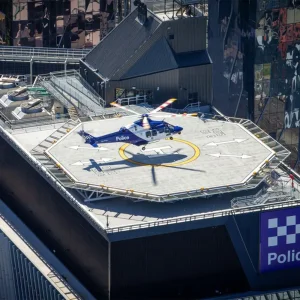
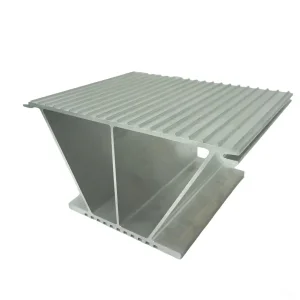
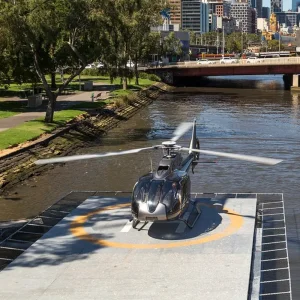
Engineered to structural load-bearing parameters, our safety net components fulfill all regional civil aviation protocols.
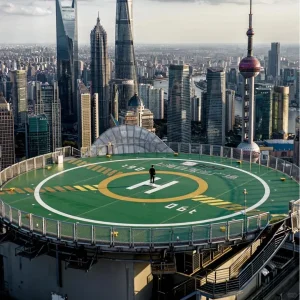
Modern high-rise rooftop heliports operationally present complex environmental and thermodynamic challenges. At altitudes exceeding 100 meters, aircraft approach profiles are subjected to erratic wind shears, thermal updrafts generated by building HVAC exhaust systems, and high structural vibrations. In this severe operational dynamic, safety nets installed on the periphery are the last line of defense against catastrophic falls for personnel and equipment.
Traditional stainless steel or carbon fiber meshes frequently fail prematurely due to high mechanical fatigue and environmental corrosion. Premium structural-grade aluminum alloy safety nets have established themselves as the global technical standard due to their outstanding strength-to-weight ratio, elastic energy dissipation properties, and superior oxidation resistance.
Lvxing Intelligent Equipment utilizes Fenglu premium aluminum to fabricate custom high-strength modular landing decks and integrated safety net panels.
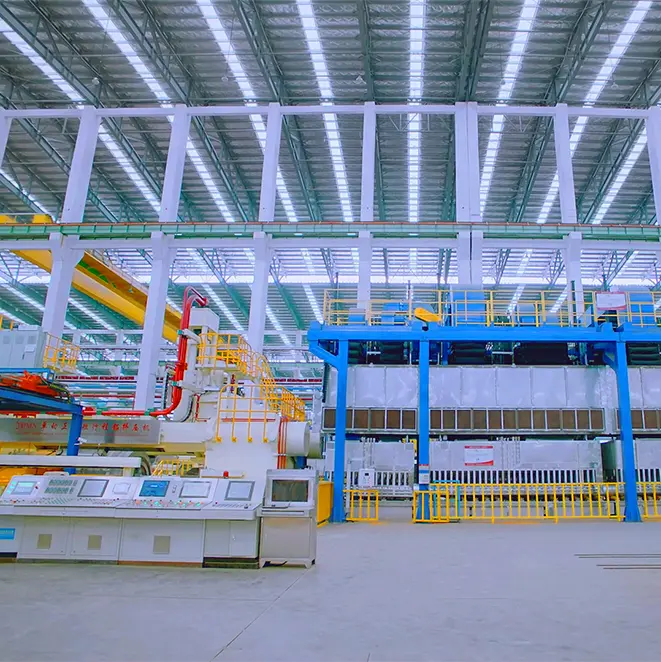
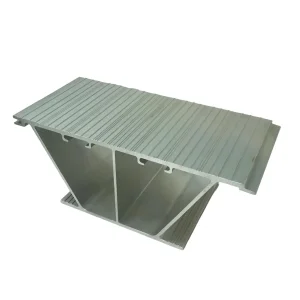
Our extrusion lines, ranging from 800T to 20,000T, accommodate high-specification alloys including the 1xxx, 2xxx, 3xxx, 5xxx, 6xxx, and 7xxx series. For rooftop helipads, we primarily leverage structural 6000-series (typically 6061-T6 or 6082-T6) and marine-grade 5000-series alloys. These guarantee unmatched yield strength and corrosion immunity against industrial atmospheric particulates and saline air currents.
| Performance Parameter | Technical Specification Value | Compliance Standards Met |
|---|---|---|
| Alloy Selections | Alloy 6061-T6 / 6082-T6 / 5052-H32 | ASTM B221, EN 755 |
| Tensile Yield Strength | ≥ 276 MPa | GB/T 3190 / ISO 209 |
| Dynamic Impact Capacity | 125 kg drop at 2.4m height (exceeds CAP 437) | UK CAA CAP 437 / ICAO Annex 14 |
| Extrusion Structural Width limit | Up to 1.2 meters (single profile section) | Custom Large Scale Machinery Support |
| Maximum Profile Continuous Length | 28 meters (ideal for seamless perimeter joists) | Seamless Long-Span Engineering |
| Corrosion Mitigation Coat | Anodized thickness ≥ 15μm or architectural PVDF | AAMA 2605 / ISO 9227 (Salt Spray) |
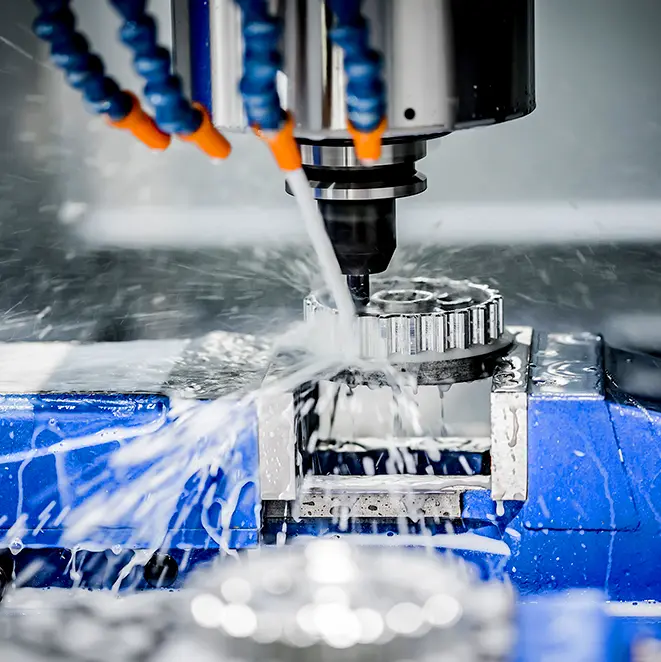
Our processing permits high-precision geometric tolerances. With section dimensions up to 1.2 meters in width and 28 meters in length, our structural components install with minimum welded joints. This reduces points of potential fatigue failure and significantly improves the long-term reliability of the installation.
LVXING, SPECIALIZES IN ALUMINUM SOLUTIONS.
Established in 2015 and located in Foshan City, Guangdong, LvXing Intelligent Equipment Co., Ltd. boasts a skilled R&D team with extensive experience. We leverage exceptional technical expertise to effectively transform customers' ideas into reality, consistently meeting their precise requirements.
We utilize premium Fenglu aluminum, offering a diverse range of profiles for flexible applications. Our extrusion lines, ranging from 800T to 20,000T, accommodate alloys 1xxx, 2xxx, 3xxx, 5xxx, 6xxx, and 7xxx, allowing us to produce shaped products with section dimensions up to 1.2 meters in width and 28 meters in length. These products are recognized for their precision and meticulous processing, finding broad application in aerospace, military, medical, and industrial sectors.
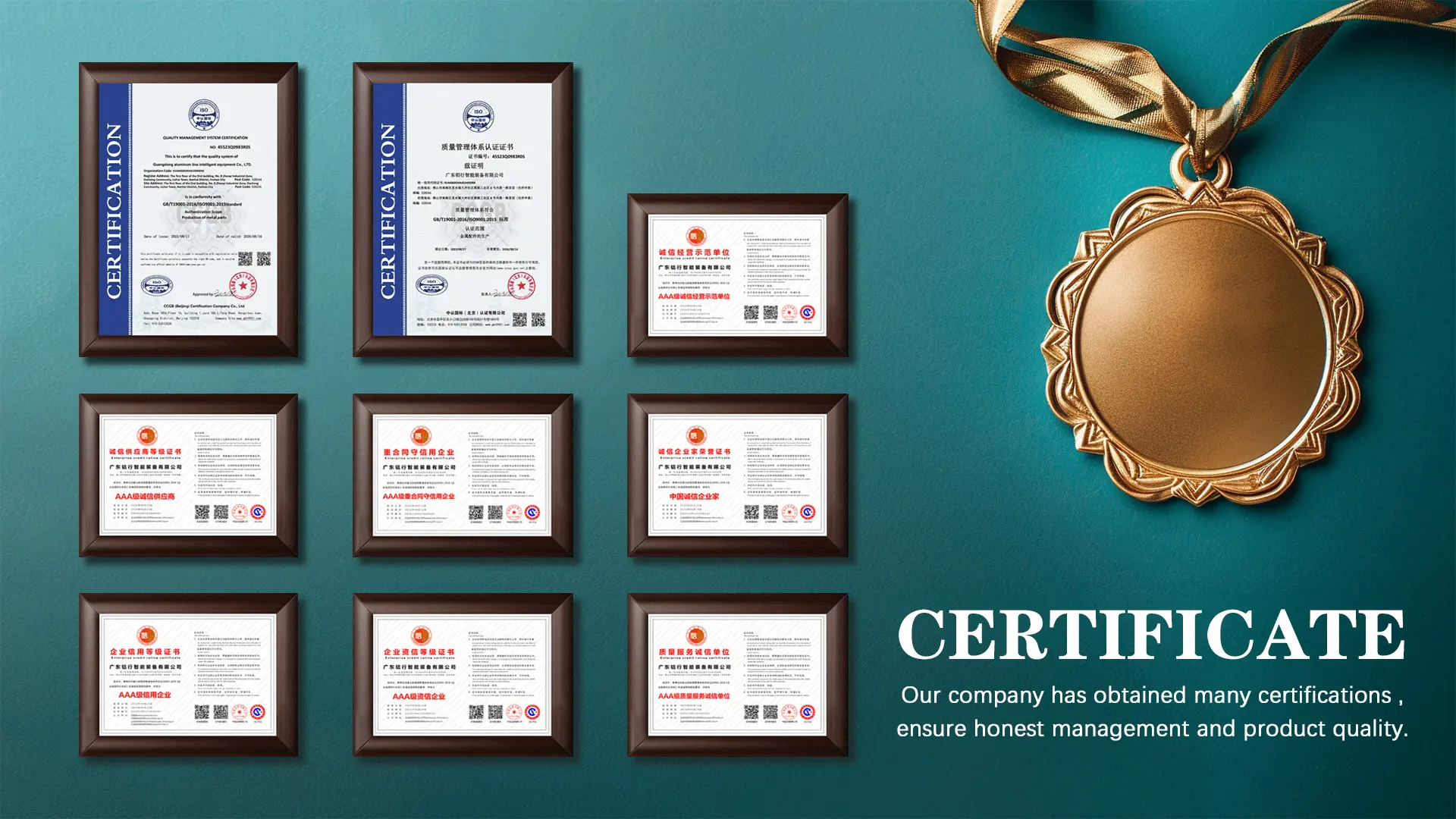
Our commitment to excellence is evident throughout the manufacturing process, rigorous quality control, thorough packaging, and efficient shipping procedures. This dedication has earned us recognition as a national excellent and honest enterprise, along with quality system certification in accordance with GB/T19001-2016/ISO9001:2015 standards.
We aspire to be your trusted business partner and warmly invite you to visit our factory.
Unparalleled technical mastery in precision extrusion and high-reliability aerospace-grade metallurgy.

We have obtained the “Special Aluminium Materials for Aerospace” Certificate. This validation ensures that every batch of aluminum profiles used in our heliport safety nets conforms to extreme stress thresholds required in high-altitude environments.

We provide and utilize high-quality Fenglu aluminum profiles. With extrusion lines ranging from 800T to 20,000T, we can produce alloys 1xxx, 2xxx, 3xxx, 5xxx, 6xxx, and 7xxx. We can manufacture fully shaped products with section dimensions up to 1.2 meters in width or 28 meters in length.

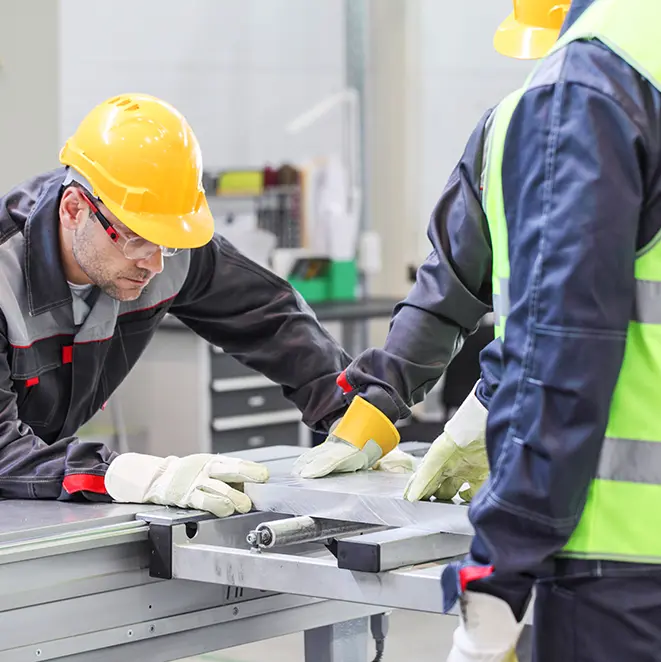
We have a team of technicians with 15 years of invaluable experience. Our deep understanding of customer requirements allows us to identify potential issues and offer practical insights, turning customer ideas into tangible products that meet specific needs.
Understanding the technical intent and regulatory pressures faced by industrial procurement directors, EPC contractors, and airport consultants.
When sourcing customized heliport safety nets from China, global engineering firms must reconcile multiple regional aviation and building codes. An off-the-shelf mesh solution rarely satisfies the unique geometric constraints of municipal skyscrapers, commercial vessels, or offshore drilling platforms. Each project requires a high degree of customization to match physical wind parameters, snow loading guidelines, and structural interface configurations.
Common Procurement Challenges Handled by Lvxing:
Pioneering smart, integrated helipad perimeter systems for the next generation of urban air mobility (UAM).
With the rise of eVTOL (electric vertical take-off and landing) aircraft and urban air mobility networks, rooftop infrastructure must evolve. Future helipad safety nets will not only act as passive physical fall arrest barriers but will integrate active telemetry and electronic warning capabilities.
Lvxing's engineering roadmap incorporates three major developments:
Integration of electric retraction mechanisms (as highlighted in our CE Certified electric perimeter nets) allowing structural nets to fold down during non-operational periods, preserving skyscraper aesthetics and complying with local skyline regulations.
Fiber-optic sensors woven into the aluminum net grid to monitor tension changes in real-time. This dynamic system flags structural degradation or fatigue caused by high wind shear, allowing maintenance teams to preempt failure points.
Integration of low-voltage LED perimeter lighting and thermal tracing cables directly within the extrusion hollows. This maintains safety net flexibility and visibility in sub-zero high-altitude winter conditions.
Navigating global structural codes to deliver frictionless customs clearance and engineering site sign-offs.
Lvxing Intelligent Equipment offers full engineering support to assure compliance with the domestic civil aviation authorities of our clients. Whether you are dealing with the Federal Aviation Administration (FAA) in North America, the European Union Aviation Safety Agency (EASA), or the Civil Aviation Authority (CAA) in the UK, our team supplies the necessary documentation packages.
Our localized support processes include:
Answering complex questions surrounding materials, standards, installation, and custom manufacturing.
From heavy structural profiles to modular perimeter safety nets, view our complete range of certified systems.
 LvXing