Select from our engineering-approved product range of customized aluminum landing solutions, perimeter safety nets, and extrusion profiles.
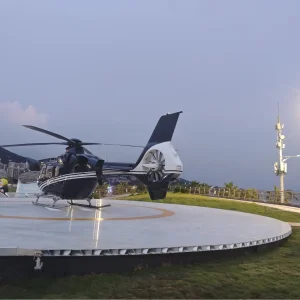
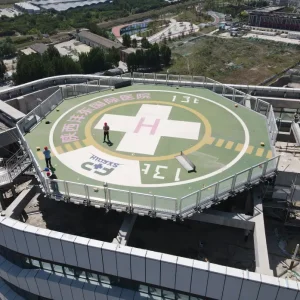
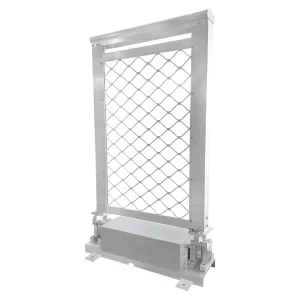
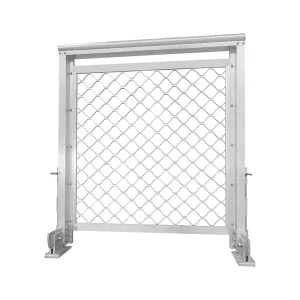
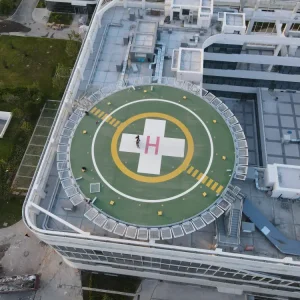
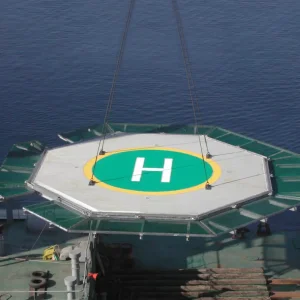
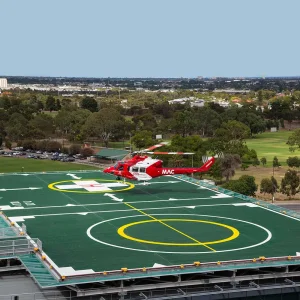
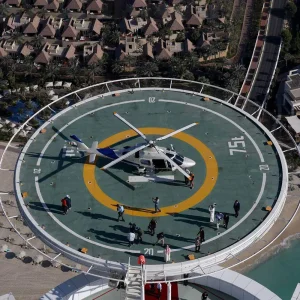
In modern aviation, civil defense, and offshore operations, elevated helipads have transitioned from high-end corporate luxuries to critical infrastructure lifelines. Elevated structures, including hospital rooftops, high-rise skyscrapers, oil rigs, offshore drillships, and maritime vessels, demand robust security protocols to prevent catastrophic falls. At the center of these safety mechanisms is the elevated structure heliport perimeter safety net.
Heliport nets are not merely catch fences; they are sophisticated, dynamic impact-absorption barriers designed to catch falling crew, passengers, or equipment without causing severe rebound injuries or compromising aircraft clearance levels. Regulated by agencies such as the International Civil Aviation Organization (ICAO), the UK Civil Aviation Authority (CAP 437), and the Federal Aviation Administration (FAA), these nets must withstand harsh environments while offering predictable tensile deformation under force load.
As offshore wind farms expand globally and trauma hospitals demand faster, safer patient transport vectors, the global market for certified, customizable, and high-performance safety mesh systems is accelerating. High-quality manufacturing must balance engineering accuracy, certified materials, and localized environmental adaptation.
The performance of any perimeter safety net is intrinsically tied to the structural integrity of the frame supporting it. While traditional systems relied on heavy carbon steels that suffered rapid degradation in salty maritime atmospheres, modern engineering favors high-grade structural aluminum alloys.
Aluminum alloys in the 6xxx (Al-Mg-Si) and 7xxx (Al-Zn-Mg-Cu) families provide the optimal balance of tensile strength, weight efficiency, and natural corrosion resistance. By optimizing these profiles, engineers can minimize the dead load placed on building rooftops and cantilevered offshore platforms.
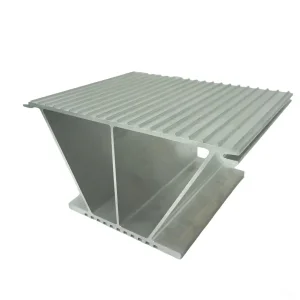
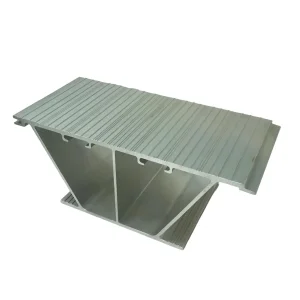
Large-scale extrusion lines allow manufacturers to design complex, multi-hollow, integrated cross-sections that solve structural challenges directly within the profile itself. Instead of welding multiple brackets—which introduces points of failure—a single, precision-designed aluminum extrusion profile can integrate connection tracks, mounting brackets, and wire paths in one solid piece. This simplifies field assembly, reduces labor costs, and eliminates welding-induced structural degradation.
Established in 2015 and located in Foshan City, Guangdong, LvXing Intelligent Equipment Co., Ltd. boasts a skilled R&D team with extensive experience. We leverage exceptional technical expertise to effectively transform customers' ideas into reality, consistently meeting their precise requirements.
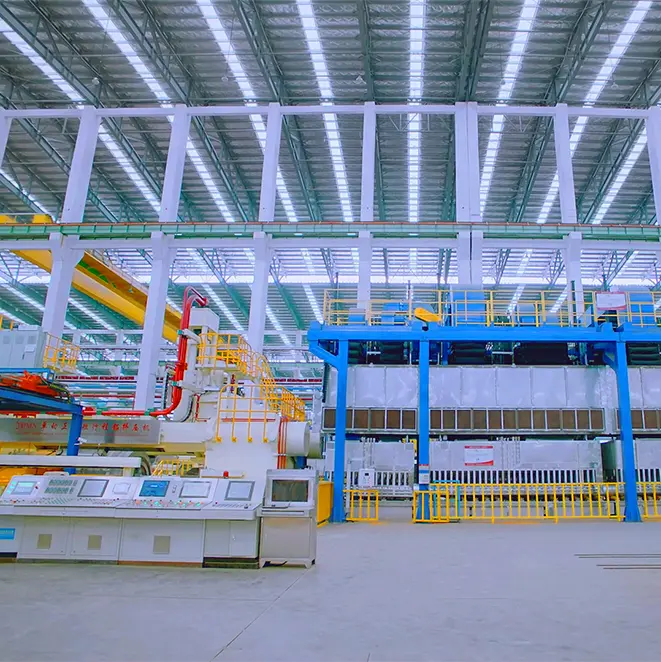
We utilize premium Fenglu aluminum, offering a diverse range of profiles for flexible applications. Our extrusion lines, ranging from 800T to 20,000T, accommodate alloys 1xxx, 2xxx, 3xxx, 5xxx, 6xxx, and 7xxx, allowing us to produce shaped products with section dimensions up to 1.2 meters in width and 28 meters in length. These products are recognized for their precision and meticulous processing, finding broad application in aerospace, military, medical, and industrial sectors.
Our commitment to excellence is evident throughout the manufacturing process, rigorous quality control, thorough packaging, and efficient shipping procedures. This dedication has earned us recognition as a national excellent and honest enterprise, along with quality system certification in accordance with GB/T19001-2016/ISO9001:2015 standards.
We aspire to be your trusted business partner and warmly invite you to visit our factory.
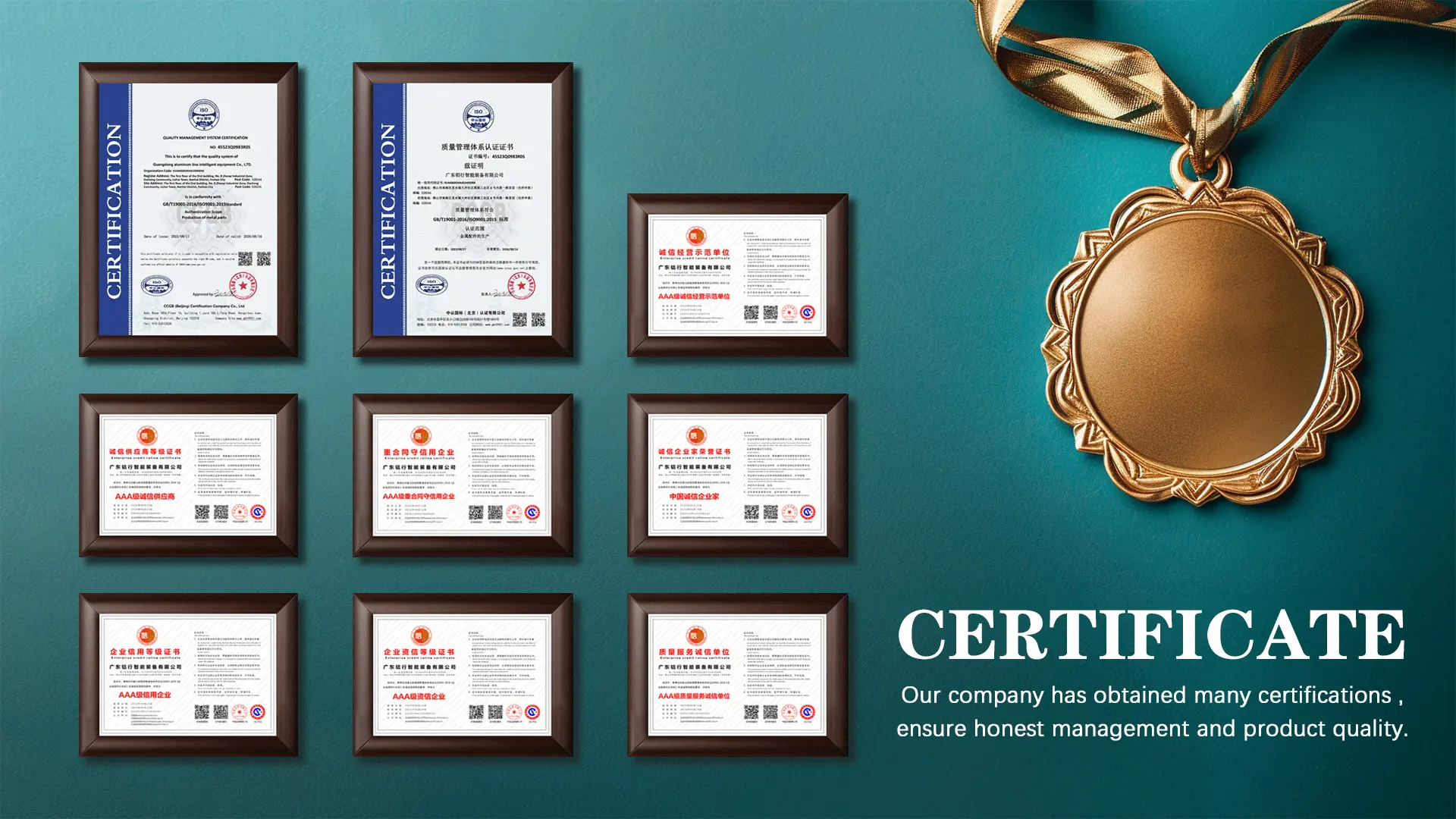
Engineered precision, unmatched raw materials, and decades of custom manufacturing experience.

We have obtained the “Special Aluminium Materials for Aerospace” Certificate.

We provide and utilize high-quality Fenglu aluminum profiles. With extrusion lines ranging from 800T to 20,000T, we can produce alloys 1xxx, 2xxx, 3xxx, 5xxx, 6xxx, and 7xxx. We can manufacture fully shaped products with section dimensions up to 1.2 meters in width or 28 meters in length.

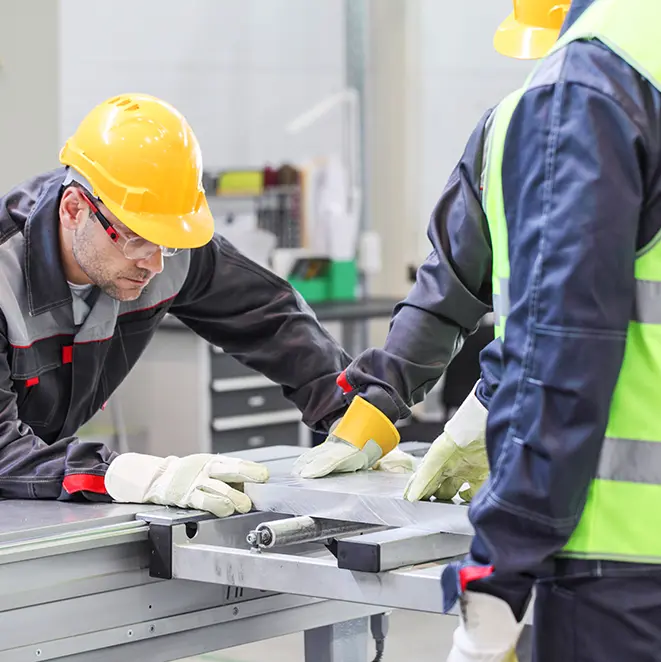
We have a team of technicians with 15 years of invaluable experience. Our deep understanding of customer requirements allows us to identify potential issues and offer practical insights, turning customer ideas into tangible products that meet specific needs.
Foshan, located in Guangdong, China, is widely recognized as the global capital for aluminum extrusion and processing. The industrial concentration here generates massive localized efficiency advantages that cannot be replicated elsewhere. At Lvxing, this means having direct access to raw material resources like high-performance Fenglu aluminum, reducing logistics overhead, and offering agile responses to customized design revisions.
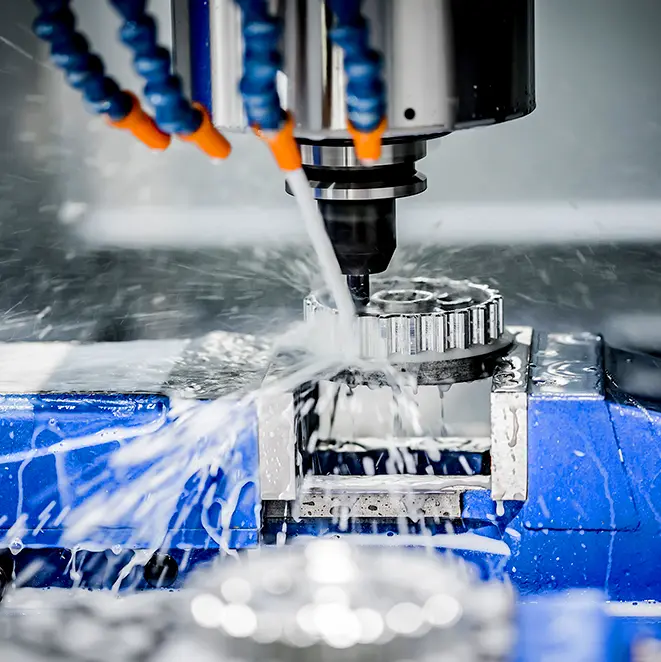
Western procurement teams often view "China pricing" as a reflection of lower material standards. However, the truth lies in industrial cluster efficiency and deep tooling technology. While a local manufacturer in North America or Europe may charge astronomical fees to custom-tool a new aluminum die for a unique helideck extrusion profile, our Foshan factory operates in an ecosystem where die manufacturing, profile extrusion, CNC machining, chemical surface treatment (anodizing and PVDF coating), and testing are executed within a tight geographic radius. This allows us to offer customized, engineered profiles with low MOQ limits and rapid turnaround schedules.
Our capabilities range from 800T to 20,000T extrusion lines. This means we can extrude wide-format shapes (up to 1.2 meters wide) and long structural spans (up to 28 meters long), reducing joint requirements and overall installation time.
We possess the “Special Aluminium Materials for Aerospace” certificate, proving our alloys meet strict density, tensile, and microstructure standards required for deep-sea offshore decks and military landing pads.
Operating under GB/T19001-2016/ISO9001:2015 frameworks, we trace every batch of raw material back to its casting log, providing chemical composition records and mechanical load certifications with every shipment.
Heliport nets are installed in diverse settings, each presenting distinct mechanical, environmental, and thermal stresses. Lvxing designs systems optimized for these unique installations:
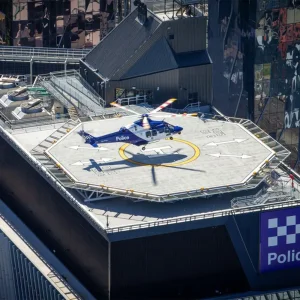
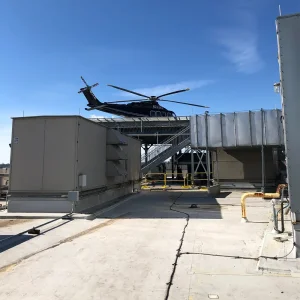
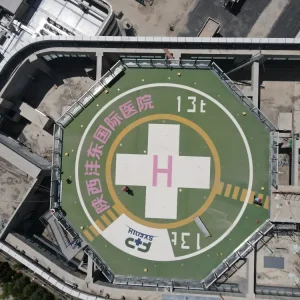
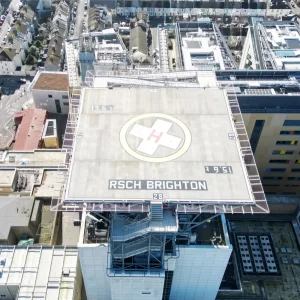
In medical emergency flight systems, helipads are located on top of active hospital buildings. The perimeter safety nets must prevent accidental falls of patients or transport personnel during high-stress transfers. Structural safety systems must remain out of the pilot's line of sight, which is why we offer low-profile, outboard-angled, foldable aluminum frames. Additionally, noise and vibration dampening are critical; our custom profile connectors integrate elastomer inserts to decouple wind-induced vibration from the building's top floor.
Offshore vessels face extreme challenges: corrosive salt spray, high wind speeds, and constant sea deck motion. Traditional steel netting rusts rapidly, leaving orange stains on structural frames and leading to catastrophic mesh failures. Lvxing’s safety nets utilize marine-grade stainless steel 316 (SS316) wire mesh integrated into specialized anodized aluminum frames. These systems resist galvanic corrosion, UV degradation, and temperatures down to sub-zero levels, making them suitable for Arctic exploration fleets.
Aesthetic integration is key for modern luxury hotels and CBD corporate towers. Our customized helipad perimeter nets feature low visual profiles, sleek black or silver anodized surface finishes, and automated electric folding mechanisms. The safety net can be lowered during non-flight periods to maintain the building's aesthetic integrity and raised before helicopter operations begin.
When procurement managers look for a "pricelist" for customized heliport safety nets, they quickly realize that a standard, off-the-shelf catalog price is rarely sufficient. Because elevated structures require custom layouts and engineering approvals, pricing varies based on several critical project parameters:
For budget estimation purposes, standard manual modular aluminum heliport perimeter net systems generally range from $150 to $350 per linear meter, depending on the dynamic load rating and finish specifications. High-end automated electrical configurations range from $450 to $850 per linear meter. We recommend contacting our engineering department with your layout drawings for a precise, itemized bill of materials (BOM) quote.
Technical and regulatory insights on elevated heliport net manufacturing and installation.
Explore our full line of safety nets, deck systems, and custom profile packages.
 LvXing