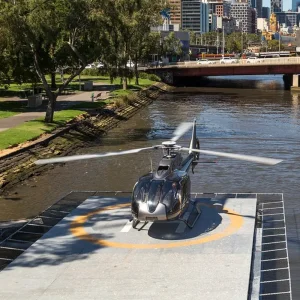
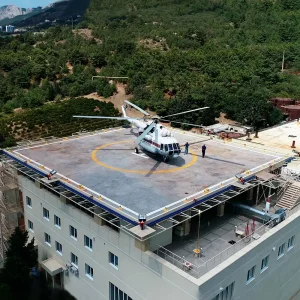
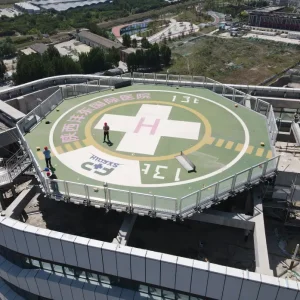
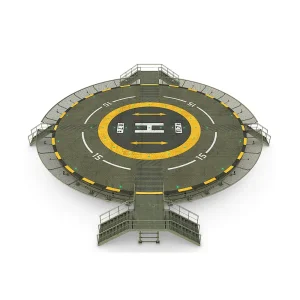
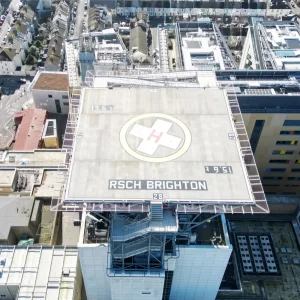
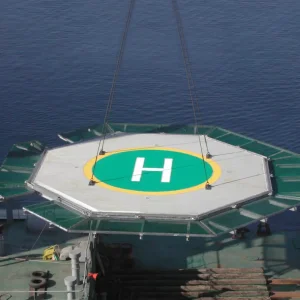
Helideck perimeter safety nets are a foundational security requirement for offshore platforms, shipboards, rooftops, and elevated structural platforms. Unlike standard safety nets, heliport protection nets must withstand extreme conditions: hurricane-force winds, intense UV radiation, high salt-spray corrosion, and the massive kinetic energy generated in the rare event of a crew member or equipment fall.
Under international aviation regulations, including CAP 437 and ICAO Annex 14, standard wire or rope configurations are no longer sufficient. Operators must install customized, certified non-collapsible perimeter protection nets capable of absorbing 2.3 kJ impact loads without catastrophic failure.
As a leading Customized Heliport Protection Nets Factory Manufacturer & Supplier, we understand that structural integrity translates to life safety. In this detailed guide, we explore the metallurgy, architectural configurations, and regulatory pathways necessary to implement safe, long-lasting helideck protection systems globally.
Established in 2015 and located in Foshan City, Guangdong, LvXing Intelligent Equipment Co., Ltd. boasts a skilled R&D team with extensive experience. We leverage exceptional technical expertise to effectively transform customers' ideas into reality, consistently meeting their precise requirements.
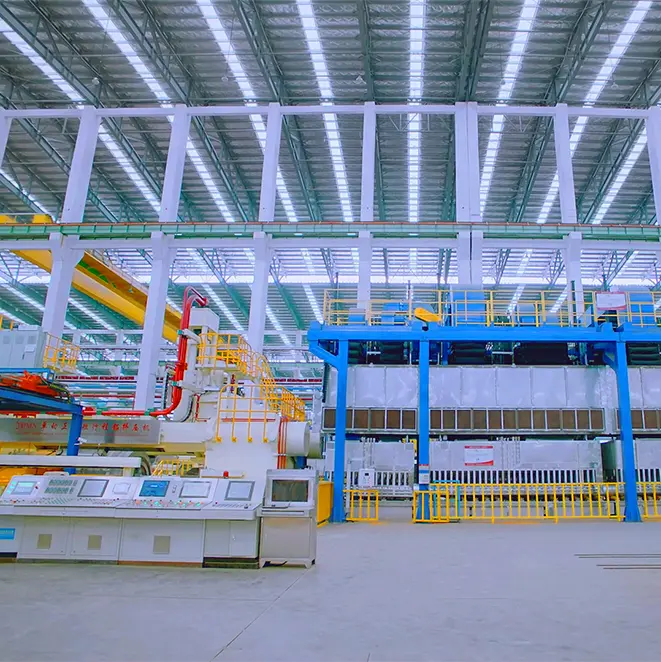
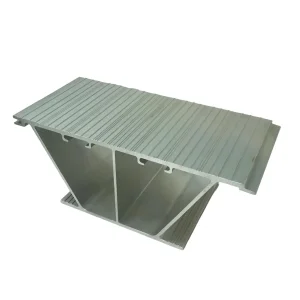
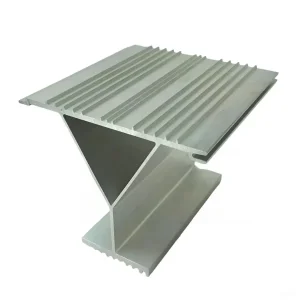
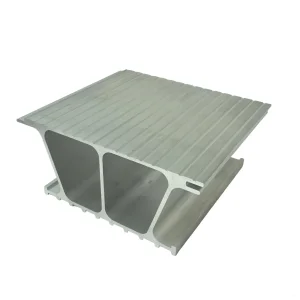
We utilize premium Fenglu aluminum, offering a diverse range of profiles for flexible applications. Our extrusion lines, ranging from 800T to 20,000T, accommodate alloys 1xxx, 2xxx, 3xxx, 5xxx, 6xxx, and 7xxx, allowing us to produce shaped products with section dimensions up to 1.2 meters in width and 28 meters in length. These products are recognized for their precision and meticulous processing, finding broad application in aerospace, military, medical, and industrial sectors.
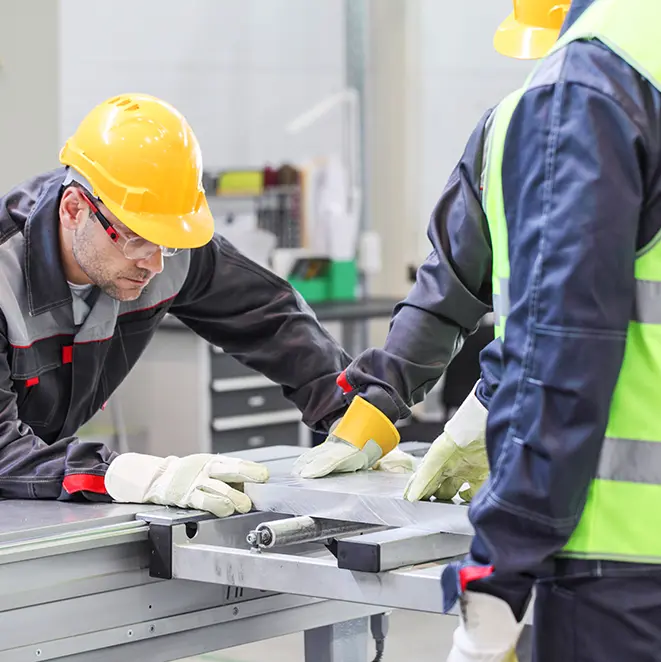
Our commitment to excellence is evident throughout the manufacturing process, rigorous quality control, thorough packaging, and efficient shipping procedures. This dedication has earned us recognition as a national excellent and honest enterprise, along with quality system certification in accordance with GB/T19001-2016/ISO9001:2015 standards.
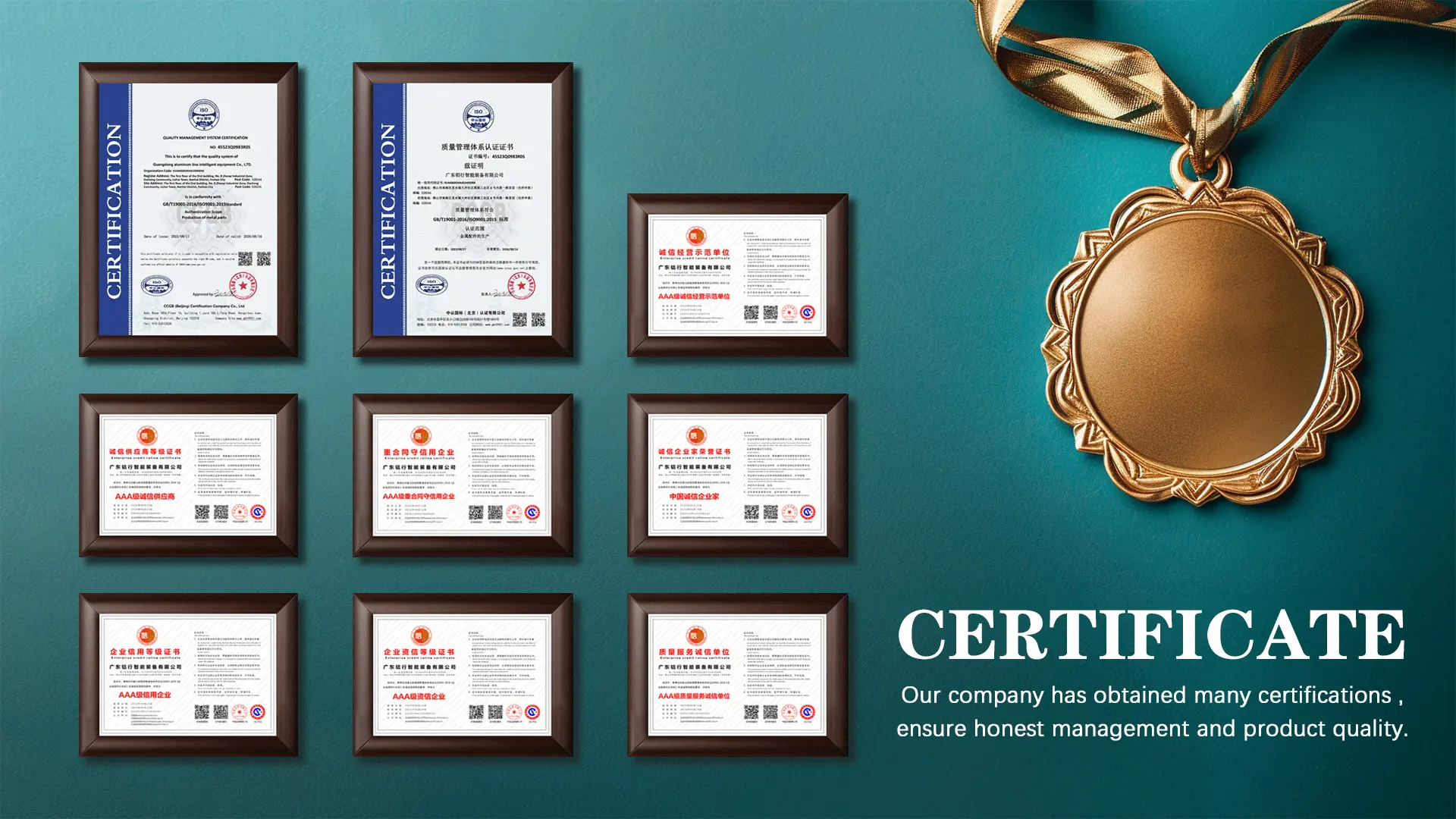
We have obtained the "Special Aluminium Materials for Aerospace" Certificate. This ensures our raw material processing meets the rigorous demands of aviation-grade construction.
Utilizing high-quality Fenglu aluminum profiles. With extrusion lines from 800T to 20,000T, producing alloys across 1xxx-7xxx series, up to 1.2m width and 28m length.
Our team of technicians has 15 years of invaluable experience. Deep understanding of requirements enables us to identify issues early and deliver custom solutions.
Heliport perimeter protection systems are subject to strict regulatory oversight. Civil aviation authorities in different jurisdictions dictate how safety nets must perform during physical stress events. Any manufacturer supplying these nets must guarantee adherence to specific regulatory pillars:
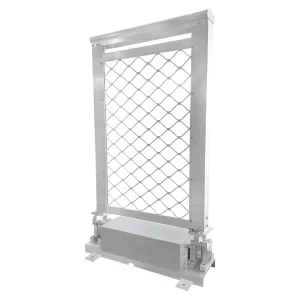
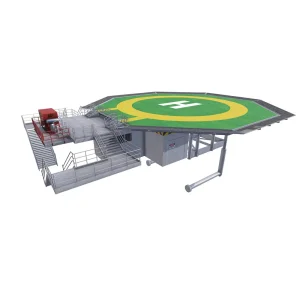
Widely considered the global standard for offshore helideck safety, UK CAA CAP 437 requirements state that the perimeter safety net must be at least 1.5 meters wide. It must project horizontally from the edge of the helideck and be inclined upwards at an angle between 10° and 15° to prevent personnel falling over the side from rolling out. Crucially, the net must not rise above the landing area level, maintaining the required clearance sector for the helicopter's rotors.
The International Civil Aviation Organization (ICAO) outlines rules for helidecks globally. Under Annex 14, perimeter safety nets must be constructed from non-corrosive material. The system must perform dynamically during drop tests, showing no tearing or compromise of the structural brackets or aluminum mesh when subjected to realistic body weight drop trajectories.
For operations inside the EU, CE Marking indicates conformity with health, safety, and environmental protection standards. Our customized square and mesh products have received the required CE markings to streamline approvals by European safety auditors and regulatory bodies.
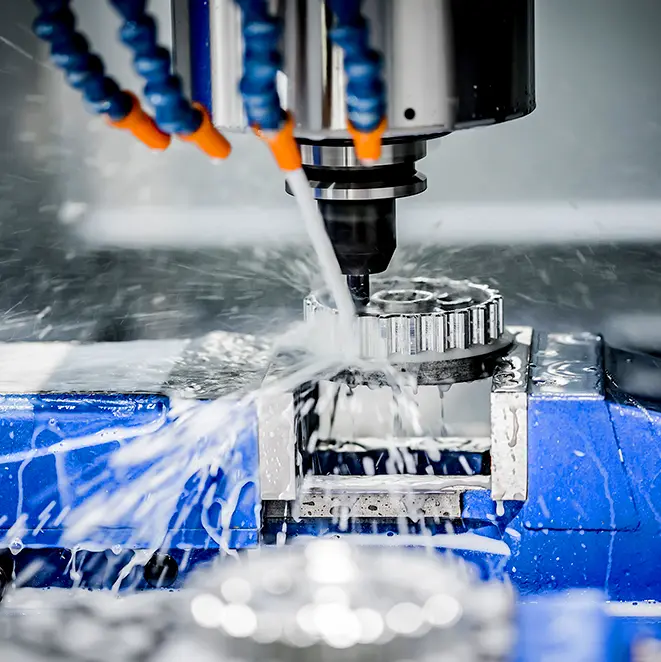
Choosing a Chinese manufacturer like LvXing provides global buyers with structural cost advantages without sacrificing mechanical performance. Our manufacturing ecosystem in Guangdong is designed to manage the entire lifecycle of custom aluminum production:
Through this integration, global procurement teams can reduce landing pad construction costs by 20% to 35% compared to local fabricators, while securing material traceability and certification.
Different installation environments present different structural challenges. Lvxing designs custom systems adapted to these specific use cases:
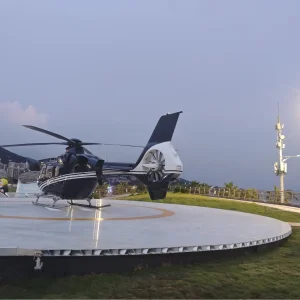
Offshore environments are highly corrosive. Traditional stainless steel nets are prone to crevice corrosion and pitting. Our marine-grade 6000-series aluminum alloy frames, paired with high-tensile wire mesh, offer excellent resistance to saltwater. They require virtually no structural maintenance for over 15 years.
Hospital roof-mounted helipads require lightweight safety structures to reduce the load on the building. Our custom aluminum alloys provide a high strength-to-weight ratio. They minimize structural loads while ensuring safety compliance, even on older buildings.
Superyacht designs emphasize both visual appeal and weight management. Our aluminum nets can be customized with sleek profiles, automated folding mechanisms, or hidden integrated layouts. This maintains the vessel's clean lines and keeps center-of-gravity additions minimal.
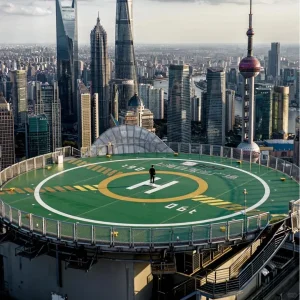
For modern commercial skyscrapers, heliport protection nets must withstand high wind shear forces. Our open-weave wire mesh designs reduce wind resistance. They prevent wind load amplification, protecting the building's structural edges.
To support engineering teams in their evaluation, we provide the following structural specifications for our aluminum alloy configurations:
| Property | 6000 Series (6061-T6 / 6082-T6) | 7000 Series (Aviation Grade) |
|---|---|---|
| Tensile Strength (MPa) | 290 - 310 | 540 - 570 |
| Yield Strength (MPa) | 240 - 270 | 480 - 500 |
| Corrosion Resistance | Excellent (Marine & Industrial) | Moderate-High (Anodization Recommended) |
| Elongation at Break | 10% - 12% | 11% - 13% |
Using our 20,000T extrusion press, we can adjust recrystallization zones and grain alignment during extrusion. This gives the profiles higher fatigue limits than typical standard commercial profiles, allowing them to withstand years of cyclic wind vibration.
 LvXing