Explore our high-performance engineered safety net configurations designed for multi-story emergency platforms and marine decks.
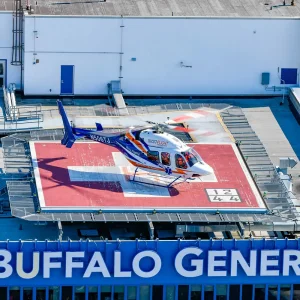
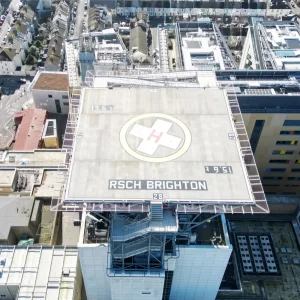
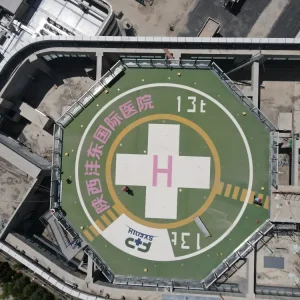
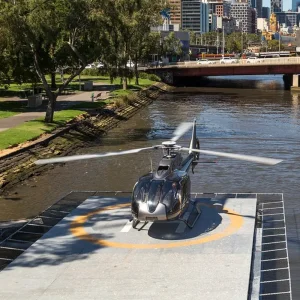
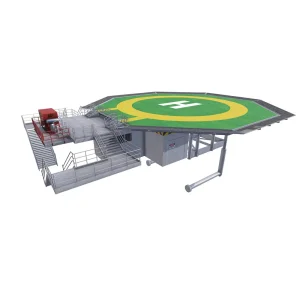
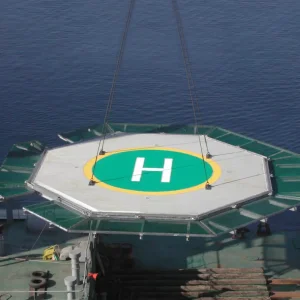
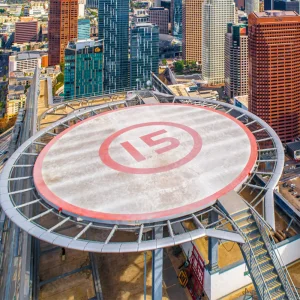
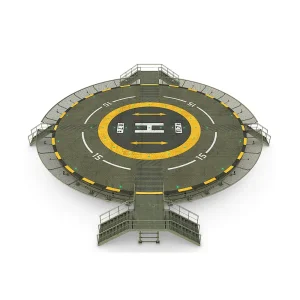
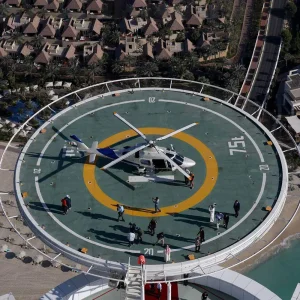
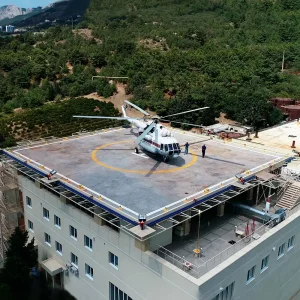
In high-density modern urban architectures, multi-story buildings, hospital rooftop emergency medical platforms, and remote offshore industrial structures, the rooftop helicopter landing facility (helideck) represents a critical lifeline. Rapid urbanization and the growing necessity of immediate trauma transport have escalated the installation of high-rise building helipads worldwide. However, safety parameters surrounding elevated landing areas demand rigorous engineering considerations far exceeding ground-level runways. Chief among these safety parameters is the installation of engineered perimeter safety netting (helicopter deck nets).
A helicopter deck net is not merely a fall barrier. It is an active safety net designed to arrest structural falls, absorb aerodynamic downwash forces generated by massive helicopter rotors, and resist extreme environmental degradation. This technical whitepaper explores the critical engineering parameters, global regulatory requirements, structural manufacturing trends, and industrial applications of customized helicopter deck nets for multi-story installations.
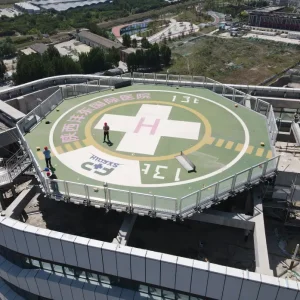
Under international aviation guidelines (such as CAP 437 and ICAO Annex 14), elevated helipads on multi-story buildings and offshore platforms must be fitted with a perimeter safety net system. These nets must project outwards by at least 1.5 meters from the edge of the landing platform to protect personnel, ground staff, and emergency workers from accidental falls. Crucially, the net profile must not present a vertical hazard: it must remain flush with or slightly below the deck level, angling upwards at no more than a 10-degree incline.
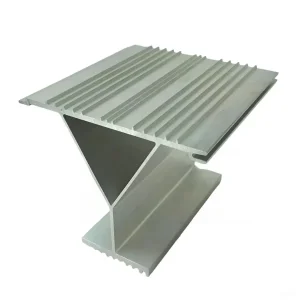
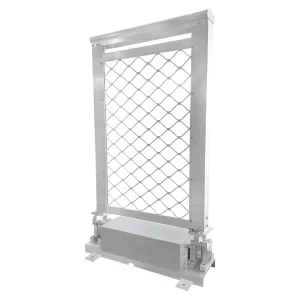
Furthermore, these installations are subject to relentless aerodynamic forces. When a rotorcraft prepares to land or take off, the downwash generates localized high-velocity wind loads. Standard security fences or loose netting cannot withstand these repeating pressure waves. Specialized aluminum profile systems and 316 stainless steel wire mesh structures are engineered precisely to distribute these pressure loads evenly across the anchor brackets into the building's structural concrete or steel frame.
Lvxing Intelligent Equipment manufactures helipad safety structures that undergo intense metallurgical stress testing.
Established in 2015 in the manufacturing core of Foshan City, Guangdong, LvXing Intelligent Equipment Co., Ltd. has established itself as an industry leader in customized aluminum engineering solutions. Boasting a highly skilled R&D team with extensive experience, we leverage exceptional technical expertise to effectively transform customers' ideas into physical, structurally sound helideck systems that meet precise international regulatory requirements.
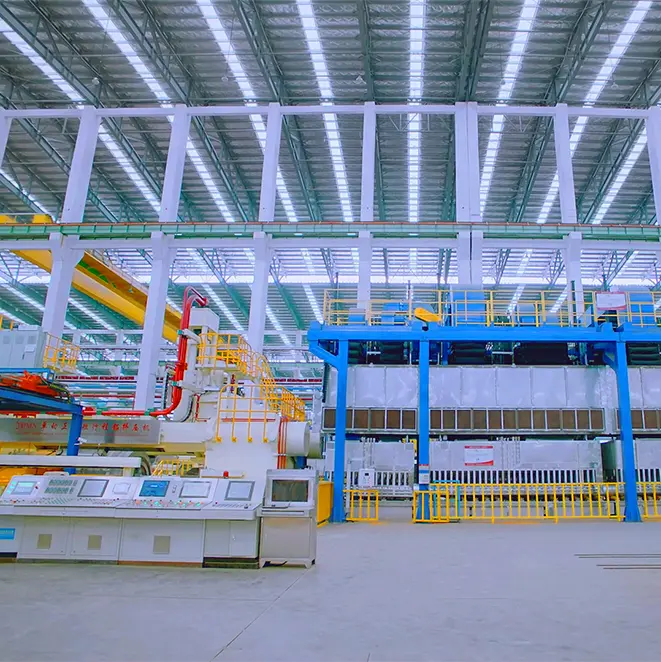
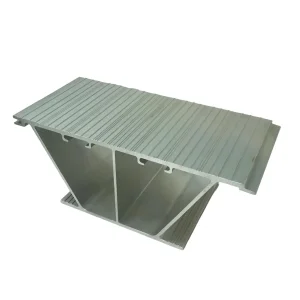
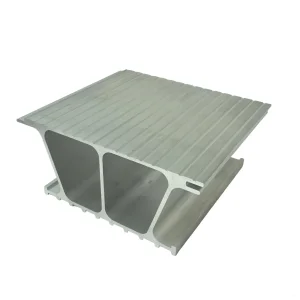
We utilize premium Fenglu aluminum, offering a diverse and high-grade range of profiles for flexible structural applications. Our extrusion capabilities are vast and diverse, spanning lines from 800T up to a monumental 20,000T. This enables us to process high-performance aluminum alloys across the 1xxx, 2xxx, 3xxx, 5xxx, 6xxx, and 7xxx series. We specialize in producing custom-shaped structures with section dimensions reaching up to 1.2 meters in width and 28 meters in length. These precision-engineered products are widely recognized for their meticulous manufacturing accuracy, making them highly sought after in aerospace, military, medical, and industrial sectors.
| Parameters & Alloys | Technical Capability | Standard Applications |
|---|---|---|
| Extrusion Capacity | 800T to 20,000T | Structural profiles, frames, crossbeams |
| Available Alloys | 1xxx, 2xxx, 3xxx, 5xxx, 6xxx, 7xxx | Aerospace, Marine, Offshore structural platforms |
| Max Extrusion Dimension | 1.2m width x 28m length | Single-span framing, large-scale modular decks |
| Quality System Certs | GB/T19001-2016 / ISO9001:2015 | Rooftop medical helipads, maritime vessels |
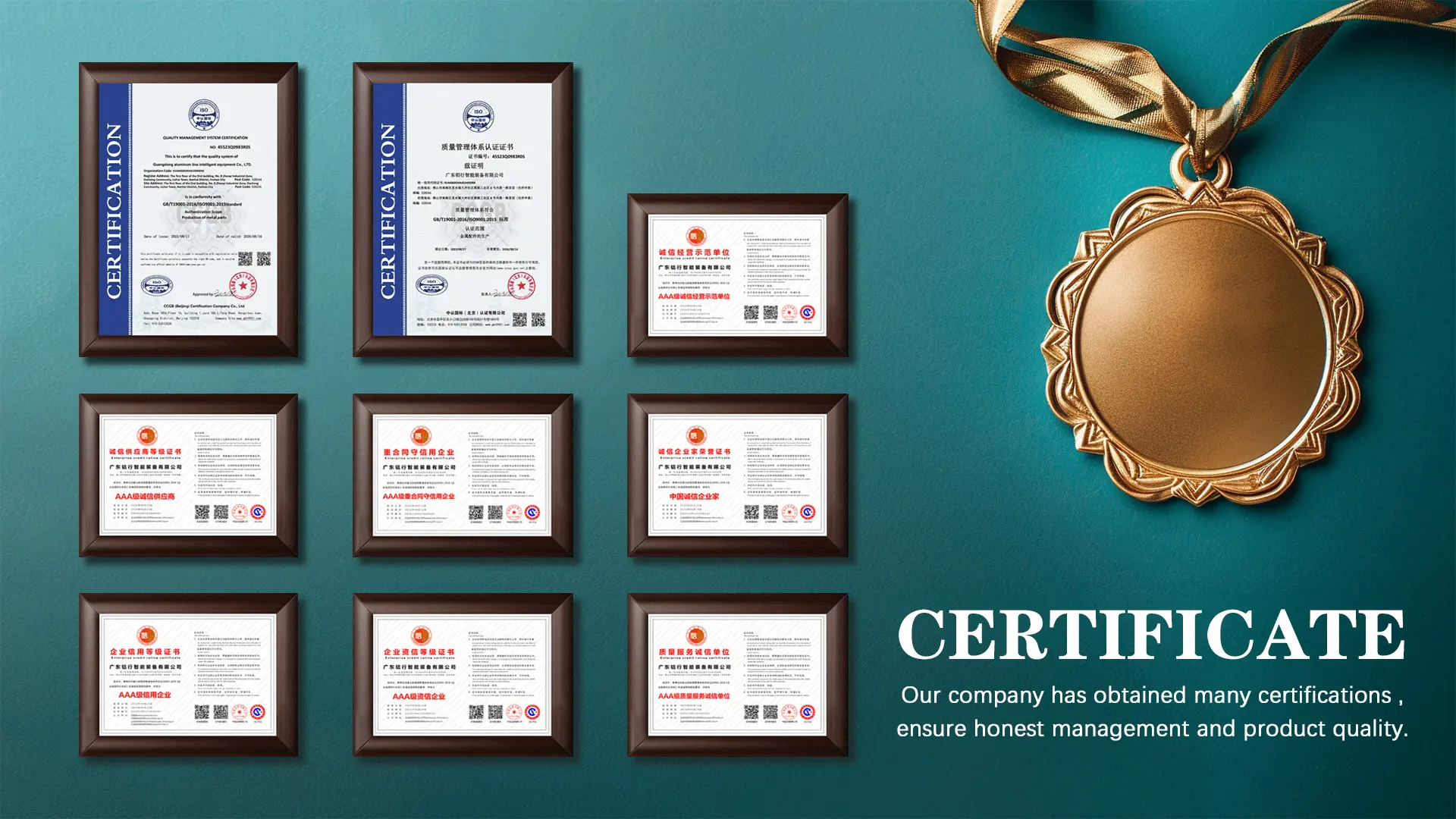
Our commitment to excellence is present throughout the manufacturing cycle, ranging from initial design optimization, metallurgical analysis, rigorous quality control testing, thorough packaging, and global logistics execution. This sustained dedication has earned us the recognition of being a national excellent and honest enterprise, coupled with full aerospace and quality management system certifications.

We have obtained the "Special Aluminium Materials for Aerospace" Certificate, guaranteeing the metallurgical stability required for high-risk landing zones.

High-quality Fenglu aluminum profiles. With extrusion lines from 800T to 20,000T, we manufacture fully shaped products up to 1.2m wide or 28m long across multiple alloys.

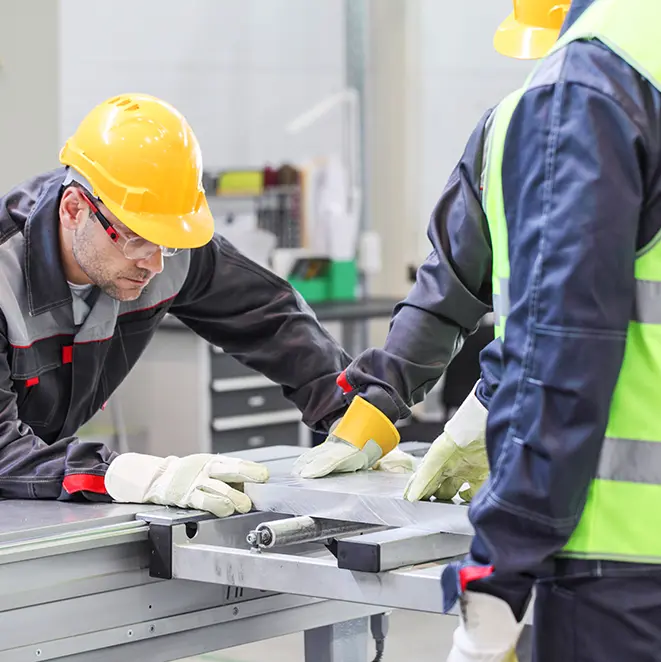
Our technicians bring over 15 years of invaluable experience, translating complex design criteria into reliable structural solutions for diverse safety environments.
The global commercial and industrial sectors are seeing a massive shift in how aviation access is integrated into infrastructure. Procurement officers for hospitals, real estate conglomerates, military bodies, and offshore oil platforms are no longer treating helidecks as accessory additions. They are viewed as highly integrated, high-stress architectural elements. Consequently, procurement demands have evolved: buyers are searching for fully customizable, corrosion-resistant, lightweight, and pre-engineered safety net systems.
Globally, procurement specs now center on three key vectors:
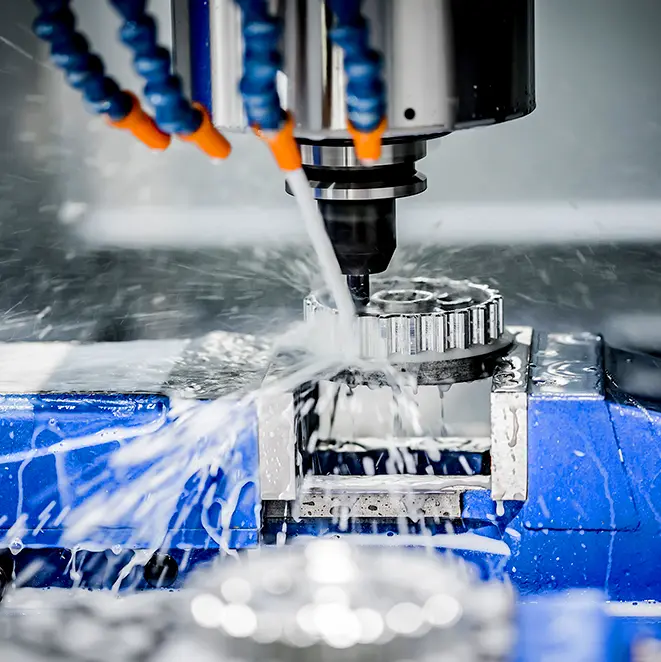
China's industrial clustering—particularly within Foshan's high-tech metallurgy zone—has allowed factories like LvXing to build highly optimized supply chains that offer significant lead-time and economic advantages to international procurement departments. Under a Factory 4.0 paradigm, our manufacturing line integrates digital design validation directly with extrusion lines, CNC precision processing, and Automated Tension Testing.
By leveraging massive local raw material supply hubs (such as Fenglu aluminum) and local specialized surface treatment facilities, we eliminate the logistics gaps that typically delay manufacturing timelines in Western Europe or North America. Furthermore, our 20,000T extrusion capability allows us to produce long-span framing components in-house, cutting out the markup and delays of third-party metal consolidators. The result is a highly responsive, resilient supply chain capable of delivering complex helipad perimeter configurations to strict project deadlines.
Helicopter safety nets must operate across highly diverse and hostile environments. Depending on location, structural engineering teams must customize the alloy and profile configurations:
To verify structural compliance, the design of a helicopter deck perimeter net must undergo finite element analysis (FEA) to confirm it can withstand dynamic drop loads. For instance, the safety net is designed to absorb the kinetic energy of a 100 kg body falling from a height of 1 meter. The net mesh must distribute the kinetic energy without rupturing or tearing away from its framing channels. Additionally, wind load calculations must assume velocities of up to 50 m/s (typical of Category 5 typhoons) to ensure structural anchoring brackets remain intact.
Lvxing’s engineering process is fully documented, providing buyers with material test reports (MTR), structural calculations, and CE certification documentation, assuring structural compliance right out of the box.
Get professional, engineering-backed answers regarding customized multi-story building helicopter deck nets.
Explore our structural aluminum profiles, perimeter netting options, and custom engineering helipad structures.
 LvXing