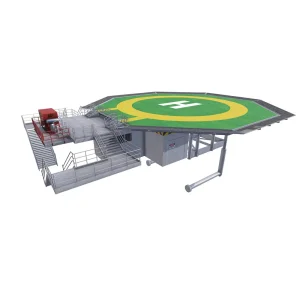
Explore our structural helideck safety net architectures. Heavy-duty aluminum mesh engineered for safety compliance and marine durability.
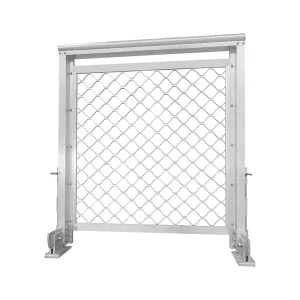
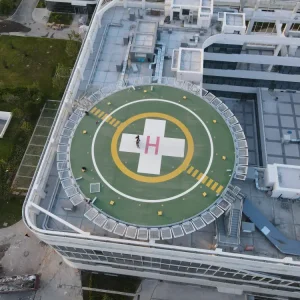
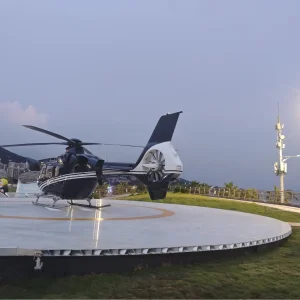
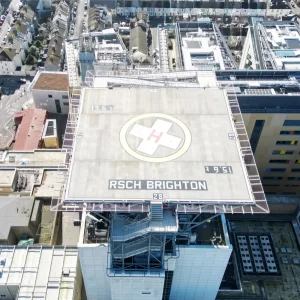
Established in 2015 and located in Foshan City, Guangdong, LvXing Intelligent Equipment Co., Ltd. boasts a skilled R&D team with extensive experience. We leverage exceptional technical expertise to effectively transform customers' ideas into reality, consistently meeting their precise requirements.
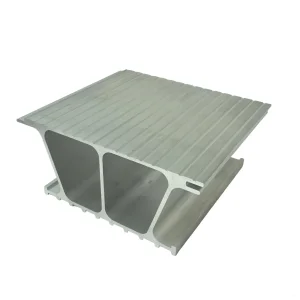
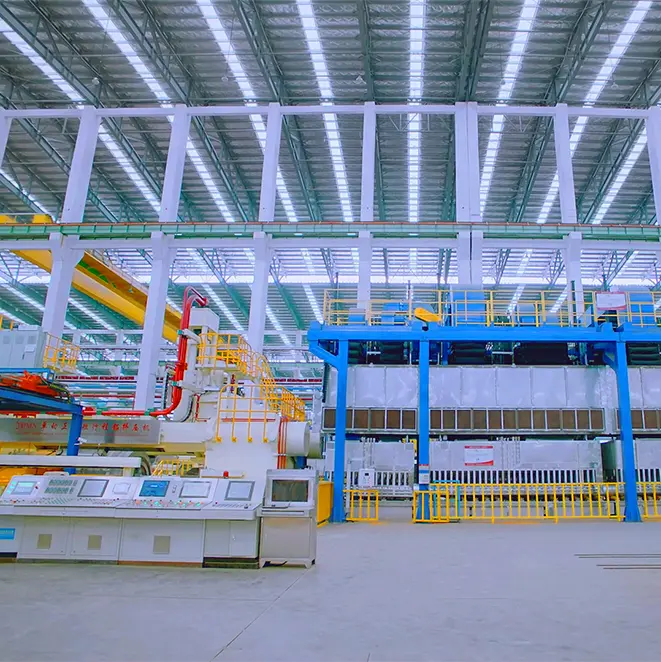
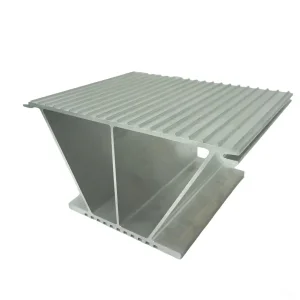
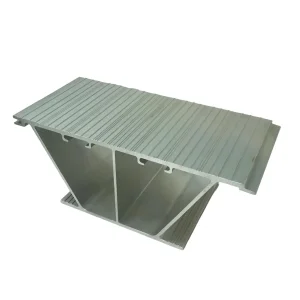
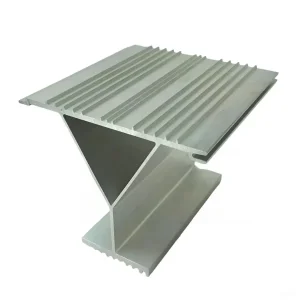
We utilize premium Fenglu aluminum, offering a diverse range of profiles for flexible applications. Our extrusion lines, ranging from 800T to 20,000T, accommodate alloys 1xxx, 2xxx, 3xxx, 5xxx, 6xxx, and 7xxx, allowing us to produce shaped products with section dimensions up to 1.2 meters in width and 28 meters in length. These products are recognized for their precision and meticulous processing, finding broad application in aerospace, military, medical, and industrial sectors.
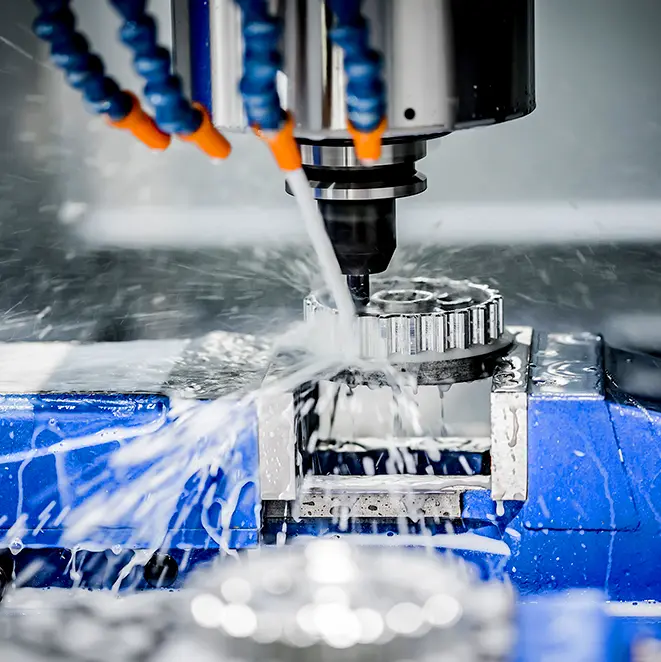
Our commitment to excellence is evident throughout the manufacturing process, rigorous quality control, thorough packaging, and efficient shipping procedures. This dedication has earned us recognition as a national excellent and honest enterprise, along with quality system certification in accordance with GB/T19001-2016/ISO9001:2015 standards.
We aspire to be your trusted business partner and warmly invite you to visit our factory.
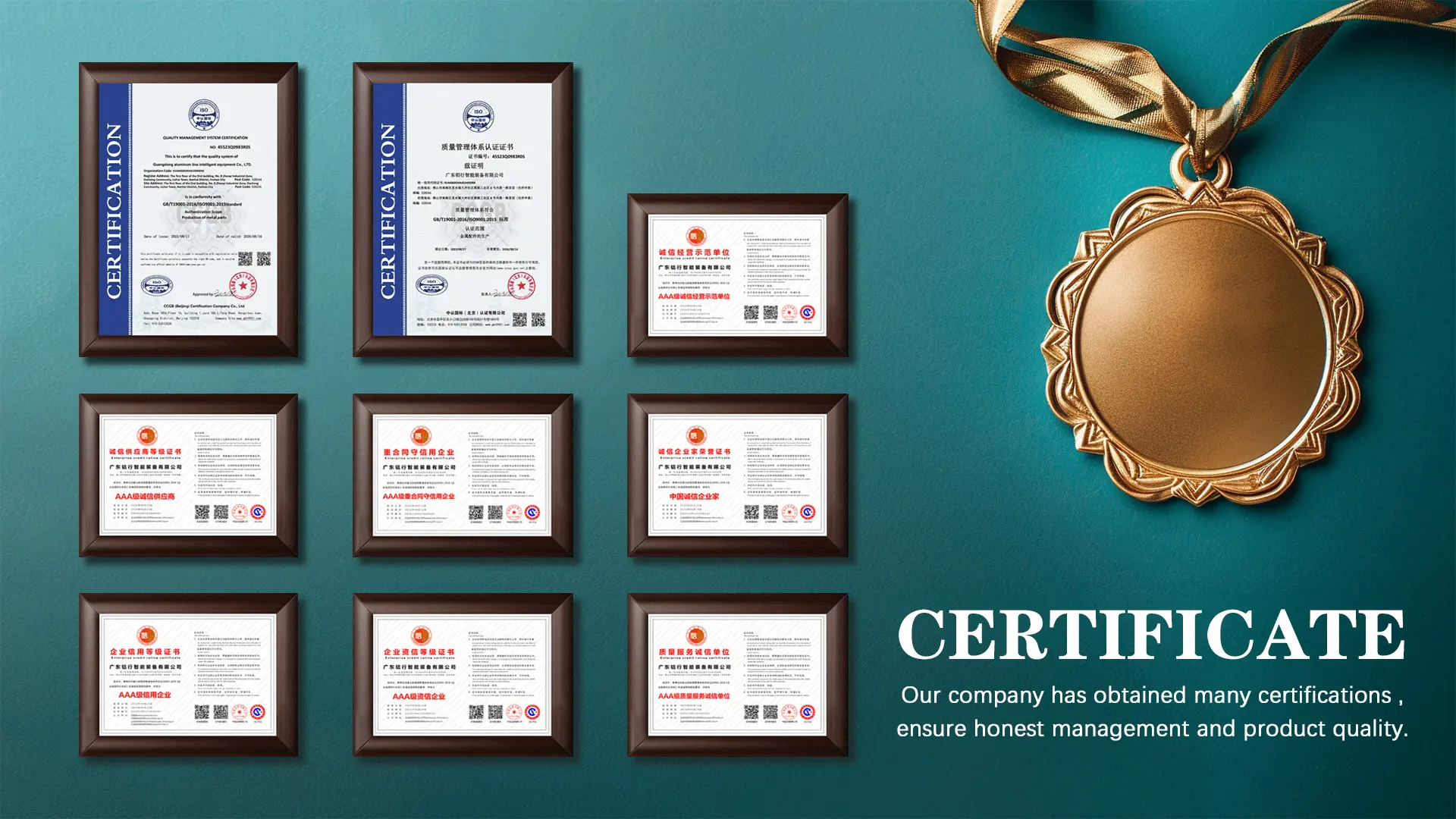
Why Lvxing remains the preferred global manufacturing partner for structural helipad systems.

We have obtained the "Special Aluminium Materials for Aerospace" Certificate, confirming our technical compliance with national defense and commercial aviation applications.

We utilize premium Fenglu aluminum profiles. Extrusion lines from 800T to 20,000T support alloys 1xxx to 7xxx, with section dimensions up to 1.2m width or 28m length.

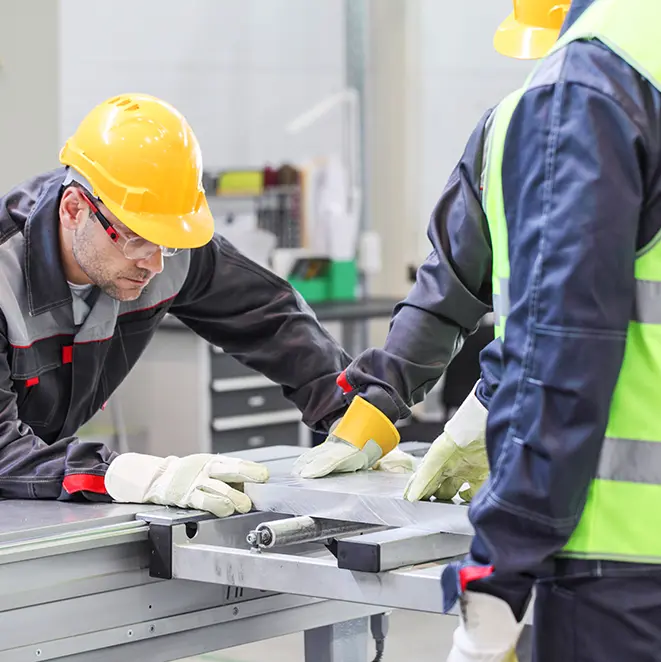
Our team of technicians has 15 years of experience. We identify structural friction risks, design challenges, and deliver customizable profiles meeting specialized engineering metrics.
An authoritative analysis on safety regulations, material engineering, and structural performance under marine and urban environments.
For decades, perimeter safety nets installed on maritime vessels, offshore oil platforms, and high-rise commercial structures were constructed using traditional coated carbon steel or nylon meshes. However, these materials struggle with modern structural demands. Steel exhibits rapid degradation in salt-laden coastal conditions, requiring constant inspections and recoating. Nylon and synthetic polymers suffer from accelerated ultraviolet (UV) degradation, losing critical tensile strength in less than 3 years.
The global helicopter safety community has shifted towards engineered aluminum alloy structures, specifically marine-grade 6000 and high-tensile 7000 series aluminum profiles. These alloys naturally form a protective passivation layer, providing corrosion resistance. Structurally, aluminum helipad safety nets offer a lightweight layout, decreasing structural loads on cantilevered roof platforms, and providing high energy-absorption characteristics during drop-impact events.
B2B procurement agents, naval architects, and institutional engineers follow strict compliance checklists when qualifying a supplier for helipad perimeter nets. Critical engineering considerations include:
Total compliance with CAP 437 (Standards for Offshore Helicopter Landing Areas), FAA AC 150/5390-2C, and ICAO Annex 14 requirements for safety net designs.
Validation of dynamic impact loading. Networks must withstand a drop-test energy equivalent to a 100kg mass dropped from a height of 1m without structural failure.
Mill test certificates (MTC) matching the chemical formulation of raw materials. Aluminum alloys must be traced back to high-grade ingots (e.g., Fenglu Aluminum).
Additionally, modern procurements request configurations that eliminate "trampoline effects." Instead of rigid surfaces, safety nets must be designed to flex and catch falling personnel, minimizing injury risks while preventing bounce-back into hazardous open spaces.
Helicopter landing decks serve diverse industries, each presenting unique structural issues. Our manufacturing capabilities allow us to customize profiles to meet these specific environments:
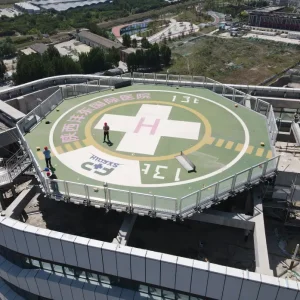
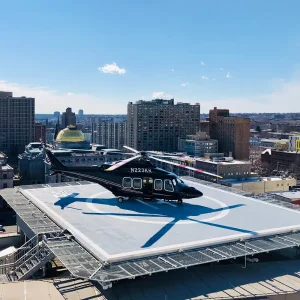
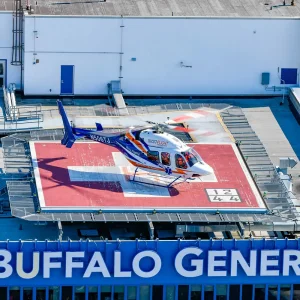
Hospital Rooftop Emergency Helipads: These helidecks demand quiet operations and low structural weights to prevent building resonance. The lightweight nature of aluminum profiles ensures rooftop stability. Netting systems must remain flush with the deck to prevent trip hazards during critical patient transit sequences.
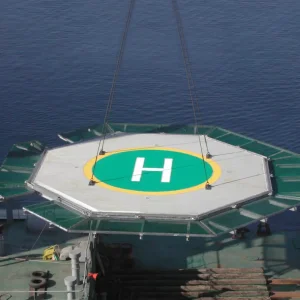
Offshore Energy Rigs and FPSOs: Exposed to violent storms and salt fog, these structures require safety nets resistant to galvanic corrosion. Lvxing's marine-grade alloy extrusions, combined with 316 stainless steel tensioning hardware, offer reliable performance in these marine environments.
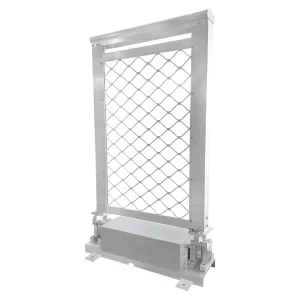
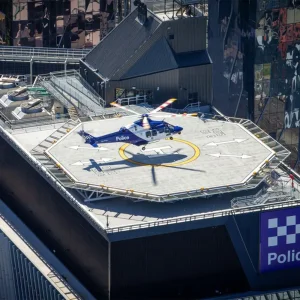
Military and Police Rooftop Operations: These helipads require rapid manual or automatic deployment options. Lvxing supplies custom-configured motorized/electric folding perimeter safety nets alongside manual swing-away systems designed to optimize clear paths for tactical aircraft maneuvers.
As a global supplier, Lvxing bridges localized engineering demands by offering targeted technical consultation. We work directly with international design firms, accepting CAD and BIM files to fabricate custom extrusion molds. Our 20,000-ton hydraulic extrusion press allows us to create monolithic panels, reducing structural joints and minimizing stress concentration zones.
Every shipment is accompanied by CE documentation and testing reports verifying alloy properties. For regional compliance (such as European EN standards or American ASTM specifications), we offer localized certification support, ensuring that our helidecks integrate cleanly into municipal building permits or offshore class society certifications (e.g., DNV, ABS, LR).
Lvxing is investing in smart-helideck technology. Our future product roadmap includes the integration of fiber-optic strain sensors inside our aluminum profiles. These sensors provide structural health monitoring, alerting engineers to load changes, impact fatigue, or structural shifts before visual cracks appear.
Furthermore, we are developing integrated low-voltage LED safety lighting built directly into the perimeter frame of the safety net. This illumination improves visibility for incoming pilots during nocturnal operations and adverse weather conditions, without presenting high-angle vertical obstructions around the deck perimeter.
Answers to engineering and procurement queries regarding specifications, testing, and compliance.
High-durability helideck mesh, rooftop assemblies, and custom extrusion profiles ready for global shipment.
 LvXing