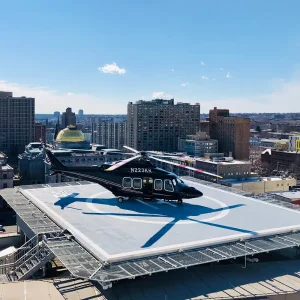
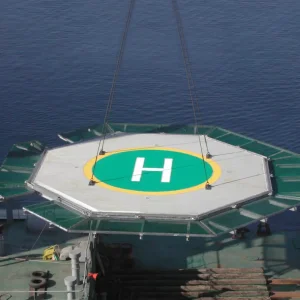
Explore our industrial range of high-strength helideck perimeter safety systems, custom profiles, and certified rescue platform arrays.
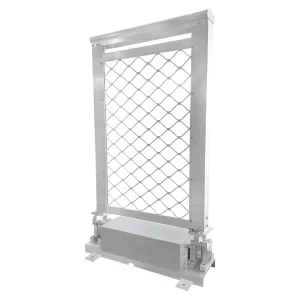
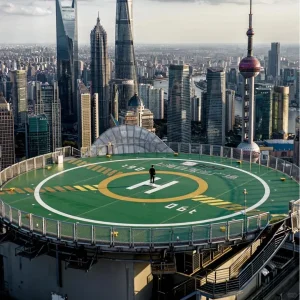
Within vertical aviation architecture (including urban skyscrapers, deep-sea exploration vessels, and military landing vessels), the perimeter safety net is not merely a passive containment barrier. It functions as a dynamic kinetic energy absorber, specifically calibrated to arrest human falls and structural debris displacements under severe offshore crosswinds and seismic activities. According to civil aviation regulatory directives such as CAP 437 and FAA AC 150/5390-2C, these systems must survive extreme ambient corrosion, heavy UV exposure, and intense dynamic impacts.
Traditional structural steel installations, although resilient under static configurations, are heavily susceptible to marine atmospheric oxidation (rusting) and impose severe weight penalties on structural cantilevers. By utilizing marine-grade aluminum alloy profiles, modern vertical landing pads mitigate structural fatigue, simplify mechanical operations, and guarantee maintenance-free lifespans extending beyond 25 years.
As a leading developer, Lvxing Intelligent Equipment offers a comprehensive ecosystem from structural extrusion designs up to motorized, fail-safe perimeter net assemblies.
Lvxing, Specializes in High-Performance Aluminum Engineering & Safety Systems.
Established in 2015 and located in Foshan City, Guangdong, LvXing Intelligent Equipment Co., Ltd. boasts a skilled R&D team with extensive experience. We leverage exceptional technical expertise to effectively transform customers' ideas into reality, consistently meeting their precise requirements.
We utilize premium Fenglu aluminum, offering a diverse range of profiles for flexible applications. Our extrusion lines, ranging from 800T to 20,000T, accommodate alloys 1xxx, 2xxx, 3xxx, 5xxx, 6xxx, and 7xxx, allowing us to produce shaped products with section dimensions up to 1.2 meters in width and 28 meters in length. These products are recognized for their precision and meticulous processing, finding broad application in aerospace, military, medical, and industrial sectors.
Our commitment to excellence is evident throughout the manufacturing process, rigorous quality control, thorough packaging, and efficient shipping procedures. This dedication has earned us recognition as a national excellent and honest enterprise, along with quality system certification in accordance with GB/T19001-2016/ISO9001:2015 standards. We aspire to be your trusted business partner and warmly invite you to visit our factory.
Proven Technical and Industrial Extrusion Prowess
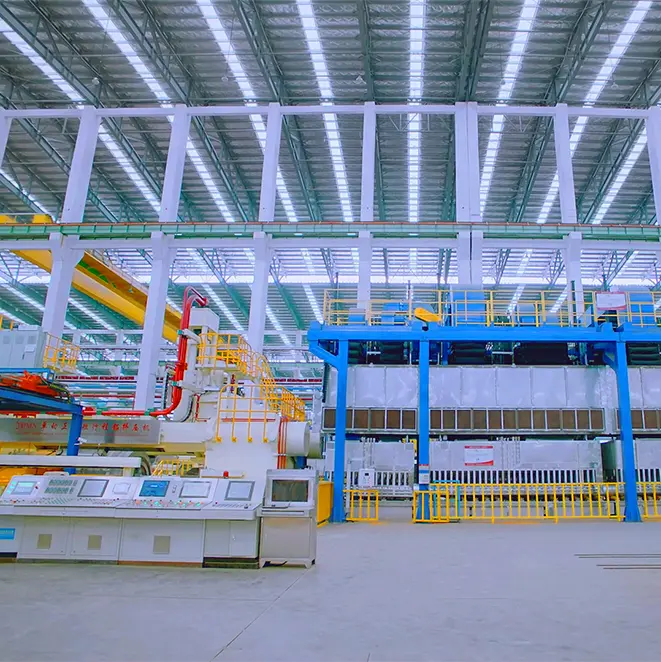

We have obtained the “Special Aluminium Materials for Aerospace” Certificate. This guarantees that every perimeter net and decking profile meets high fatigue resistance and military-grade safety factors.
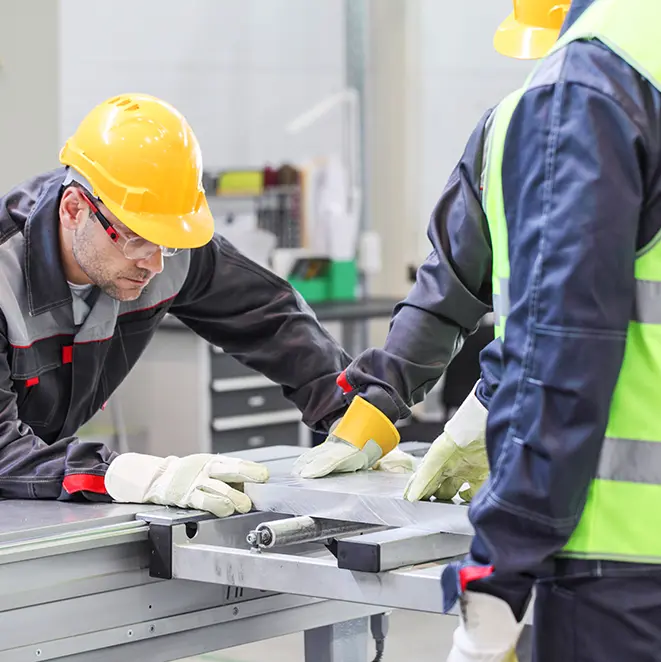

We provide and utilize high-quality Fenglu aluminum profiles. With extrusion lines ranging from 800T to 20,000T, we can produce alloys 1xxx, 2xxx, 3xxx, 5xxx, 6xxx, and 7xxx. We can manufacture fully shaped products with section dimensions up to 1.2 meters in width or 28 meters in length.
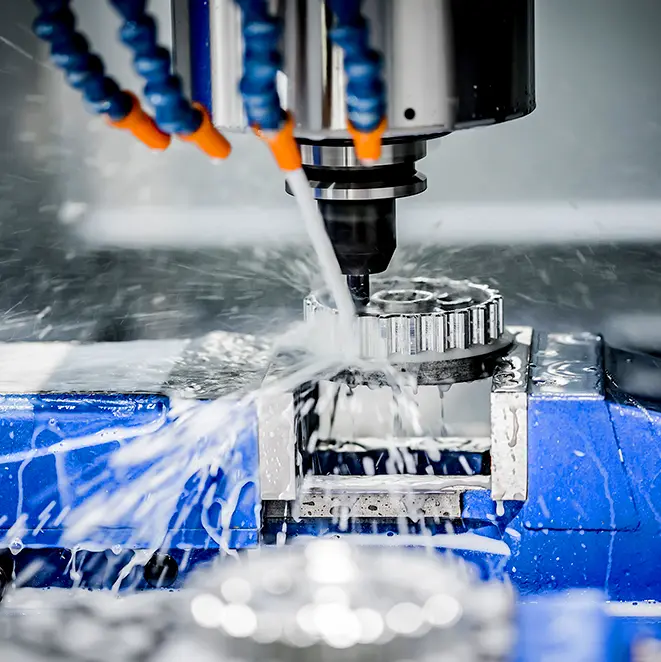

We have a team of technicians with 15 years of invaluable experience. Our deep understanding of customer requirements allows us to identify potential issues and offer practical insights, turning customer ideas into tangible products that meet specific needs.
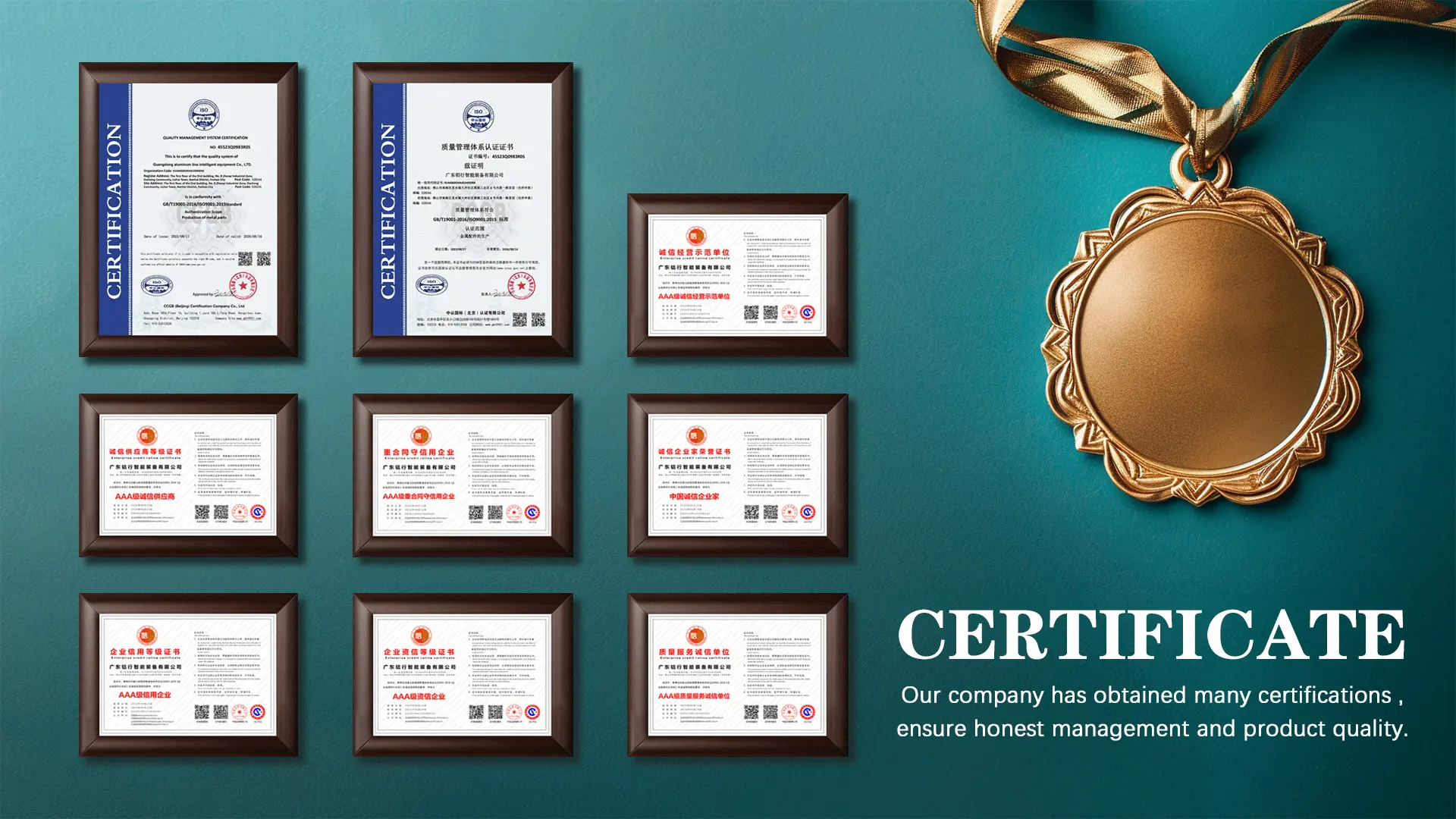
A comprehensive overview of dynamic security shifts in modern vertical aviation landing pad design.
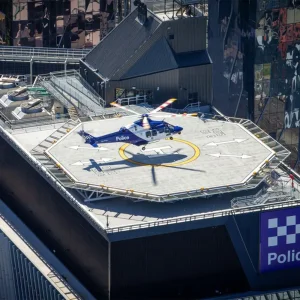
Urban developers and offshore operators are moving away from heavy steel structures. Aluminum mesh and structural safety perimeter systems reduce structural load on building cantilevers, allowing for simpler installation and lowered costs.
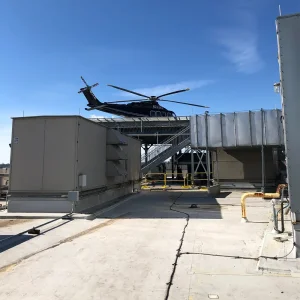
High-end naval vessels and skyscraper rooftops require automated folding or electric/manual pivoting systems. Modern helidecks utilize motorized perimeter safety nets that retract seamlessly to prevent collision with helicopter blades during crosswind maneuvers.
Offshore helidecks encounter salt-spray corrosion daily. Procuring agencies mandate marine-grade 6082-T6 and 316 stainless steel cable netting systems that survive corrosive environments without structural degradation, guaranteeing 15+ years of operational service.
Comparative design metrics across aerospace, marine, and commercial civil aviation specifications.
| Specification Parameter | Marine Offshore (CAP 437) | Urban Hospital/Police Pad (FAA) | Military & Naval Operations |
|---|---|---|---|
| Primary Material Structure | Anodized Aluminum 6082-T6 / SS316 | Structural Aluminum 6061-T6 / SS304 | Mil-Spec Anodized Aluminum 7075 / SS316 |
| Dynamic Impact Load | Min. 2.3 kJ (Body weight drop 100kg from 1m) | Min. 1.8 kJ (Standard civilian safety fall limits) | Min. 3.5 kJ (Enhanced military cargo fallback) |
| Outer Projection | 1.5 meters wide sloping upward (10°) | 1.5 meters wide level or slightly sloping | 1.5 to 2.0 meters variable customizable profile |
| Corrosion Protection | Class I Anodizing (25μm) / Acid-resistant | Class II Anodizing (15μm) / Weather-resistant | Hard Anodized (50μm) / Severe environment coating |
| Mechanical Operations | Manual Retraction / Fixed Bracket | Fixed Cantilever Frame Assembly | Motorized Electric Auto-Retract / Pivoting Linkages |
A look at how Lvxing Intelligent Equipment is shaping the future of landing safety.
Perfecting the electrical retraction of perimeter safety net arrays via remote PLC controllers. Eliminating manual deployment risks on vessels experiencing pitching motion.
Integrating strain gauges within structural safety net frames to alert maintenance personnel of structural compromise or impact incidents instantly.
Combining the high-precision capability of our 20,000T aluminum extrusion capabilities with lightweight composites to decrease structural weight by an additional 35%.
Expert answers addressing the compliance, manufacturing, and design of vertical landing pad systems.
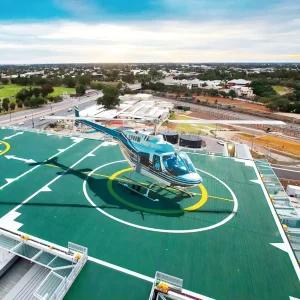
Under international CAP 437 regulations, a safety net must extend at least 1.5 meters outwards from the deck perimeter. It must not project above the level of the landing area itself. Instead, it should slope upwards at an angle of roughly 10 degrees to safely cradle falling personnel and prevent them from bouncing outward off the net.
Aluminum alloys, especially structural grades like 6061-T6 and 6082-T6, offer an exceptional strength-to-weight ratio. They minimize structural loads on skyscraper roofs or offshore platforms. Furthermore, aluminum forms a natural protective oxide layer that resists corrosion in severe marine saltwater settings far better than standard carbon steel, reducing structural maintenance overhead to zero.
We execute standard dynamic drop testing. A 100 kg weight (representing an adult technician with tools) is dropped from a height of 1 meter directly onto the net center. The net assembly, mesh, and support frame must absorb the kinetic energy without tearing, separating from the framework, or causing the structural frame to experience permanent mechanical failure.
Yes. Supported by our 800T to 20,000T extrusion lines, we specialize in producing complex structural profiles. We can extrude sections up to 1.2 meters wide and 28 meters long using various alloy grades (1xxx to 7xxx), customized precisely to match your engineering layouts and loading specifications.
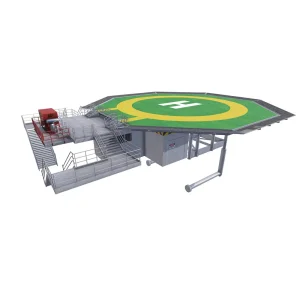
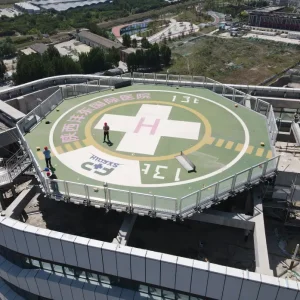
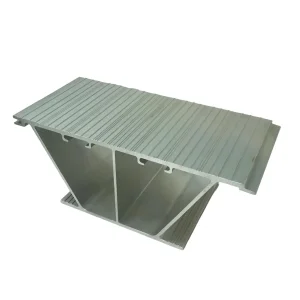
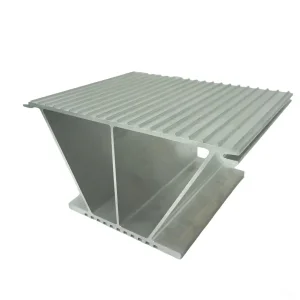
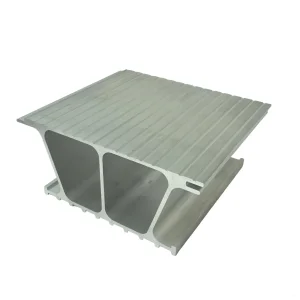
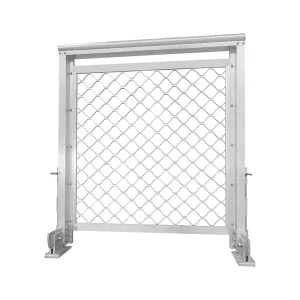
Engineered profiles and helipad decking components from Lvxing manufacturing facilities.
 LvXing