Engineered specifically for structural integrity, rapid assembly, and seawater corrosion resistance in Southeast Asian marine and urban environments.
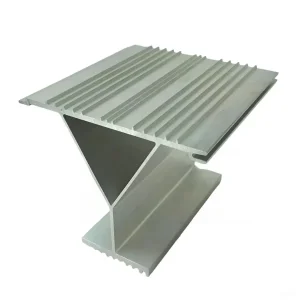
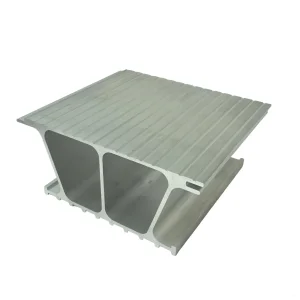
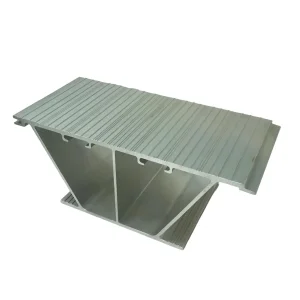
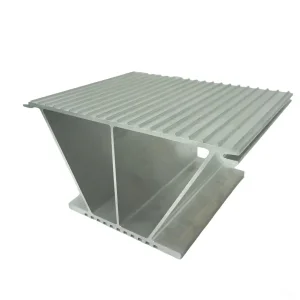
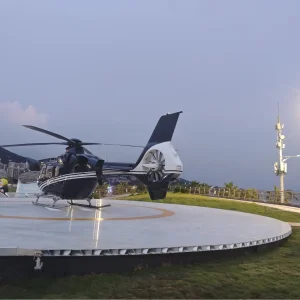
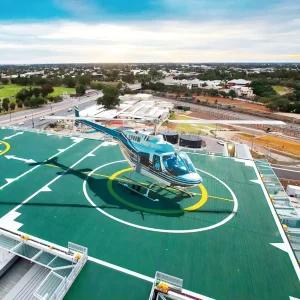
Thailand's unique position as a leading medical hub, tourist destination, and oil exploration powerhouse in the Gulf of Thailand has catalyzed a substantial surge in helicopter landing facility developments. Key industries such as offshore gas extraction, luxury hotel and resort infrastructure, and emergency medical services (EMS) demand high-performance architectural systems that can withstand extreme environmental conditions.
Operated within the Gulf of Thailand, offshore assets face relentless tropical heat, high moisture, and saline corrosion. Traditional steel decks degrade rapidly under these conditions, demanding continuous maintenance. Modern engineering calls for high-tensile 6000-series aluminum alloys that naturally resist salt-spray corrosion while significantly reducing deck weight, lowering structural load stresses on the platform jacket.
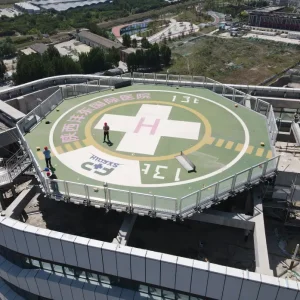
Bangkok's rapid medical centralization requires state-of-the-art trauma centers to house advanced rooftop helipads. Building retrofitting is strictly constrained by structural load bearing capacities. Extruded aluminum profile modular assemblies offer a lightweight alternative (up to 70% lighter than concrete), allowing hospitals to install structural helipads without extensive structural reinforcement of older facilities.
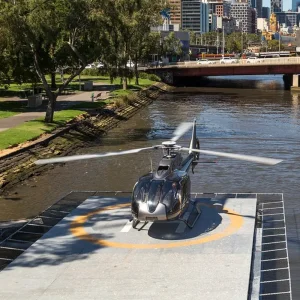
Phuket, Koh Samui, and Pattaya luxury properties rely heavily on swift, private aerial transport. Esthetic integration, noise attenuation, and structural safety are paramount. Aluminum alloy modular planking allows for customized shapes, anti-skid surfaces, and built-in drainage channels that meet strict environmental regulations and high architectural standards.
As structural engineering evolves, the adoption of modular aluminum profiles has transitioned from an innovative alternative to a global standard. When compared directly with steel or concrete, structural aluminum provides a multi-fold advantage in life-cycle cost (LCC), structural load management, and installation speed.
| Specification/Factor | Structural Aluminum Decking | Reinforced Concrete Decking | Structural Mild Steel Decking |
|---|---|---|---|
| Dead Weight Load | ~ 75 kg/m² (Ultra-lightweight) | ~ 350-500 kg/m² (Extremely heavy) | ~ 200 kg/m² (Heavy structural) |
| Corrosion Resistance | Excellent (Self-passivating oxide layer) | Poor (Spalling, rebar degradation) | Very Poor (Requires continuous painting) |
| Installation Duration | 7 - 10 Days (Modular interlocking) | 30 - 60 Days (Curing required) | 20 - 30 Days (On-site heavy welding) |
| Service Life Span | 35+ Years (Zero Maintenance) | 15 - 20 Years (Requires restoration) | 10 - 15 Years (Requires sandblasting/repainting) |
All structural designs implemented within Thailand must align with the standards set by the Civil Aviation Authority of Thailand (CAAT) and international guidelines. Crucially, our products are engineered to conform to the ICAO Annex 14 Volume II (Heliports), CAP 437 (Standards for Offshore Helicopter Landing Areas), and the American Society for Testing and Materials (ASTM) standards. Our structural profiles offer a standardized solution to help engineering teams gain quick compliance approval from Thai aviation officials.
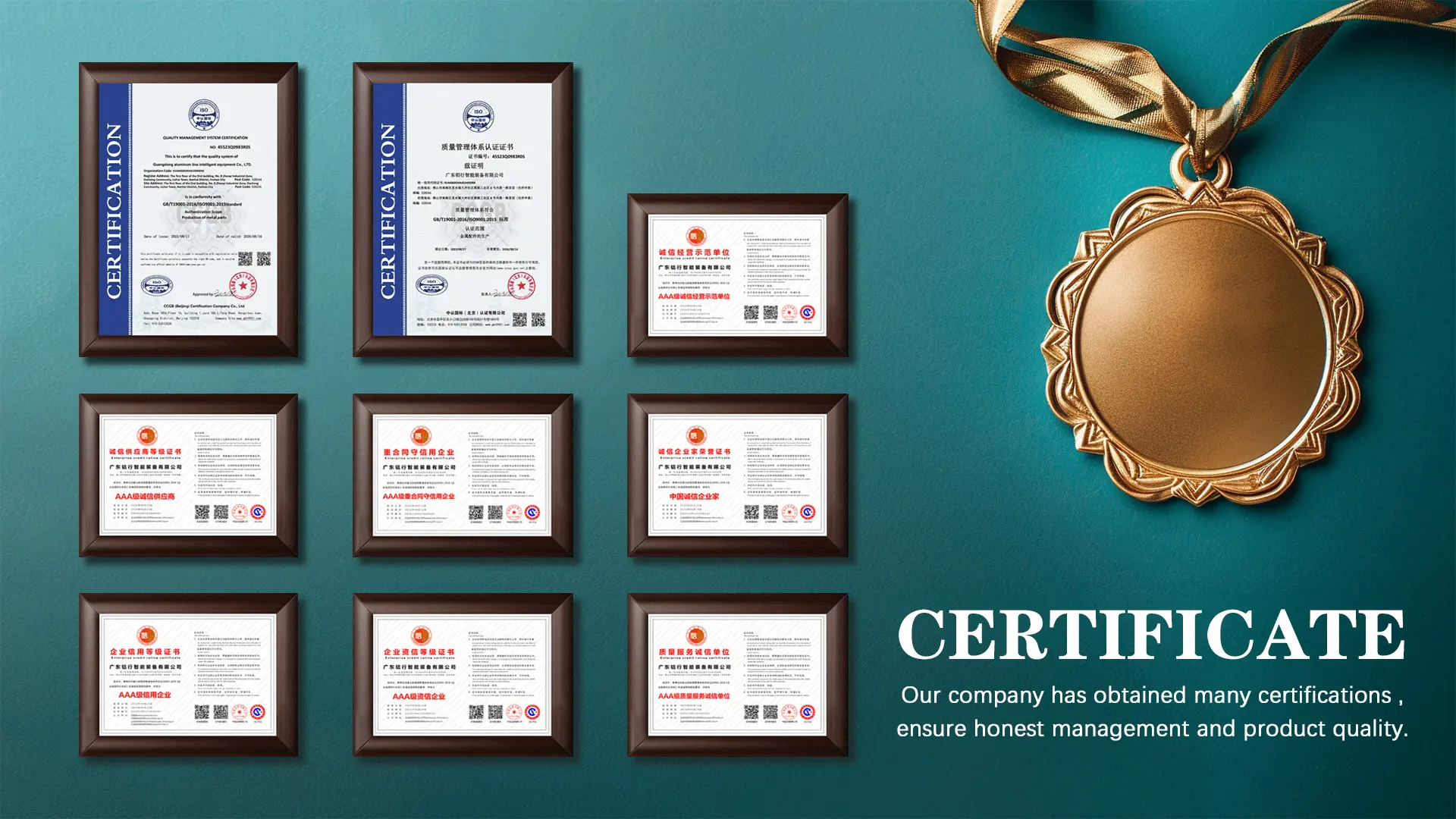
Established in 2015 and based in Foshan City, Guangdong, LvXing is a national-level excellent and honest enterprise. We have built an elite R&D team specializing in transforming intricate conceptual designs into heavy-duty structural reality. Our ISO9001:2015 and GB/T19001-2016 certifications underscore our dedication to quality, traceabilty, and safety.
We utilize premium Fenglu aluminum to guarantee unmatched tensile strength and durability. Our capabilities extend across multiple alloys, including 1xxx, 2xxx, 3xxx, 5xxx, 6xxx, and 7xxx, allowing us to customize the exact material composition for specific structural and anti-corrosion profiles.
Armed with massive extrusion presses from 800T to 20,000T, we can extrude complete profile modules up to 1.2 meters wide and 28 meters long. This significantly reduces the need for structural joining/welding points, greatly minimizing weak points and cutting assembly times in half.
Our manufacturing features the prestigious "Special Aluminium Materials for Aerospace" Certificate. Every batch undergoes ultrasonic inspection, mechanical pull tests, dimensional tolerance checks, and corrosion acceleration tests, ensuring strict consistency with world-class safety standards.
For engineering firms in Thailand, logistics and import coordination can represent critical friction points. To address this, LvXing offers tailored localization services that ensure seamless deployment of aluminum helipads across Bangkok, Chonburi, Rayong, and the offshore platforms in the Gulf of Thailand.
Our engineers provide comprehensive Finite Element Analysis (FEA) based on the specific helicopter models planned for your deck (e.g., Sikorsky S-92, Airbus H175). We calculate exact deflection limits, dynamic landing factor reactions, and shear stresses in line with localized wind shear models typical of monsoon seasons in Thailand.
Every profile is shipped as a numbered, ready-to-assemble kit. No on-site hot work (welding) is required. Planks lock together using precision tongue-and-groove joints and stainless steel fasteners, ensuring lightning-fast installation on offshore topsides and urban high-rises.
We supply full trace documentation, raw material certificates (MTRs), mill test reports, and customs clearing documentation conforming to regional Thai import policies, reducing port-side customs delays to a minimum.
As aviation pushes toward sustainable air mobility, including Electric Vertical Takeoff and Landing (eVTOL) aircraft, helipads must adapt. LvXing is pioneering developments to integrate smart tech directly into the aluminum structural profiles.
Our upcoming profile iterations feature pre-machined channels designed to recess inset LED lighting directly into the structural planks. This preserves the surface plane of the helipad, minimizing damage from helicopter wheel strikes and protecting sensitive flight instruments.
By utilizing Friction Stir Welding on structural seams, we create solid-state joints without melting the alloy. This maintains the original material temper (e.g., T6) across the entire deck surface, yielding 30% higher joint efficiency compared to traditional MIG/TIG welding.
In accordance with global net-zero initiatives, we are expanding our raw material options to include low-carbon primary aluminum, reducing the overall carbon footprint of your infrastructure projects by up to 50% without compromising structural performance.
Find answers to typical engineering, procurement, and regulatory questions regarding aluminum helipads in Thailand.
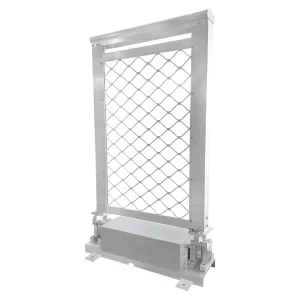
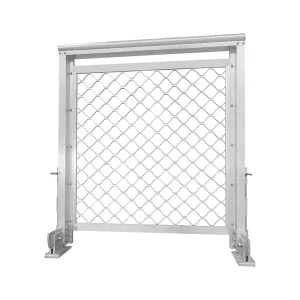
Select from our comprehensive portfolio of CE-certified decks, safety netting systems, and high-performance alloy structures tailored for regional applications in Thailand.
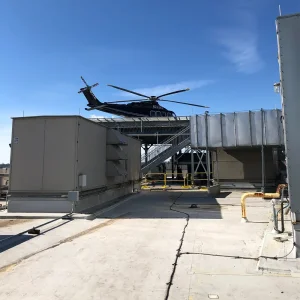
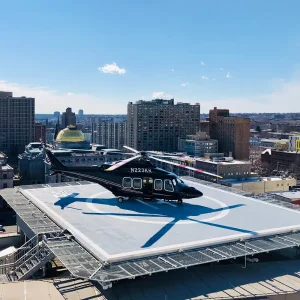
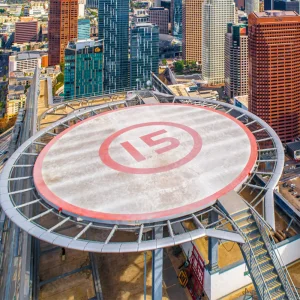
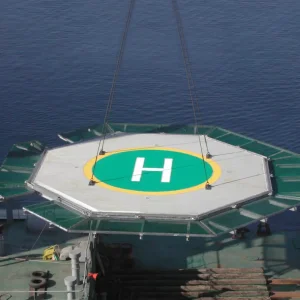
Serving marine engineering projects, hospitals, and offshore developments globally from our production hub.
Get complete structural calculation support, direct pricing, and detailed CAD integration files from our senior engineering team.
 LvXing