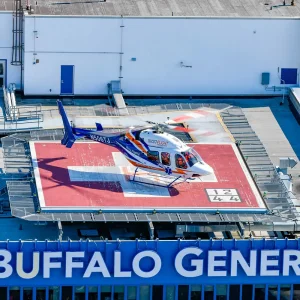
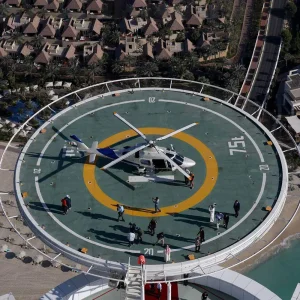
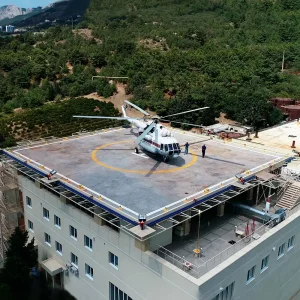
Helipad and Safety Nets Manufacturer & Factory Serving the Ireland Market

High-Strength Structural Aluminum Helidecks & CE-Certified Safety Net Systems Compliant with ICAO, EASA, and Irish Aviation Authority Standards

Executive Whitepaper: Industrial & Maritime Aviation Infrastructure in Ireland

A comprehensive analysis of design methodologies, compliance standards, and localized engineering strategies for Ireland's offshore wind boom, healthcare transport network, and coastal security operations.

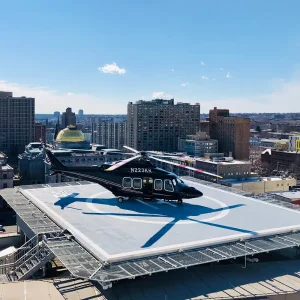
Aviation infrastructure within Ireland is experiencing a profound phase of modernization and expansion. Geographically positioned as the western gateway to Europe, Ireland demands high-reliability offshore marine helidecks and urban rooftop helipads. As offshore wind projects accelerate in the Celtic Sea and Irish Sea, and the Health Service Executive (HSE) executes upgrades for rapid emergency medical services (EMS), the demand for robust, lightweight, and corrosion-resistant landing platforms and associated safety nets has risen dramatically.

In response to these demands, structural aluminum has emerged as the premier material choice over traditional steel. The combination of lightweight design, high strength-to-weight ratio, and natural corrosion resistance makes engineered aluminum helipads highly suited to the challenging North Atlantic marine environments. However, safety depends on compliance. Operational safety requires strict adherence to international and local regulatory frameworks, including the Irish Aviation Authority (IAA) guidance, EASA Annex V, and the internationally recognized CAP 437 (Standards for Offshore Helicopter Landing Areas).

20,000T
Maximum Extrusion Capacity
C5-M
Corrosion Resistance Class
100%
CE & CAP 437 Compliant
15+ Yrs
Specialized R&D Experience

Critical Compliance Regulations for Irish Helipad Construction

Helipads and perimeter safety nets are not merely physical assets; they are lifesavers under extreme pressure. In Ireland, helideck infrastructure must address structural design criteria defined by civil aviation and maritime regulators:

  • Irish Aviation Authority (IAA) Requirements: Aligning with Civil Aviation Publication CAP 437 and ICAO Annex 14 Volume II guidelines, rooftop landing installations must integrate passive fire suppression, adequate load-bearing capabilities, and reliable fall protection.
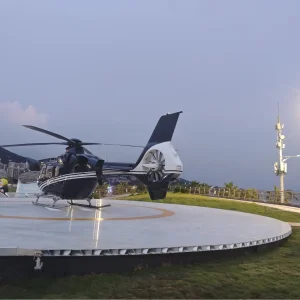
  • Offshore Celtic Sea Wind Sector Demands: Helipads on offshore substations (OSS) and service operation vessels (SOVs) must survive continuous salt spray, high wind speeds, and seismic activity while remaining operational in critical rescue scenarios.
  • EASA & CE Safety Nets Norms: Perimeter safety nets must be designed to stop a falling human body without spring-back hazards. Testing protocols specify dynamic load tests to guarantee they absorb up to 2.3 kJ of energy without failing.

Welcome to Lvxing: Global Aluminum Pioneers

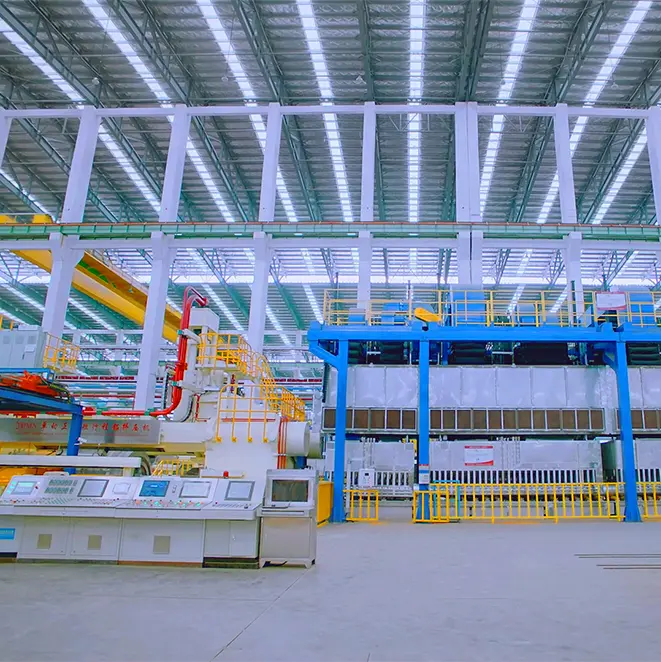
LVXING SPECIALIZES IN ADVANCED ALUMINUM SOLUTIONS. Established in 2015 and located in Foshan City, Guangdong, LvXing Intelligent Equipment Co., Ltd. boasts a skilled R&D team with extensive experience. We leverage exceptional technical expertise to effectively transform customers' ideas into reality, consistently meeting their precise requirements.

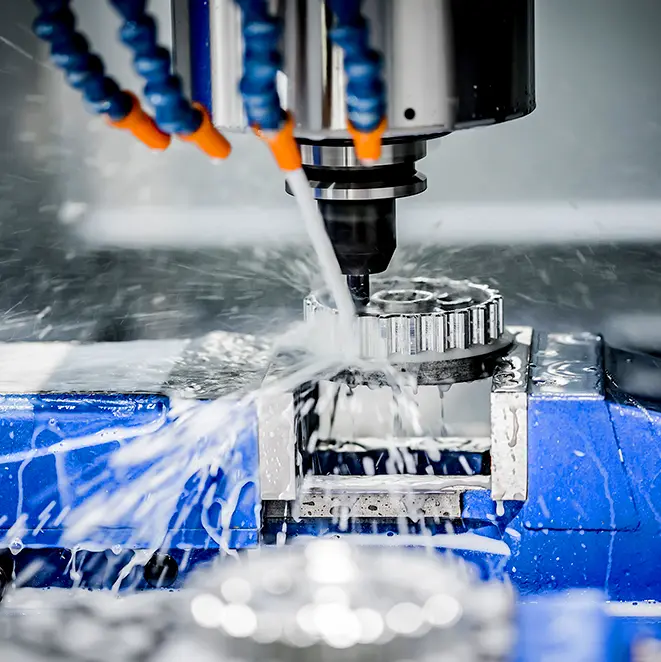
We utilize premium Fenglu aluminum, offering a diverse range of profiles for flexible applications. Our extrusion lines, ranging from 800T to 20,000T, accommodate alloys 1xxx, 2xxx, 3xxx, 5xxx, 6xxx, and 7xxx, allowing us to produce shaped products with section dimensions up to 1.2 meters in width and 28 meters in length. These products are recognized for their precision and meticulous processing, finding broad application in aerospace, military, medical, and industrial sectors.

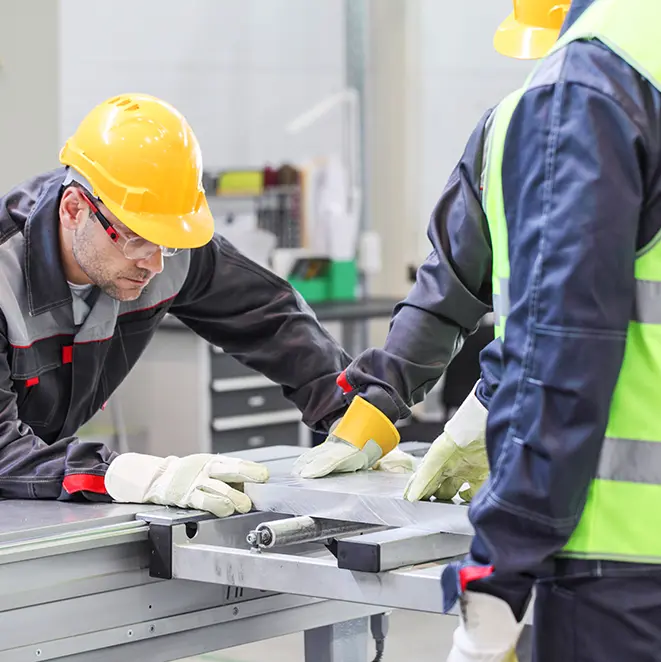
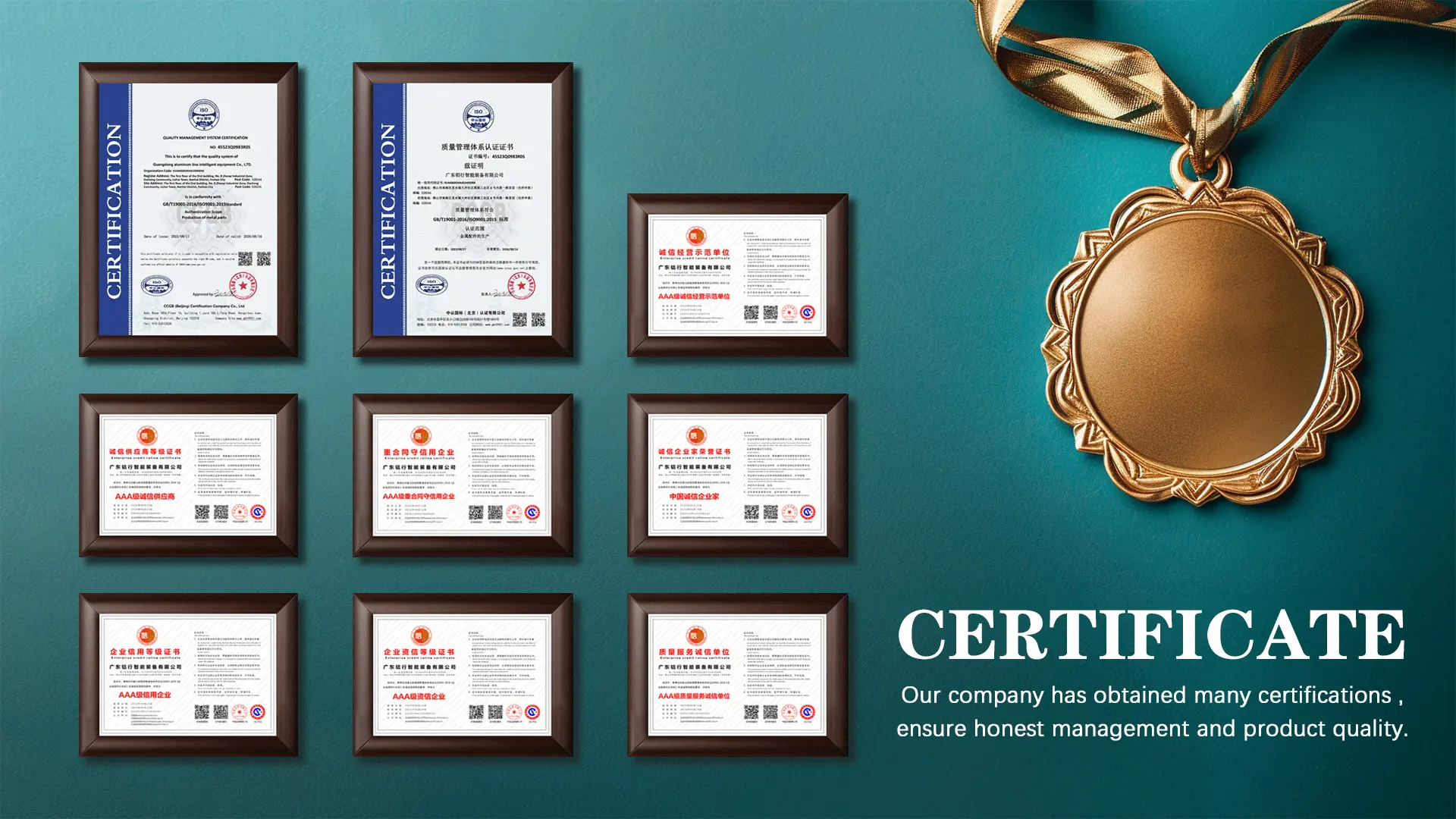
Our commitment to excellence is evident throughout the manufacturing process, rigorous quality control, thorough packaging, and efficient shipping procedures. This dedication has earned us recognition as a national excellent and honest enterprise, along with quality system certification in accordance with GB/T19001-2016/ISO9001:2015 standards.

Why Fenglu Aluminum Profile Matters:

By utilizing raw materials from Fenglu, one of the world's most advanced aluminum extruders, Lvxing guarantees structural purity. Utilizing custom alloys like 6082-T6 and 6061-T6, we supply the Irish market with helipad decks that offer outstanding tensile strength and yield performance, while resisting atmospheric corrosion from Atlantic storms.

Our Engineering Advantage

Three core competencies that qualify us as a premier industrial aviation partner for general contractors and offshore operators in Ireland.

Aerospace Certification Lvxing
Aviation Certified Logo

Aerospace Class Quality

We have obtained the "Special Aluminium Materials for Aerospace" Certificate. This qualification means our structural calculations, alloy composition controls, and tolerances conform to aerospace standards.

Fenglu Extrusion Line Capacity
Heavy Industrial Logo

20,000T Extrusion Power

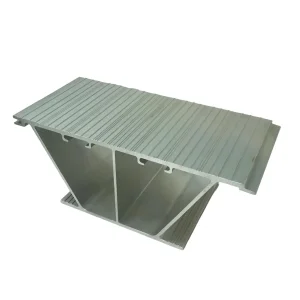
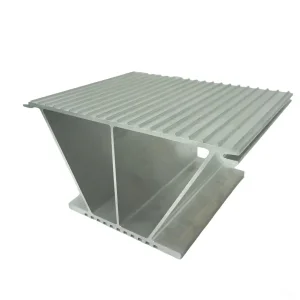
We provide high-quality Fenglu aluminum profiles. With extrusion lines ranging from 800T to 20,000T, we produce alloys in the 1xxx, 2xxx, 3xxx, 5xxx, 6xxx, and 7xxx series. We manufacture large profile structures up to 1.2 meters wide or 28 meters long, reducing structural welds and potential stress points.

Experienced R&D Team
Consultancy Logo

15+ Years Engineering Expertise

Our team of technicians has 15 years of experience. We analyze customer designs to identify potential installation challenges, evaluate wind shear effects, and customize perimeter safety nets for local wind environments.

Helipad & Safety Net Technical Overview

A closer look at how our systems are engineered to withstand offshore conditions and urban rooftop requirements.

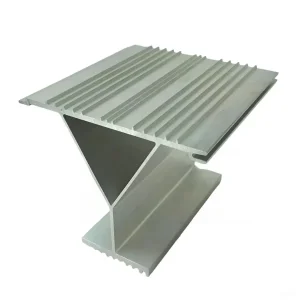
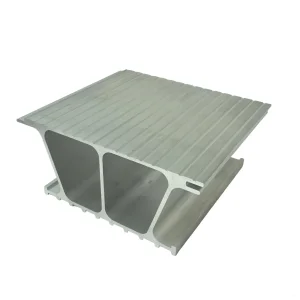
Lvxing’s aluminum landing decks are designed to replace concrete or steel decks. By utilizing interlocking extruded aluminum planks, we achieve a lightweight structure that reduces the dead weight of host structures, such as hospital roofs and offshore substation topsides.

Technical Characteristics of Lvxing Helipads

Feature / Parameter Structural Aluminum Helipad Traditional Steel Helideck Ireland Regulations (CAP 437/IAA)
Weight (kg/m²) approx. 35 - 50 kg/m² approx. 110 - 150 kg/m² Rooftop retrofits require minimal load profile
Corrosion Class C5-M (Marine Grade, ISO 12944) Requires regular painting/coating maintenance Mandatory offshore durability standard
Pre-Engineering Modular interlocking planks Heavy on-site welding required Requires minimal site fabrication in Irish ports
Service Life 30+ Years with minimal upkeep 10-15 Years before structural recoating Ensures reliable infrastructure lifespan
Sustainability 100% Recyclable Aluminum High energy footprint during maintenance Supports Irish National Decarbonisation targets

Perimeter Safety Net System Engineering

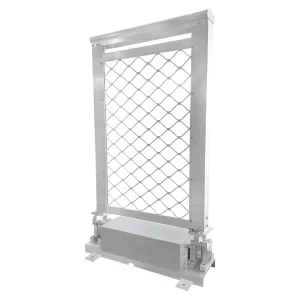
Perimeter safety nets are a critical safeguard on any raised helipad platform. Under CAP 437 and ICAO Annex 14 requirements, all offshore helidecks and elevated landing areas must install a safety net system around the perimeter to protect operators and flight crews from falls.

Our manual and motorized systems feature high-strength aluminum frames and corrosion-resistant mesh panels. The mesh is made from marine-grade materials (either 316 stainless steel cable or specialized aluminum alloy wire) to handle high-salinity maritime environments. The systems are designed to absorb energy, reducing the risk of rebound injury during fall accidents.

We provide two operating configurations for the Irish market:

  • Manual Swing-Down/Folding Safety Nets: Simple, robust, and cost-effective. These nets lock securely in place during helicopter maneuvers and can be lowered manually for maintenance.
  • Electric Dynamic Tensioning Safety Nets: Automatically managed from control rooms or ship bridges. This minimizes crew exposure on the helideck during harsh winter weather in the Atlantic.

Wind-Tunnel Tested

Frames and mesh are designed to minimize wind resistance, helping to mitigate turbulences above the helideck.

Modular Maintenance

Individually tensioned frame segments allow swift swap-out of damaged panels without replacing the entire perimeter system.

CE and CAP 437 Approved

Every batch undergoes drop testing to verify it meets European safety standards for personnel fall protection.

Reliable Marine and Offshore Helicopter Infrastructure

From the winds of the Atlantic to offshore substations in the Irish Sea, Lvxing structural systems are engineered to withstand severe weather. Explore our certifications and contact our design engineers to review your project blueprints.

Get Project Layout Layout Analysis

Supply Chain Efficiency & Irish Procurement Support

Streamlined engineering, fabrication, and shipping solutions designed to fit Irish building cycles and port operations.

For international buyers managing projects in Ireland, balancing supply chain timelines with regulatory compliance can be a challenge. Lvxing addresses these challenges through a systematic approach to quality control, documentation, and delivery logistics:

1. Pre-Engineered Modular Assemblies

Our helipad decks are fully fabricated and dry-assembled at our factory prior to shipping. This process helps ensure that all structural tolerances, connection interfaces, and safety accessories fit correctly, reducing construction delays when parts arrive in Dublin, Cork, or Belfast ports.

2. Comprehensive Compliance Documentation

Every shipment is delivered with a complete documentation package, including material test certificates, CE compliance declarations, non-destructive testing (NDT) reports for welds, and quality assurance logs in line with ISO 9001:2015. This documentation helps simplify the compliance process with Irish authorities and Lloyd's Register or DNV inspectors.

3. Optimized Maritime and Ground Shipping

Lvxing’s production facility in Foshan is located near major Southern Chinese container terminals, allowing for efficient containerized shipping. Large-format structural extrusions are secured in custom open-top or flat-rack containers to prevent transport wear, ensuring they arrive on-site in clean condition.

Technical Roadmap: Smart Helipads and Green Materials

Ongoing research and development focused on lightweight aluminum alloys, digital safety monitoring, and circular construction.

With global climate policies shifting toward low-carbon and smart infrastructure, Lvxing is investing in R&D to prepare landing decks and safety net systems for future demands:

  • Integrated De-Icing & LED Systems: We are refining extruded profiles with built-in channels for heating elements (hydronic or electric) to prevent ice build-up in Atlantic weather, alongside integrated CAP 437-compliant LED lighting.
  • Sensored Perimeter Safety Nets: Researching integrated load-cell technology that alerts offshore operators if a safety net's tension drops below legal limits due to weather impact.
  • High-Recycled-Content Alloys: Working to increase the use of recycled aluminum billet while preserving structural integrity, helping Irish operators meet their ESG targets.

Helideck Infrastructure & Safety Systems FAQ

Answers to frequent technical, logistical, and compliance questions about helipad procurement in Ireland.

What factors determine the structural load requirements for rooftop hospital helipads in Ireland? +
Rooftop hospital helipads must be designed for both dead loads (the weight of the landing deck and supporting structure) and dynamic loads from helicopter landings. Engineers must calculate the maximum take-off weight (MTOW) of the largest helicopter expected to use the pad, such as the Sikorsky S-92 or AgustaWestland AW139. Additionally, designs must account for wind loads, snow loads, and safety factors defined in Eurocode 9 (BS EN 1999) for aluminum structures, along with requirements from the Irish Aviation Authority (IAA) and the Health Service Executive (HSE).
Why is CAP 437 compliance essential for offshore helidecks in the Irish Sea? +
CAP 437 is widely recognized as the global standard for offshore helideck safety. It covers landing area dimensions, surface friction, drainage, obstacle-free zones, and perimeter safety nets. Compliance is crucial for insuring offshore assets like wind substations and gas platforms, and is required to allow helicopter operators like the Irish Coast Guard to execute landings safely.
How do manual perimeter safety nets compare to electric tensioning safety nets? +
Manual perimeter safety nets are cost-effective, durable, and highly reliable, making them suitable for installations with regular access. Electric tensioning safety nets, on the other hand, allow crews to raise or fold back the perimeter net frames remotely. This is especially useful for harsh offshore environments in Ireland, where minimizing the time crews spend on exposed decks during winter storms helps reduce overall operational risk.
What type of maintenance is required for marine-grade aluminum helidecks in Ireland? +
Marine-grade aluminum helidecks require very little maintenance compared to steel. They do not need regular painting or rust treatments. Maintenance is typically limited to periodic washdowns with fresh water to remove salt deposits, visual inspections of weld joints and fasteners, and regular friction testing of the landing surface to ensure it meets CAP 437 friction requirements.
Can Lvxing custom extrude aluminum profiles to fit specific architectural layouts? +
Yes. Utilizing our advanced extrusion lines (ranging up to 20,000T), Lvxing can custom design and manufacture aluminum profiles to fit specific structural requirements. We produce profiles up to 1.2 meters in width and 28 meters in length, allowing us to supply large, pre-engineered structural components that match unique architectural plans.

Let's Work Together on Your Next Project

Our engineering and technical teams are ready to help with structural analyses, custom extrusion layouts, and regulatory compliance reviews for your Ireland-based project.