High-performance extruded aluminum profiles designed for structural resilience, anti-corrosion, and rapid deployment in Morocco's strategic projects.
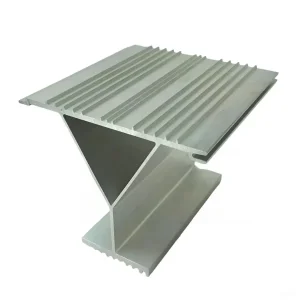
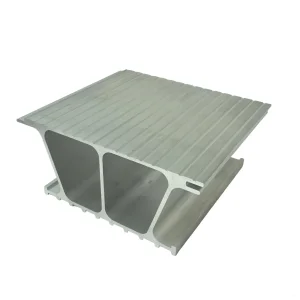
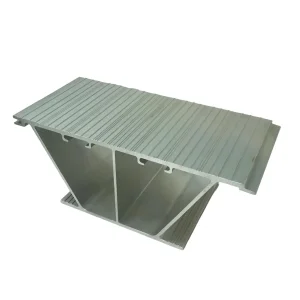
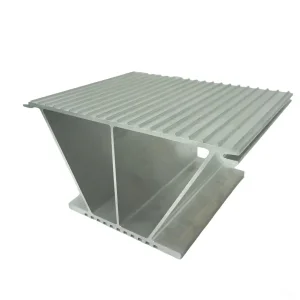
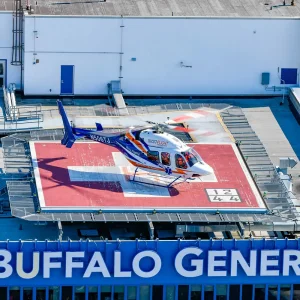
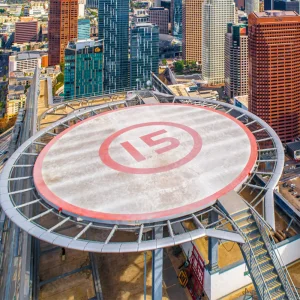
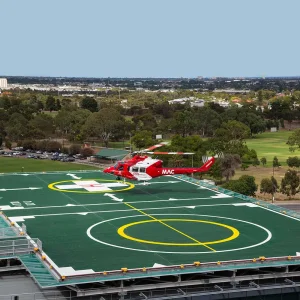
As Morocco positions itself as the premier logistical and industrial hub connecting Europe with Sub-Saharan Africa, the development of modern aerial support infrastructure has become a priority. Backed by initiatives such as Morocco's Vision 2030 and the expansion of emergency medical networks (SAMU), there is an unprecedented demand for high-performance rooftop helipads, hospital landing decks, and offshore marine helidecks.
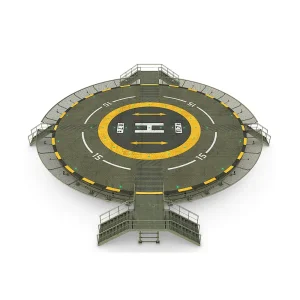
Traditional concrete helipads are increasingly being replaced by engineered extruded aluminum profiles. The geographic diversity of Morocco—ranging from the high-humidity coastal zones of Casablanca, Tangier, and Agadir to the dry, thermally volatile regions of the interior—imposes severe physical stress on building materials. Heavy concrete structures add enormous dead weight to rooftops, requiring expensive structural reinforcement. In contrast, Lvxing's aluminum helipads provide a lightweight, modular alternative that reduces structural load by up to 70%, while offering built-in drainage, fire suppression channels, and unmatched corrosion resistance.
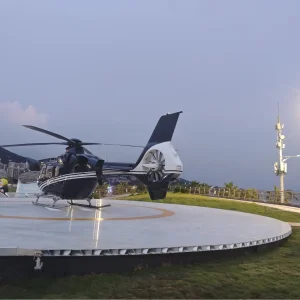
Morocco’s long Atlantic and Mediterranean coastlines present highly saline atmospheres. Our marine-grade aluminum profiles (such as 6000-series alloys) feature natural oxide layers supplemented by industrial anodization, eliminating rust and minimizing maintenance overheads for coastal heliports.
Many urban developments in northern Morocco lie in seismically active zones. Extruded aluminum's high elasticity and energy absorption, combined with engineered interlocking expansion joints, ensure the deck remains structurally sound during earthquakes and extreme desert temperature fluctuations.
Helicopter operations during landing and take-off create intense ground-effect winds and turbulence. The structural layout of the landing deck must incorporate passive airflow mitigation. Lvxing’s aluminum profile designs feature micro-textured, anti-slip surface patterns that optimize friction coefficients (exceeding CAP 437 guidelines) while preventing water ponding. The hollow chambers within the profiles also act as natural conduits for rapid firefighting drainage, diverting fuel spillages away from the deck area instantly in an emergency.
Established in 2015 and located in Foshan City, Guangdong, LvXing Intelligent Equipment Co., Ltd. boasts a skilled R&D team with extensive experience. We leverage exceptional technical expertise to effectively transform customers' ideas into reality, consistently meeting their precise requirements.
We utilize premium Fenglu aluminum, offering a diverse range of profiles for flexible applications. Our extrusion lines, ranging from 800T to 20,000T, accommodate alloys 1xxx, 2xxx, 3xxx, 5xxx, 6xxx, and 7xxx, allowing us to produce shaped products with section dimensions up to 1.2 meters in width and 28 meters in length. These products are recognized for their precision and meticulous processing, finding broad application in aerospace, military, medical, and industrial sectors.
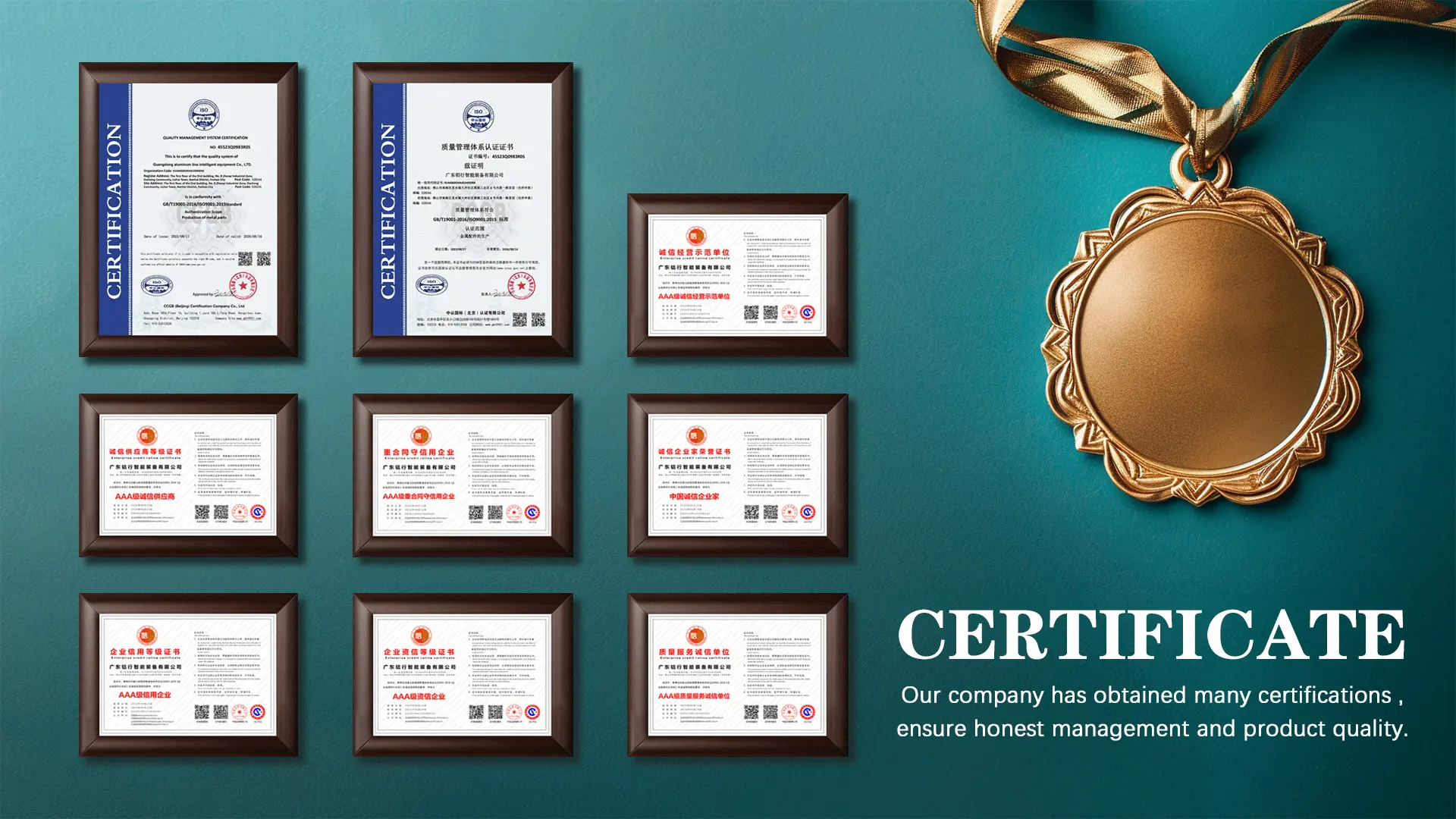
Our commitment to excellence is evident throughout the manufacturing process, rigorous quality control, thorough packaging, and efficient shipping procedures. This dedication has earned us recognition as a national excellent and honest enterprise, along with quality system certification in accordance with GB/T19001-2016/ISO9001:2015 standards.
We aspire to be your trusted business partner and warmly invite you to visit our factory.
Underpinning our manufacturing excellence with rigorous global compliance criteria for military and commercial helidecks.
Utilizing high-tensile 6005A-T6 and 6082-T6 aluminum alloys to achieve optimal yield strength, superior weldability, and resilience to extreme localized shear stresses.
Calculated to support helicopters with maximum take-off weights (MTOW) up to 21 tonnes (e.g., EH101, Sikorsky S-92) under extreme impact landing scenarios.
Guaranteed compliance with standard international aviation codes, governing friction testing, perimeter light integration, and structural deflection thresholds.
Unlike welded steel structures, which suffer from heat-affected zones that compromise localized material strength, Lvxing's aluminum deck profiles employ a dry-joint interlocking design. This mechanical connection distributes loads evenly across the sub-structure, allowing for rapid assembly on-site. For Moroccan contractors working in distant desert zones or dense urban sectors like Casablanca, this means transport costs are slashed by up to 50% due to modular flat-pack logistics. Assembly requires no high-energy onsite welding, dramatically reducing installation time and hazard risks.
Why global and local contractors choose Lvxing as their reliable long-term helipad infrastructure partner.
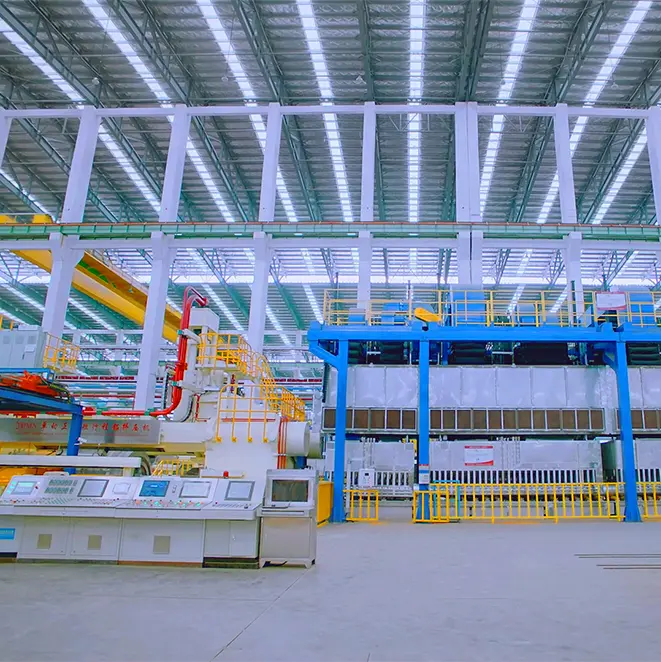

We have obtained the "Special Aluminium Materials for Aerospace" Certificate.
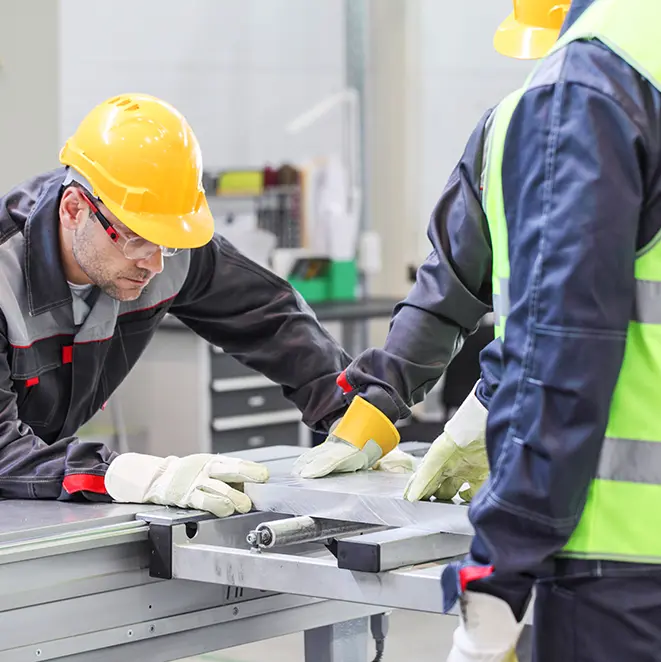

We provide and utilize high-quality Fenglu aluminum profiles. With extrusion lines ranging from 800T to 20,000T, we can produce alloys 1xxx, 2xxx, 3xxx, 5xxx, 6xxx, and 7xxx. We can manufacture fully shaped products with section dimensions up to 1.2 meters in width or 28 meters in length.
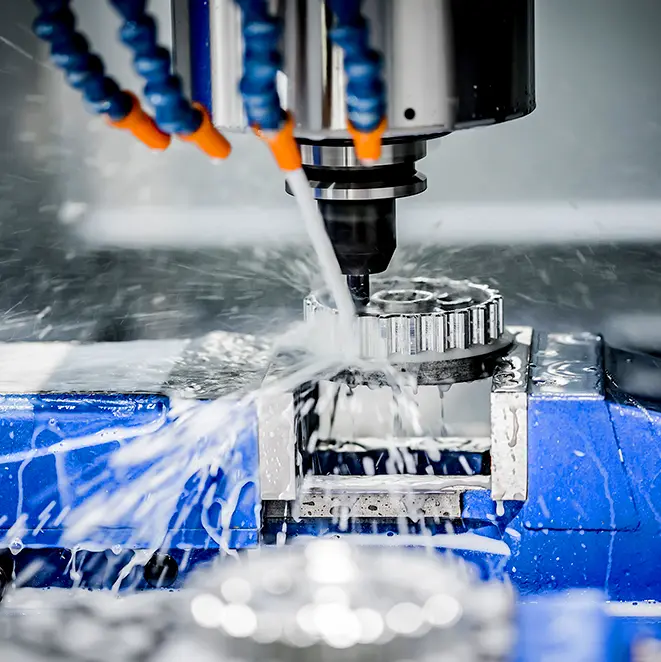

We have a team of technicians with 15 years of invaluable experience. Our deep understanding of customer requirements allows us to identify potential issues and offer practical insights, turning customer ideas into tangible products that meet specific needs.
Protecting personnel and aircraft with advanced offshore-grade perimeter safety solutions.
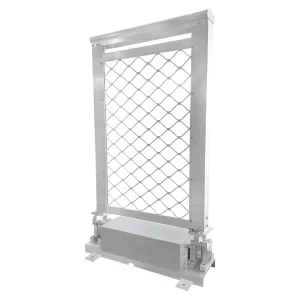
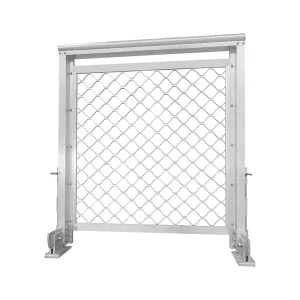
A critical and non-negotiable safety aspect of any rooftop, offshore, or maritime helipad is the perimeter safety net. Under ICAO Annex 14 and Civil Aviation Authority CAP 437 standards, all elevated landing decks must have safety netting installed around their boundaries to prevent personnel from falling while allowing clear passage for rescue operations.
Lvxing manufactures both manual and motorized (electric) folding safety nets tailored to the operational parameters of marine vessels and urban high-rises. Our safety nets are made from highly durable, copper-free marine-grade aluminum alloy frames or high-tensile 316 stainless steel wire mesh. These materials are chosen specifically to withstand the aggressive atmospheric corrosion common to major Moroccan ports like Tangier Med, Casablanca, and Agadir.
The perimeter net system is engineered to pass rigorous drop-testing standards (delivering a dynamic energy absorption equivalent to a 100 kg load falling from 1 meter). Crucially, the outward-tilting design ensures that helicopters can land without risk of rotor blade contact, while still catching personnel in emergency run-off scenarios. Our systems are engineered to withstand wind velocities of up to 60 m/s without experiencing structural distortion or structural compromise.
Ensuring seamless coordination with Moroccan civil aviation authorities and simplified customs processing.
Embarking on a helipad construction project in Morocco requires adherence to local civil aviation guidelines managed by the Direction Générale de l'Aviation Civile (DGAC). The DGAC enforces strict rules regarding obstacles, lighting, landing zone dimensions, and surface friction coefficients.
Lvxing provides comprehensive technical documentation, raw material mill certificates, fire resistance ratings, and load-test reports to facilitate local regulatory approvals. By partnering directly with local engineering, procurement, and construction (EPC) contractors in Morocco, we streamline the structural verification phase.
Logistically, our production center in Foshan, China, is situated close to major shipping channels. We offer direct shipping containers to major Moroccan ports, including Casablanca Port and the mega-hub Tanger-Med Port. Standard packing protocols include heavy-duty steel crates and corrosion-preventive plastic wraps to ensure all components arrive on-site in pristine structural condition, ready for quick assembly.
Technical and commercial answers for architects, design institutes, and procurement managers in Morocco.
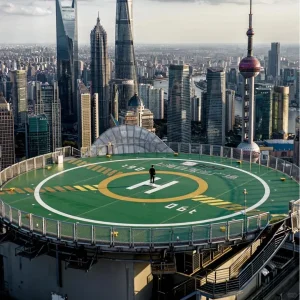
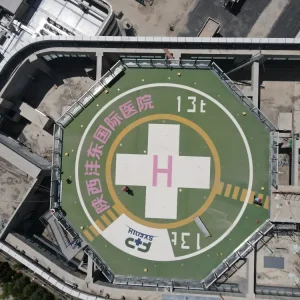
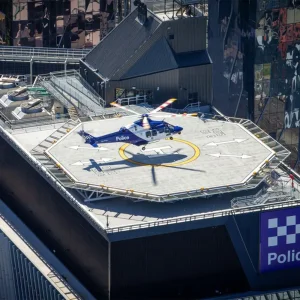
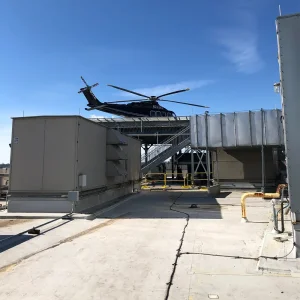
Engineered configurations designed to integrate with Moroccan commercial, civic, and rescue infrastructure.
 LvXing