Engineered to handle dynamic operational loads under severe Australian wind zone structures.
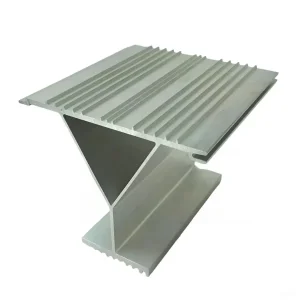
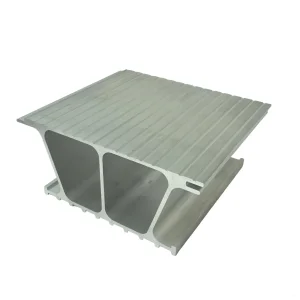
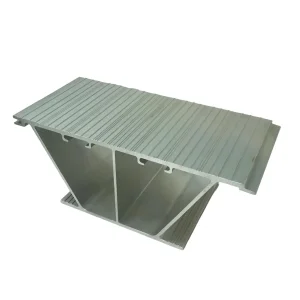
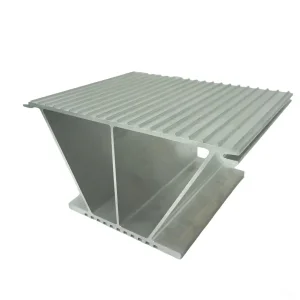
Australia boasts some of the most remote and demanding industrial operation parameters on earth. From massive iron ore operations across Western Australia’s Pilbara region to offshore oil rigs in the Bass Strait and high-altitude urban trauma centers in Sydney and Melbourne, helicopter accessibility is critical. These operations require dynamic structural safety, corrosion-free lifespans, and swift deployments.
Historically, concrete landing zones dominated the Australian landscape. However, modern commercial architecture has shifted focus. High structural dead-load requirements and extensive curing processes make concrete inefficient. Lightweight, modular, aerospace-grade aluminum helipad profiles have emerged as the industry standard. They significantly decrease foundation loads, perform with superior durability in saline-rich coastal environments, and reduce build timelines from months to days.
Global logistics demand highly reliable manufacturing pipelines. Lvxing bridges the gap between state-of-the-art global extrusion capacity and local Australian engineering requirements. Using ultra-premium, high-purity Fenglu aluminum, we design structural profiles using 6000 and 5000-series alloys, matching structural integrity with unparalleled marine-grade corrosion performance.
With industrial extrusion powerhouses handling ranges from 800T up to massive 20,000T presses, Lvxing handles standard and highly specialized profile structures. This capability allows us to manufacture complex interlocking modular planks measuring up to 1.2 meters in width and 28 meters in length, reducing field welding and maximizing the structural modulus of elasticity.
“By deploying high-strength extruded aluminum modular decks, Australian projects achieve over a 70% dead-load weight reduction compared to conventional concrete assemblies. This directly correlates to millions in structural framework savings for multi-story hospital extensions and offshore floating production storage and offloading (FPSO) units.”
To help engineers and procurement leads formulate objective life-cycle analyses, Lvxing presents a direct comparison of structural helipad options:
| Parameter | Concrete Platform | Structural Carbon Steel | Lvxing Modular Aluminum |
|---|---|---|---|
| Weight (Dead Load) | Extremely Heavy (~2400 kg/m³) | Heavy (~7850 kg/m³) | Ultra-Lightweight (~2700 kg/m³) |
| Corrosion Resistance | Moderate (Porous, carbonation risk) | Poor (Requires painting every 3-5 years) | Excellent (Self-passivating oxide layer) |
| Installation Time | 6 - 10 Weeks (Curing & Formwork) | 3 - 5 Weeks (On-site hot work) | 5 - 10 Days (Interlocking assembly) |
| Aero-Safety Net Integration | Complex custom structural brackets | Standard weldment brackets | Pre-engineered slide-in channels |
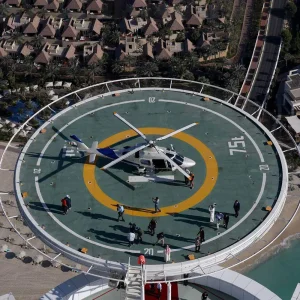
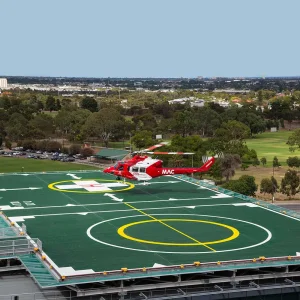
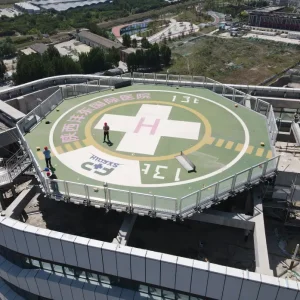
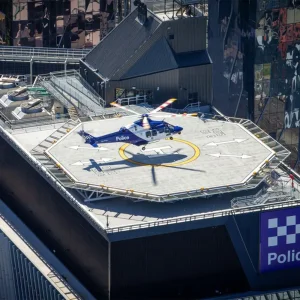
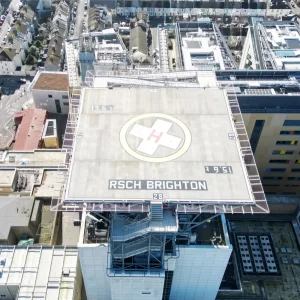
In high-density medical facilities, every second counts. Rooftop helipads must comply with Civil Aviation Safety Authority (CASA) regulations to support large twin-engine helicopters like the AW139, commonly used by emergency services. Lvxing’s aluminum decking options integrate surface heating systems, landing lights, and safety nets. This design ensures all water drainage and jet fuel runoff are safely routed through integrated channels beneath the deck profile.
Located in the red-dust regions of Western Australia and Queensland, mining helipads face high temperatures and severe wind storms. Since shipping concrete to these remote sites is expensive and logistically difficult, our modular aluminum helipad profiles offer a practical alternative. They ship compactly in standard ocean containers and are assembled on-site with basic hand tools, requiring no heavy cranes or welding equipment.
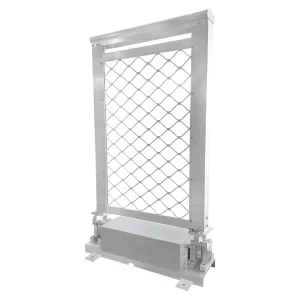
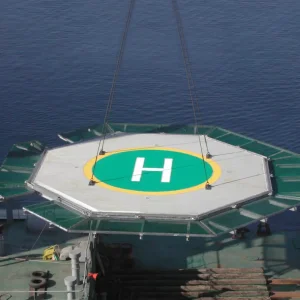
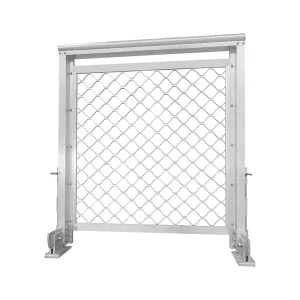
Offshore oil platforms, drillships, and luxury yachts encounter constant seawater spray and structural movement. Lvxing designs profiles using marine-grade alloys, like 6082-T6, to prevent galvanic corrosion. These platforms are equipped with either manual or electric motorized perimeter safety nets. These nets meet CAP 437 standards to protect offshore personnel during rough sea landings.
LVXING SPECIALIZES IN PREMIUM INDUSTRIAL ALUMINUM SOLUTIONS.
Established in 2015 and located in Foshan City, Guangdong, LvXing Intelligent Equipment Co., Ltd. boasts a skilled R&D team with extensive experience. We leverage exceptional technical expertise to effectively transform customers' ideas into reality, consistently meeting their precise requirements.
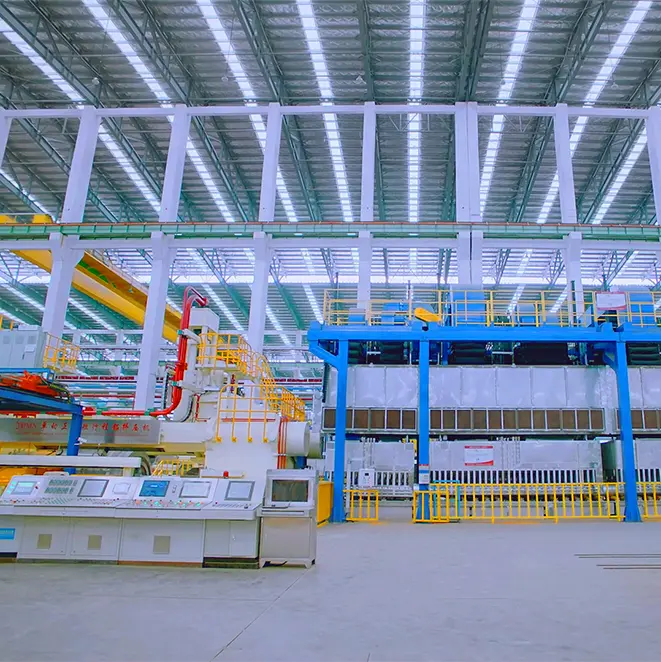
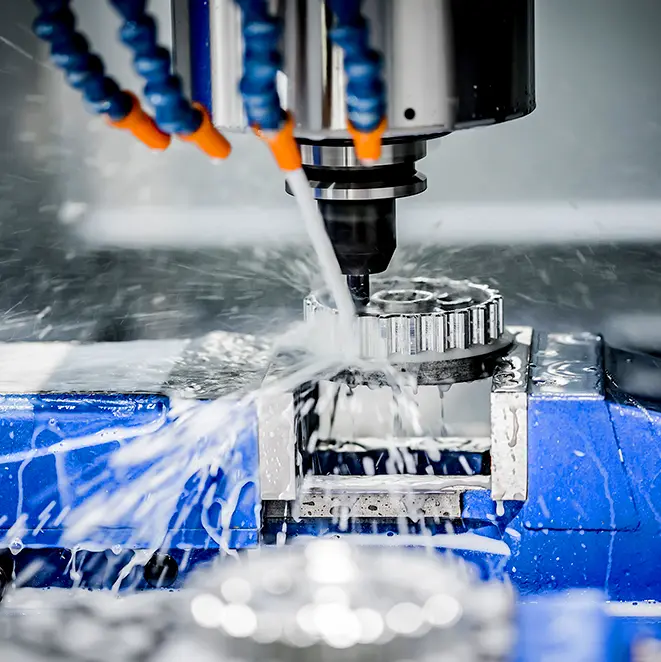
We utilize premium Fenglu aluminum, offering a diverse range of profiles for flexible applications. Our extrusion lines, ranging from 800T to 20,000T, accommodate alloys 1xxx, 2xxx, 3xxx, 5xxx, 6xxx, and 7xxx, allowing us to produce shaped products with section dimensions up to 1.2 meters in width and 28 meters in length. These products are recognized for their precision and meticulous processing, finding broad application in aerospace, military, medical, and industrial sectors.
Our commitment to excellence is evident throughout the manufacturing process, rigorous quality control, thorough packaging, and efficient shipping procedures. This dedication has earned us recognition as a national excellent and honest enterprise, along with quality system certification in accordance with GB/T19001-2016/ISO9001:2015 standards.
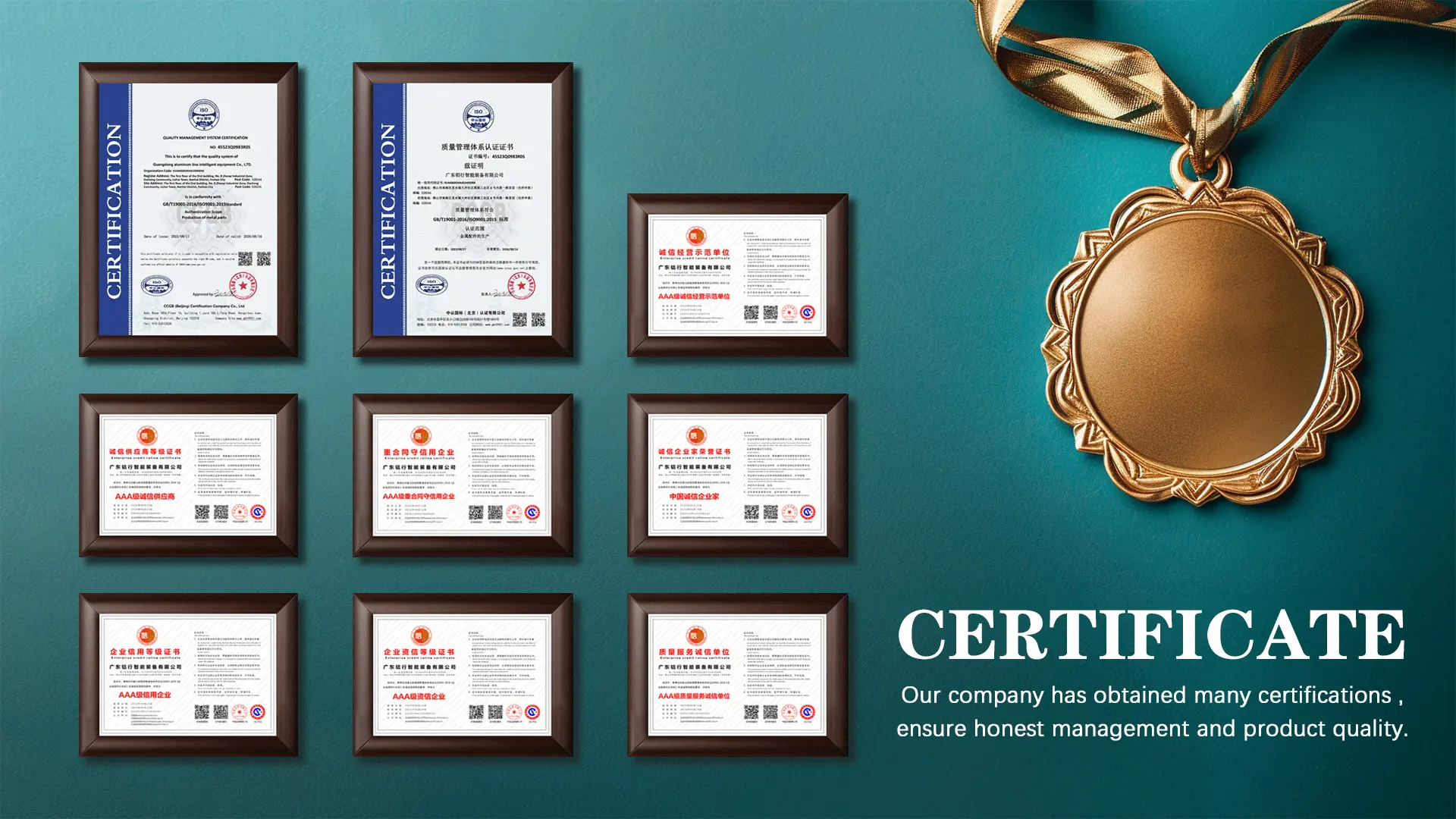

We have obtained the "Special Aluminium Materials for Aerospace" Certificate, confirming our ability to meet strict structural tolerances.

We utilize premium Fenglu aluminum. Running extrusion presses from 800T up to 20,000T, we shape alloys up to 1.2m wide and 28m long.

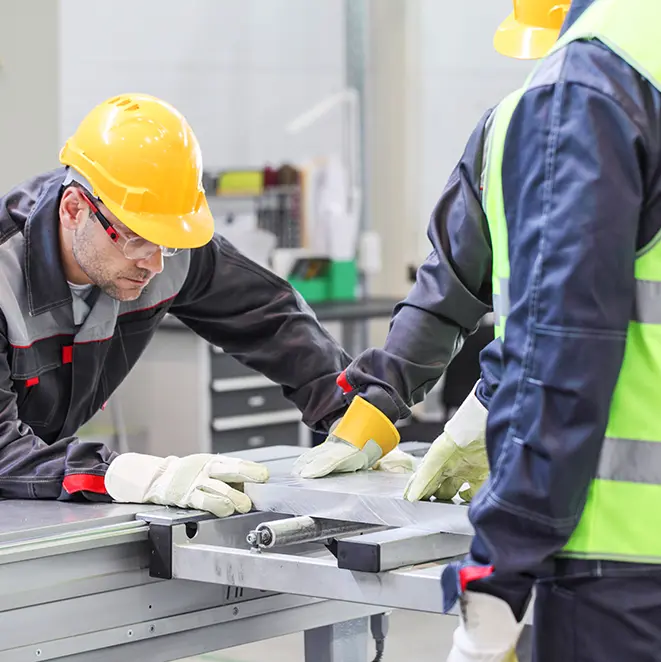
Our engineers have 15 years of industry experience, allowing us to identify structural issues early and build functional landing decks.
Examine our full range of certified offshore safety nets, rooftop structures, and customized profiles.
The urban air mobility (UAM) sector is growing rapidly. In the next ten years, Electric Vertical Takeoff and Landing (eVTOL) aircraft are expected to change urban passenger transport across Australia’s eastern seaboard. This shift requires updates to structural airport specifications.
Lvxing is designing advanced profiles for future vertiports. Unlike traditional helicopters, eVTOL systems use distributed electric propulsion, which changes landing impact distributions and requires integrated rapid-charging systems on the deck. Our future designs include embedded cooling channels and intelligent sensors to monitor structural load shifts in real time.
Additionally, we prioritize carbon reduction throughout our supply chain. By using green, hydro-powered aluminum extrusions and structural designs that are 100% recyclable, Lvxing helps projects meet green building standards, like Green Star ratings in Australia and LEED certifications globally.
Crucial commercial, technical, and regulatory answers for structural engineers and project developers in Australia.
Discuss your project specs with our technical sales division. We provide preliminary deck layouts, weight calculations, and estimated project quotes.
Send Inquiry Now LvXing